
Q&A
What Is the Difference Between Gum Curettage and Professional Teeth Cleaning?
Professional teeth cleaning removes bacterial plaque and hardened tartar from tooth surfaces. What is commonly called gum curettage usually refers to deeper cleaning below the gumline and treatment of the root surfaces. The appropriate procedure depends on the patient's periodontal condition.
 Answered by:
Dr Hasan Karatay
Answered by:
Dr Hasan Karatay
Published:
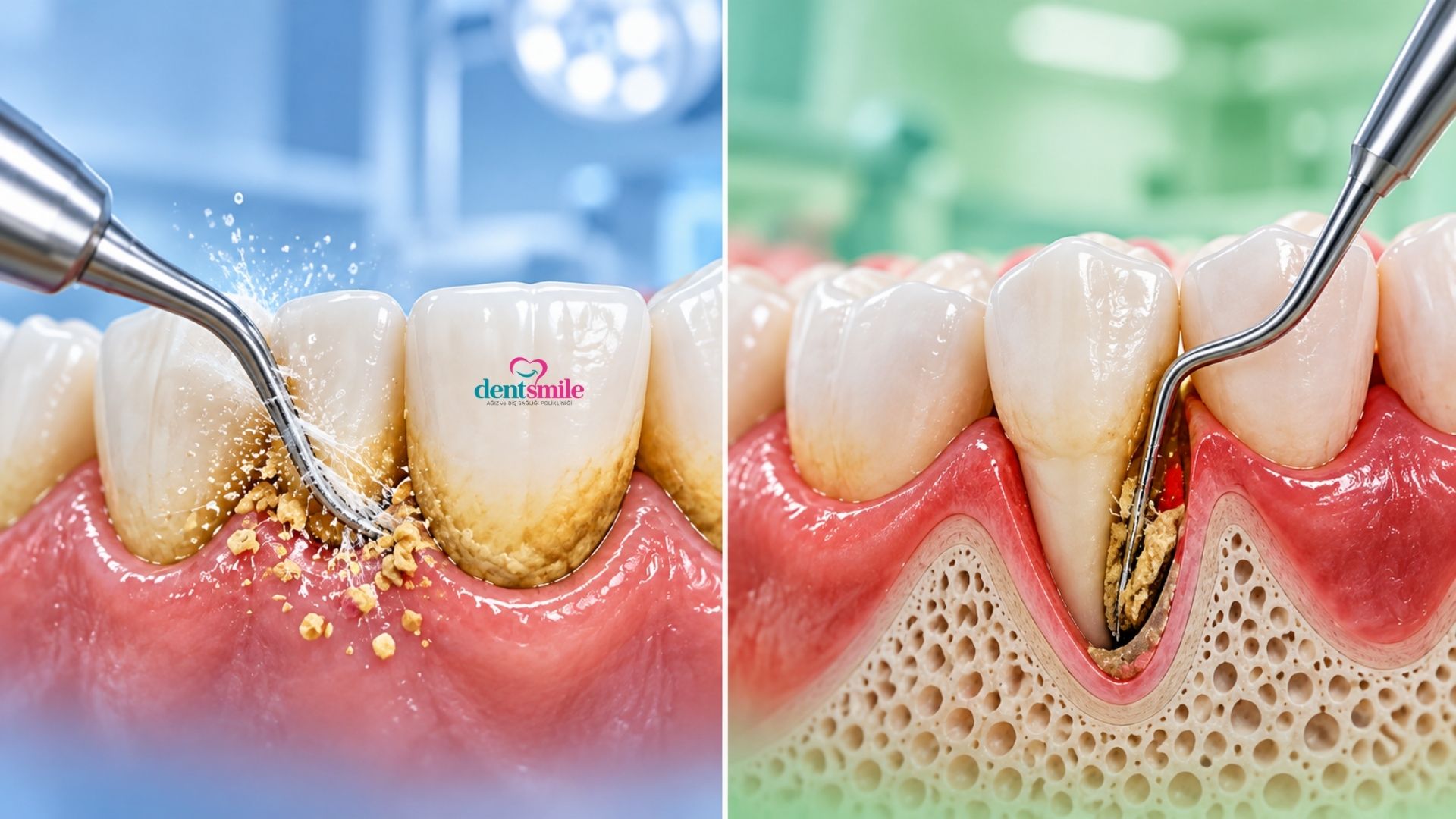
Professional teeth cleaning removes bacterial plaque and hardened tartar from tooth surfaces. What is commonly called gum curettage usually refers to deeper cleaning below the gumline and treatment of the root surfaces. The appropriate procedure depends on the patient's periodontal condition.
What Is the Difference Between Gum Curettage and Professional Teeth Cleaning?
The main difference lies in the depth of cleaning and the purpose of treatment. Both procedures aim to improve gum health, but they are not performed for the same conditions.
Professional scaling generally involves removing plaque and tartar from accessible tooth surfaces, particularly above the gumline. It may be suitable for patients with tartar deposits or early gum inflammation, known as gingivitis.
The term gum curettage is sometimes used by patients to describe deep cleaning below the gumline, professionally known as subgingival instrumentation or scaling and root planing.
During this procedure, bacterial deposits and calculus are removed from periodontal pockets and root surfaces using specialized hand instruments or ultrasonic devices.
An important distinction should be made: traditional gingival curettage refers to scraping soft tissue from the inner wall of a periodontal pocket. This is not routinely considered the principal treatment for periodontitis today. Modern periodontal therapy primarily focuses on removing disease-associated deposits from root surfaces and controlling inflammation.
When Is Deep Gum Cleaning Necessary?
If inflammation is limited to the gums, professional cleaning combined with effective daily oral hygiene may be sufficient.
However, when periodontitis develops, the supporting tissues around the teeth can be damaged, and periodontal pockets may become deeper. In these cases, cleaning only the visible tooth surfaces may not adequately address the disease.
The dentist evaluates periodontal pocket depths, bleeding, and bone support when necessary before recommending treatment.
Is Gum Curettage Painful?
Local anesthesia may be used during deep periodontal cleaning to reduce discomfort.
After treatment, patients may experience temporary gum tenderness, mild bleeding, or sensitivity to hot and cold temperatures. These symptoms generally improve as healing progresses.
What Should You Do After Periodontal Treatment?
Daily oral hygiene plays an essential role in maintaining treatment results.
Patients should brush correctly, clean between their teeth, and attend recommended follow-up appointments.
People with periodontitis may also require ongoing periodontal maintenance. Although treatment can control inflammation and help stabilize the condition, previously lost supporting bone cannot always be fully restored.
Professional Teeth Cleaning and Periodontal Treatment in Üsküdar
At Dentsmile Oral and Dental Health Polyclinic in Üsküdar, periodontal treatment planning involves assessing plaque and tartar accumulation, gum bleeding, pocket depths, and the condition of the supporting tissues.
Not every patient requires deep cleaning. The priority is to identify the stage of gum disease and select an appropriate treatment.
Early intervention and consistent preventive care can help preserve natural teeth over the long term.