Paediatric Dentistry
Dental Fissure Sealant
Prevent tooth decay with children's dental fissure sealant treatment at Dentsmile in Üsküdar, Istanbul. Gentle, painless preventive dentistry for kids.
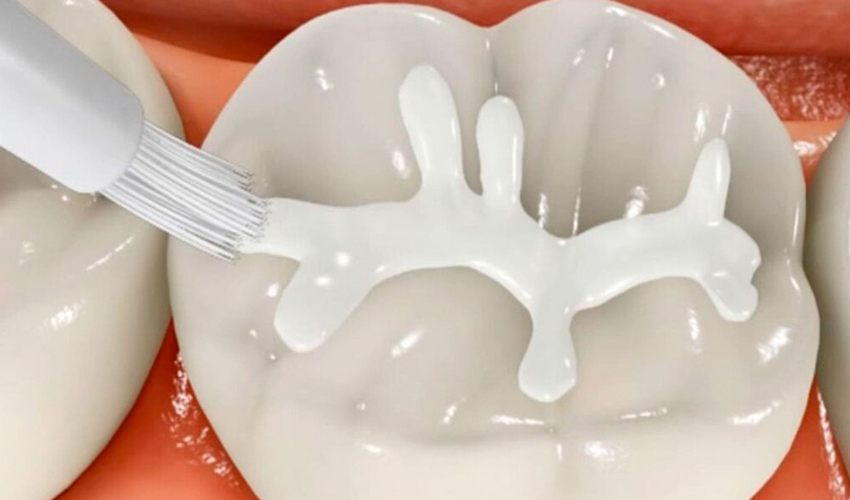
Dental fissure sealant treatment for children is a painless, preventive dental procedure designed to reduce the risk of tooth decay by covering the deep grooves and fissures on the chewing surfaces of teeth, particularly molars, with a protective material. Applied during childhood as the teeth develop, fissure sealants help prevent food particles and bacterial plaque from accumulating in narrow grooves, thereby reducing the likelihood of cavities. At Dentsmile Oral and Dental Health Polyclinic in Üsküdar, Istanbul, fissure sealant treatments for children are planned according to each child's dental development, oral hygiene habits, and individual risk of tooth decay.
What Are Dental Fissure Sealants for Children?
Dental fissure sealants are protective materials applied to the natural grooves and depressions found on the chewing surfaces of molars. The chewing surfaces of teeth are not completely smooth. They contain various ridges and grooves that help break down food during chewing. However, deep and narrow fissures can create areas where food debris and bacterial plaque accumulate.
Because children's toothbrushing habits may not yet be fully developed, adequately cleaning these areas can be challenging. Furthermore, some fissures are so narrow that toothbrush bristles cannot reach their deepest points. This can increase the risk of tooth decay, particularly in newly erupted permanent molars.
During fissure sealant treatment, the grooves on the chewing surfaces are covered with a protective material, usually a flowable resin-based substance. This creates a surface that is easier to clean and makes it more difficult for cavity-causing deposits to accumulate.
Fissure sealants are primarily intended to prevent tooth decay rather than treat existing cavities. However, in appropriately assessed cases, they may also be used to arrest the progression of certain early-stage, non-cavitated carious lesions.
Why Are Fissure Sealants Recommended for Children?
Tooth decay during childhood is an important oral health concern that can affect both primary and permanent teeth. The chewing surfaces of molars are particularly susceptible to cavities because of their anatomical structure.
The first permanent molars generally begin to erupt around the age of six. Because these teeth emerge behind the primary teeth, parents may sometimes mistake them for baby teeth. However, they are permanent teeth expected to remain in the mouth throughout life, making their protection from an early age particularly important.
Newly erupted permanent teeth may be more vulnerable to decay while their enamel continues to mature in the oral environment. Additionally, cleaning the chewing surfaces can be difficult when a tooth has not fully erupted.
Fissure sealants offer an effective preventive approach during this period. By protecting teeth before cavities develop, preventive treatments may reduce the need for fillings or more extensive restorative procedures later in life.
However, fissure sealants are not necessarily required for every child or every tooth. The decision to apply them should be based on the tooth's anatomical structure, the child's history of cavities, oral hygiene habits, and overall caries risk.
Which Teeth Can Receive Fissure Sealants?
Fissure sealants are most commonly applied to the chewing surfaces of primary and permanent molars. This is because the deep grooves found in these teeth are particularly susceptible to plaque accumulation and cavity formation.
The first permanent molars, which typically erupt around age six, and the second permanent molars, which generally erupt around age twelve, are among the most important teeth considered for fissure sealant application.
Nevertheless, fissure sealants are not limited to permanent teeth. They may also be recommended for primary molars with deep grooves when a child has an increased risk of tooth decay. In some cases, preventive sealants may be applied to premolars or other teeth with pronounced anatomical grooves.
The most important considerations are not simply the child's age but also the eruption stage of the tooth and the risk of developing cavities. Therefore, the appropriate timing for fissure sealant treatment should be determined following an examination by a pediatric dentist.
How Is Dental Fissure Sealant Treatment Performed?
Fissure sealant treatment for children is a relatively quick preventive procedure designed to preserve natural tooth structure. Before treatment, the dentist carefully examines the chewing surface of the tooth. The presence of decay, the depth of the fissures, and the suitability of the tooth for a preventive sealant are assessed.
The procedure begins with cleaning the tooth surface to remove plaque and food debris. The surface is then prepared to allow the sealant material to bond effectively. This generally involves applying a special conditioning acid to the enamel, creating a microscopic surface texture that improves adhesion.
After the tooth has been rinsed and dried, the fissure sealant material is carefully placed into the grooves. Depending on the type of material used, a special curing light may be applied to harden the sealant.
Finally, the dentist checks whether the sealant fits the tooth surface properly and whether it creates any interference during biting. Minor adjustments may be made when necessary.
Fissure sealant treatment generally does not require drilling or local anesthesia. For this reason, it is considered a comfortable preventive dental procedure for children. However, if the tooth has existing decay or requires additional treatment, the procedure may differ.
At Dentsmile Oral and Dental Health Polyclinic, helping children feel comfortable during dental treatment is an important part of pediatric care. Explaining each step of the procedure in age-appropriate language can help children cooperate and develop a positive attitude toward dental visits.
Benefits of Dental Fissure Sealants for Children
The primary advantage of fissure sealant treatment is that it provides protection before tooth decay develops. Particularly in children with an increased risk of cavities, sealants can significantly reduce the likelihood of decay on the chewing surfaces of molars.
By covering deep grooves, fissure sealants help make these areas easier to clean. Combined with regular brushing and the use of fluoride toothpaste, they contribute to maintaining healthier teeth.
Another important benefit is that the procedure usually does not require anesthesia or the removal of healthy tooth structure. For young children with limited dental experience, beginning with a painless preventive treatment may help build confidence and reduce anxiety about future dental appointments.
Fissure sealants are also an important component of preventive dentistry. Appropriate intervention before cavities develop can help preserve natural tooth structure for longer.
However, fissure sealants do not provide complete protection against all forms of tooth decay. Cavities can still develop between teeth and on other surfaces. Therefore, regular oral hygiene, appropriate fluoride use, healthy dietary habits, and routine dental examinations remain essential.
How Long Do Dental Fissure Sealants Last?
The durability of fissure sealants depends on several factors, including the material used, moisture control during application, the eruption stage of the tooth, and the child's oral habits.
When properly applied, fissure sealants may remain in place for several years. However, over time, the material may wear down, partially fracture, or detach from the tooth surface.
Moisture control can be particularly challenging when treating newly erupting teeth, potentially affecting how securely the sealant bonds to the enamel. For this reason, regular follow-up examinations are important.
During routine dental visits, the dentist evaluates whether the sealant remains intact. If partial loss or wear is detected, the affected areas may be resealed when necessary.
The loss of part of a fissure sealant does not necessarily mean that a cavity has developed. Nevertheless, examining these areas is important to ensure that the tooth continues to receive adequate protection.
What Should Children Do After Fissure Sealant Treatment?
Resin-based fissure sealants hardened with a curing light become fully set during the procedure. Therefore, children generally do not need to wait for an extended period before eating solely because a fissure sealant has been applied. However, the dentist's instructions should always be followed, as recommendations may vary depending on the material and treatment conditions.
Children should continue brushing their teeth normally after fissure sealant treatment. Oral hygiene should never be neglected under the assumption that sealed teeth can no longer develop cavities.
Regular brushing with an age-appropriate amount of fluoride toothpaste is essential. Younger children may require parental supervision or assistance to ensure that brushing is performed effectively.
Frequent consumption of sugary foods and drinks can increase the risk of tooth decay, making dietary habits another important aspect of preventive dental care.
If a child experiences a noticeable change in their bite, discomfort while chewing, or signs that the sealant has become detached, a dental examination should be arranged.
What Is the Difference Between Fissure Sealants and Fluoride Treatment?
In pediatric dentistry, fissure sealants and professional fluoride applications are two different preventive methods used to reduce the risk of tooth decay.
Fissure sealants work by physically covering the grooves on the chewing surfaces of teeth, helping prevent plaque accumulation and the development of cavities in these areas.
Fluoride treatments, on the other hand, help strengthen tooth enamel against acid attacks, reduce mineral loss, and support the remineralization of early enamel lesions.
These two preventive procedures are not necessarily alternatives to one another. Depending on a child's individual cavity risk, both may be included in the same preventive dental care plan.
At Dentsmile, children's oral health is evaluated as a whole rather than focusing on individual preventive procedures in isolation. The decision regarding which teeth require fissure sealants and whether professional fluoride treatment would be beneficial is based on each child's specific needs.
Dental Fissure Sealant Treatment for Children in Üsküdar, Istanbul
Early preventive care and regular dental examinations play an important role in maintaining children's oral health. Dental assessments during the period when permanent molars begin to erupt can help identify teeth at increased risk of developing cavities.
At Dentsmile Oral and Dental Health Polyclinic in Üsküdar, Istanbul, fissure sealant treatments for children are planned as part of a comprehensive preventive pediatric dentistry approach. Each child's age, dental development, oral hygiene habits, and existing cavity risk are carefully assessed before selecting teeth for preventive treatment.
Evaluations performed by dentists specializing in pediatric dentistry consider not only the current condition of the teeth but also the prevention of potential oral health problems in the future.
Families seeking children's dental fissure sealant treatment in Üsküdar receive information about the purpose of the procedure and its role in protecting developing teeth. Timely evaluation of newly erupted permanent teeth can help reduce the likelihood of more extensive dental treatments being required as children grow older.
At Dentsmile Oral and Dental Health Polyclinic, the primary objective of preventive pediatric dental care is to support the healthy development of natural teeth, reduce the risk of cavities, and help children establish positive dental care habits that can continue throughout their lives.