
Q&A
What Causes Tooth Decay in Children and How Can It Be Prevented?
Tooth decay in children develops when bacteria in the mouth use sugars and other fermentable carbohydrates to produce acids, which cause mineral loss from the tooth surface. Frequent sugar consumption, inadequate oral hygiene, nighttime feeding habits, and insufficient fluoride exposure can increase the risk of cavities. Proper oral care, a balanced diet, and regular visits to a pediatric dentist can significantly reduce the risk of tooth decay.
 Answered by:
Uzman Dr. Dt. Yağmur Yıldırım
Answered by:
Uzman Dr. Dt. Yağmur Yıldırım
Published:
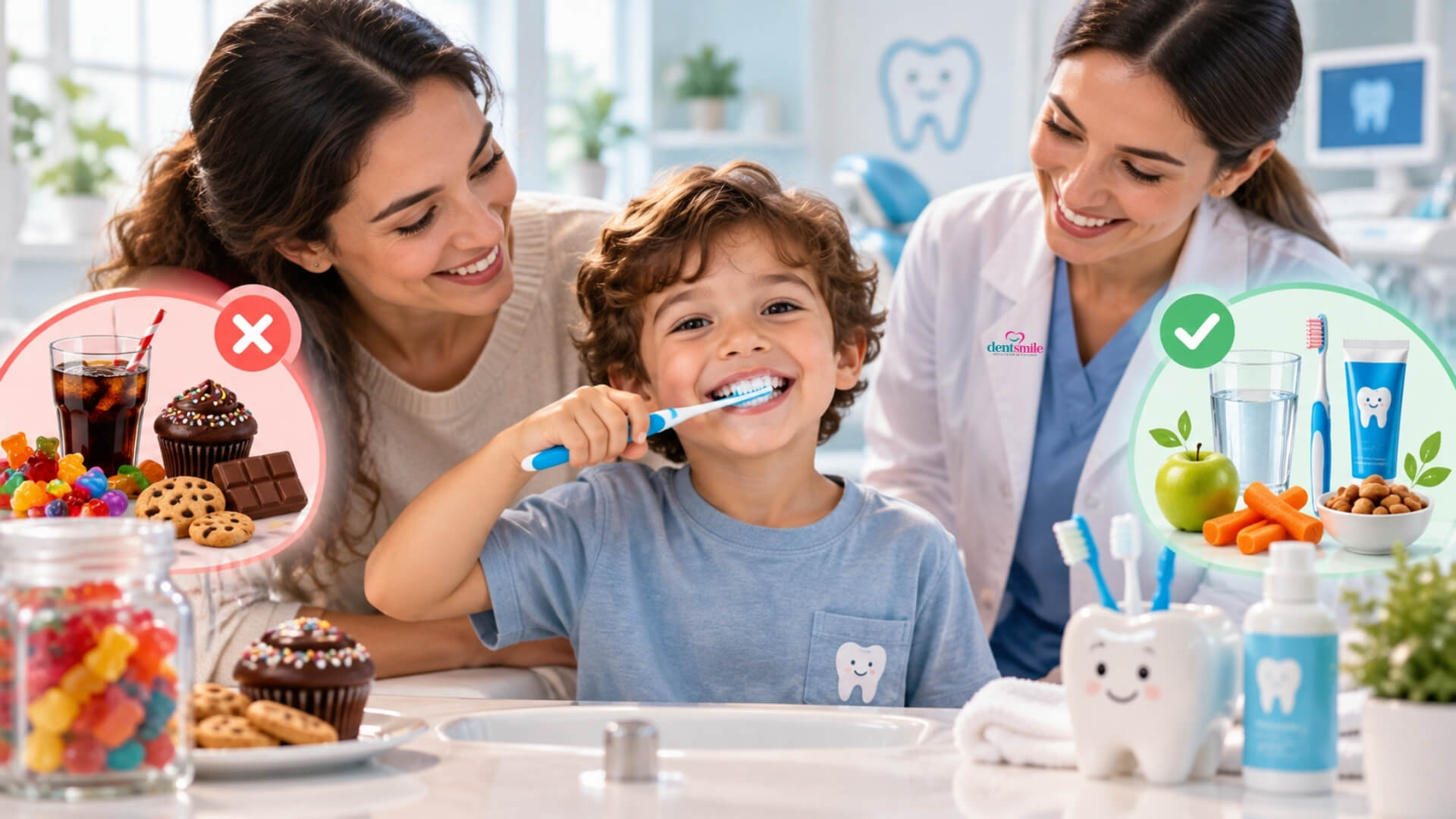
Tooth decay in children develops when microorganisms in bacterial plaque on the tooth surface use sugars and other fermentable carbohydrates from food to produce acids. These acids can cause minerals to be lost from tooth enamel. When this process occurs frequently and the lost minerals are not adequately replaced, cavities may gradually develop.
The enamel and dentin of primary teeth have different structural characteristics from those of permanent teeth. As a result, some cavities may progress more rapidly in children. Cavities that develop between teeth or on the chewing surfaces of molars may be particularly difficult for parents to notice in their early stages.
The main risk factors for tooth decay in children include:
Frequent consumption of sugary foods and drinks throughout the day,
Not brushing teeth regularly or using the correct technique,
Going to bed without cleaning the teeth,
Bottle feeding or frequent consumption of sugar-containing beverages,
Inadequate cleaning between the teeth,
Not using age-appropriate fluoride toothpaste,
The anatomical structure of the teeth and individual susceptibility to cavities.
However, tooth decay does not have a single cause. Dietary habits, oral hygiene practices, saliva characteristics, and the child's overall health should be evaluated together.
Why Is Tooth Decay in Baby Teeth Important?
Although baby teeth are temporary, they play essential roles in a child's oral and dental health.
In addition to supporting chewing, speech, and facial development, they help maintain the spaces needed for the permanent teeth that will eventually replace them.
Leaving cavities in baby teeth untreated simply because these teeth will eventually fall out is not an appropriate approach.
Advanced decay can cause pain, infection, difficulty eating, and, in some cases, premature tooth loss. Early loss of baby teeth can also negatively affect the space required for permanent teeth to erupt properly.
Therefore, when decay is detected in a baby tooth, treatment should be planned according to the depth of the cavity and the condition of the tooth.
How Does Sugar Consumption Affect Tooth Decay in Children?
The development of tooth decay in children is influenced not only by the amount of sugar consumed but also by how frequently sugary foods and drinks are consumed throughout the day.
For example, repeatedly eating sugary snacks throughout the day can expose tooth surfaces to acidic conditions again and again.
Sugary beverages, fruit juices, candies, and certain sticky snacks can particularly increase the risk of cavities.
For this reason, reducing the frequency of sugar-containing foods and drinks and choosing water as the main beverage are important aspects of children's nutrition.
Can Nighttime Bottle Feeding and Eating Cause Tooth Decay?
Nighttime feeding habits can affect the risk of tooth decay, particularly in young children.
Saliva flow decreases during sleep, making the mouth's natural cleaning mechanisms less effective. Prolonged contact between the teeth and sugar-containing liquids can therefore contribute to cavity development.
Giving fruit juice, sweetened milk, or other sweetened beverages in a bottle is particularly risky. Frequent nighttime feeding combined with inadequate tooth cleaning may also contribute to early childhood caries.
It is important to establish regular cleaning habits as soon as the first baby tooth erupts and to assess nighttime feeding recommendations according to the child's age.
When Should Children Start Brushing Their Teeth?
Children's oral hygiene should begin as soon as the first baby tooth appears in the mouth.
Teeth should be brushed twice a day using an age-appropriate soft-bristled toothbrush and the recommended amount of fluoride toothpaste.
Generally, a rice-grain-sized amount of fluoride toothpaste is recommended for children younger than three years, while a pea-sized amount is recommended for children aged three to six.
Young children may not be able to clean their teeth adequately on their own. Therefore, parents should brush their children's teeth or provide close assistance according to the child's developmental stage.
Once adjacent teeth begin touching, dental floss may also be needed to clean areas that a toothbrush cannot reach.
Does Fluoride Help Prevent Tooth Decay in Children?
Fluoride is an important preventive agent that helps strengthen tooth enamel against acids and supports the replacement of minerals lost during the early stages of tooth decay.
Regular use of an age-appropriate amount of fluoride toothpaste is one of the fundamental methods of preventing cavities in children.
For some children with a high risk of tooth decay, professionally applied fluoride varnish may also be recommended by a dentist.
The type and frequency of fluoride application should be determined by considering the child's age, cavity risk, and exposure to other fluoride sources.
Can Dental Sealants Prevent Tooth Decay in Children?
The deep pits and grooves on the chewing surfaces of molars can create areas where bacterial plaque accumulates.
Dental sealants are a preventive treatment designed to cover these areas with a suitable protective material, making cleaning easier and reducing the risk of cavities.
They may be recommended particularly for newly erupted permanent molars and, when necessary, certain primary molars.
However, dental sealants do not replace regular tooth brushing. Periodic examinations are also important to ensure that the sealants remain intact and continue providing protection.
How Can Tooth Decay Be Prevented in Children?
Reducing the risk of cavities requires a comprehensive approach to a child's daily habits.
Brushing twice daily with fluoride toothpaste, cleaning between the teeth appropriately, reducing the frequency of sugary foods, and attending regular dental checkups are essential preventive measures.
It is also important for children to learn that oral care is a natural part of everyday life rather than a punishment or an unpleasant obligation.
Parents can support the development of healthy oral hygiene habits by setting an example and actively helping their children brush their teeth.
When Should Children Have Their First Dental Checkup?
A child's first dental examination is recommended after the first baby tooth erupts and no later than the first birthday.
During this examination, the dentist evaluates more than just the existing teeth. Parents also receive age-appropriate guidance on oral hygiene, nutrition, fluoride use, and cavity prevention.
The intervals between subsequent checkups are determined according to the child's cavity risk and overall oral health.
Regular dental visits beginning at an early age can also help children become comfortable with the dental environment.
Prevention and Treatment of Tooth Decay in Children in Üsküdar
At Dentsmile Oral and Dental Health Polyclinic in Üsküdar, Istanbul, children's oral and dental health assessments consider not only existing cavities but also dental development, oral hygiene habits, dietary patterns, and individual risk factors for tooth decay.
Within pediatric dentistry, early detection of cavities, preventive fluoride treatments, dental sealants, and restorative treatments for baby teeth may be considered when necessary.
The primary goal is to preserve the health of natural primary and permanent teeth whenever possible and help children develop proper oral hygiene habits that they can maintain throughout their lives.
Tooth decay in children is a largely preventable oral health problem. However, prevention requires adopting a preventive dental care approach from the eruption of the first teeth rather than seeking treatment only after cavities develop.