
Q&A
What Should You Do If Baby Teeth Fall Out Too Early?
What happens if baby teeth fall out too early? Learn about premature tooth loss, permanent teeth, space maintainers, and pediatric dental care.
 Answered by:
Uzman Dr. Dt. Yağmur Yıldırım
Published:
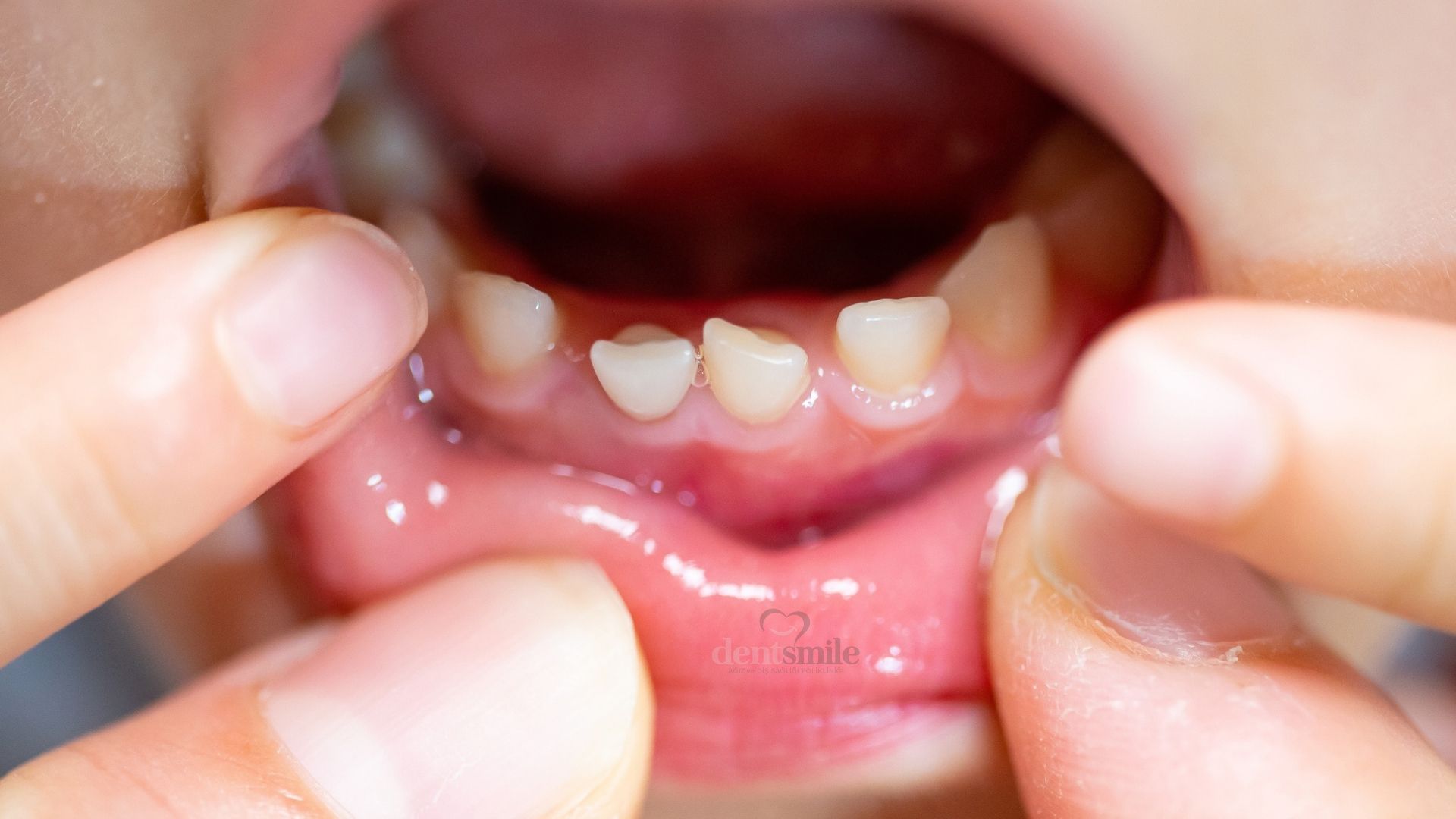
Losing baby teeth earlier than expected can affect the eruption and alignment of permanent teeth. Early tooth loss may result from decay, trauma, or infection. If a primary tooth is lost prematurely, a pediatric dental examination is important to assess the developing permanent tooth, determine whether a space maintainer is needed, and plan appropriate follow-up care.
What Should You Do If Baby Teeth Fall Out Too Early?
Children naturally lose their baby teeth when the time comes for permanent teeth to replace them. This is a normal part of growing up. However, when a baby tooth falls out much earlier than expected or must be extracted because of severe decay or an injury, parents should pay attention to the possible consequences.
Baby teeth are not simply temporary teeth without an important function. They help children chew their food, support speech development, and maintain the space needed for permanent teeth to erupt in appropriate positions.
For this reason, it is not always correct to assume that nothing needs to be done when a baby tooth is lost early. At the same time, not every case of premature tooth loss leads to complications or requires a space maintainer. What matters is identifying which tooth was lost, the child's age, and the reason for the loss.
At What Age Do Baby Teeth Normally Fall Out?
Baby teeth generally begin to fall out at around six years of age. The front incisors are usually among the first teeth to be replaced. Baby molars and canine teeth commonly remain in the mouth for longer, with many being replaced between approximately nine and twelve years of age.
These ages are not identical for every child. Individual differences in tooth eruption and shedding are normal. However, the early loss of a baby molar can be particularly important when several years remain before its permanent successor is expected to erupt.
In such situations, the dentist may need to assess whether the space left behind is likely to remain available for the developing permanent tooth.
Why Do Baby Teeth Fall Out Prematurely?
One of the most common reasons for premature loss of baby teeth is advanced tooth decay. When decay severely damages a primary tooth and the tooth cannot be preserved through suitable treatment, extraction may become necessary.
Dental injuries are another possible cause. A fall, collision, or accident during play can result in a tooth becoming loose or being completely knocked out. Certain infections affecting the tissues around the tooth and, less commonly, developmental conditions may also contribute to early tooth loss.
A baby tooth that has been completely knocked out by trauma must not be replanted. Attempting to put it back into the socket can damage the developing permanent tooth underneath. The child should be examined by a dentist as soon as possible after the injury.
Can Losing a Baby Tooth Early Affect Permanent Teeth?
When a baby tooth is lost prematurely, neighboring teeth may gradually move into the empty space. This can reduce the room available for the permanent tooth and may contribute to crowding or eruption difficulties later on.
However, the risk is not the same for every tooth. Whether the missing tooth is an incisor or a molar, the child's age, the stage of development of the permanent successor, and the existing dental alignment all influence the decision about treatment.
When appropriate, the dentist may assess the permanent tooth's position using a clinical examination and suitable dental X-rays. Some children need only periodic monitoring, while others may benefit from preserving the available space.
When Is a Space Maintainer Necessary?
A space maintainer is an orthodontic appliance designed to help prevent neighboring teeth from moving into a gap left by a prematurely lost baby tooth. It may be considered particularly when a baby molar is lost well before the permanent tooth is ready to erupt.
Space maintainers may be fixed or removable. The most suitable option depends on the location of the missing tooth, the child's age, the condition of neighboring teeth, and the expected timing of permanent tooth eruption.
Nevertheless, a space maintainer is not necessary after every premature baby tooth loss. In some cases, the space may remain stable without treatment, or the permanent tooth may already be close to erupting. The decision should therefore be made following an individual pediatric dental assessment.
How Can Premature Loss of Baby Teeth Be Prevented?
Protecting primary teeth is an important part of preventing early tooth loss. Regular brushing with an age-appropriate amount of fluoride toothpaste from the eruption of the first tooth, parental help with oral hygiene, and limiting frequent exposure to sugary foods and drinks can reduce the risk of tooth decay.
Regular pediatric dental examinations also allow early cavities to be identified before substantial damage occurs. Depending on the situation, fluoride varnish, fissure sealants, dental fillings, or pulp treatment for primary teeth may help preserve the natural tooth.
The important point is not to delay necessary treatment simply because baby teeth will eventually be replaced. Keeping them healthy until their natural shedding time can support normal dental development.
Premature Baby Tooth Loss and Pediatric Dentistry in Üsküdar
At Dentsmile Oral and Dental Health Polyclinic in Üsküdar, premature loss of primary teeth is assessed by considering the child's age, the location of the missing tooth, the development of permanent teeth, and the structure of the jaws. When necessary, the dentist evaluates whether a space maintainer or a follow-up plan is appropriate.
The aim of pediatric dentistry is not only to treat existing dental problems but also to support the healthy eruption and development of permanent teeth.
Losing a baby tooth early does not always result in a serious orthodontic problem. However, timely assessment can help identify potential loss of space and developing alignment problems before they become more difficult to manage.