
Q&A
What Are the Differences Between Lingual Braces and Traditional Braces?
Discover the differences between lingual and traditional braces, including appearance, comfort, speech, oral hygiene, treatment duration, and cost.
 Answered by:
Uzman Dr. Dt. Akif Arslan
Published:
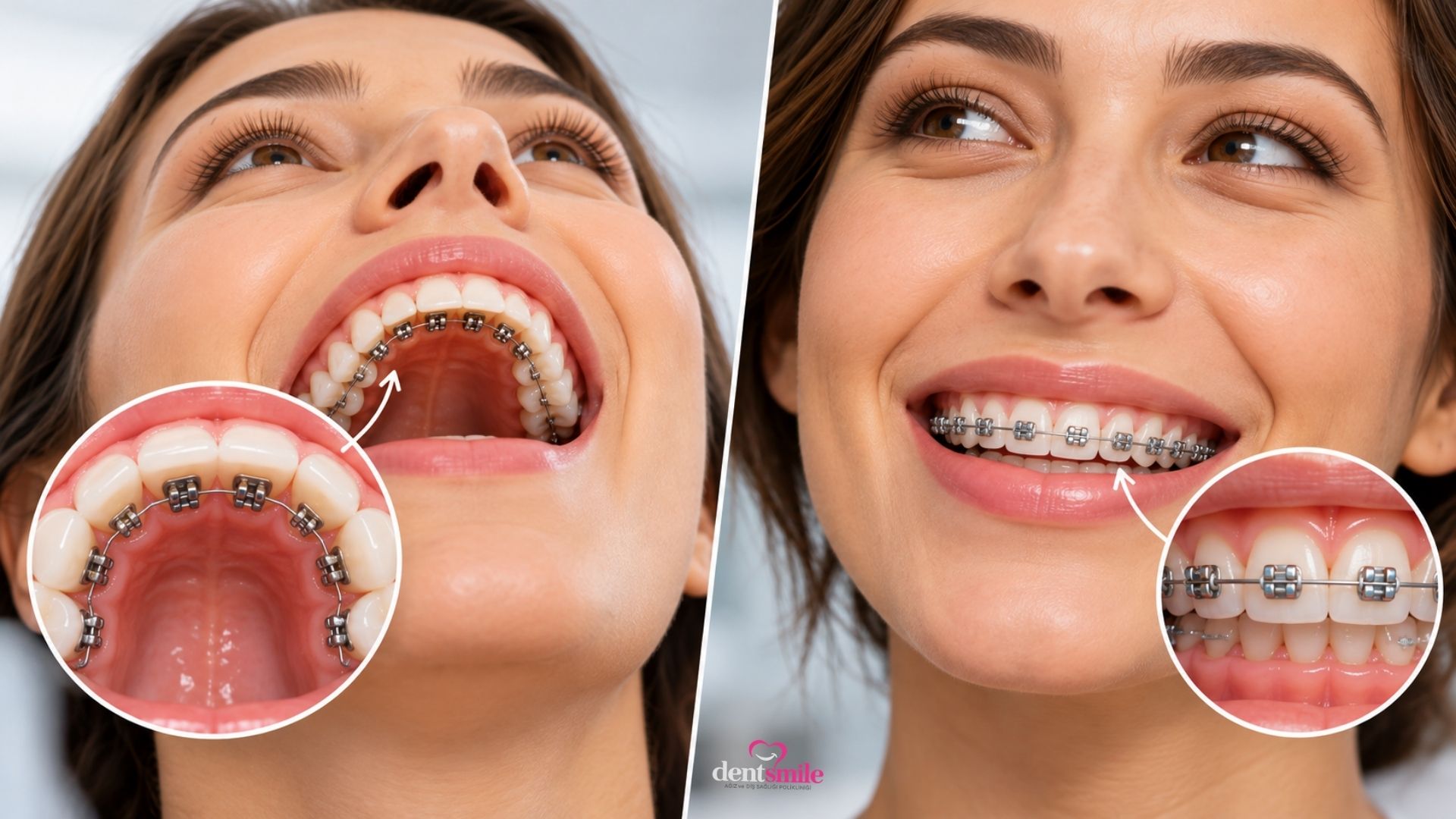
The main difference between lingual orthodontics and traditional braces is where the brackets are attached. Lingual braces are placed on the inner surfaces of the teeth, while traditional braces are attached to the front surfaces. Both methods can correct crowded teeth and certain bite problems. The most suitable option depends on the patient's dental structure, oral health, and aesthetic expectations.
What Are the Differences Between Lingual Braces and Traditional Braces?
Lingual braces and traditional braces are fixed orthodontic treatments designed to straighten teeth and improve bite alignment. Both systems use brackets and orthodontic wires to apply controlled forces that gradually move teeth into their planned positions.
The most noticeable difference is the position of the brackets.
With traditional braces, metal or ceramic brackets are attached to the front surfaces of the teeth. With lingual braces, the brackets are placed behind the teeth, facing the tongue.
This makes lingual orthodontics an option for patients who prefer less visible braces.
However, the differences are not limited to appearance. Comfort, speech, oral hygiene, treatment planning, and cost may also vary.
Differences in Appearance
The main aesthetic advantage of lingual braces is that the brackets are largely hidden during normal speaking and smiling.
This can be particularly appealing to adults who prefer a discreet orthodontic treatment for professional or personal reasons.
Traditional metal braces are more noticeable because they are attached to the front surfaces of the teeth. Ceramic brackets can make them less visible, although they are not completely invisible.
Speech and Adjustment Period
Because lingual brackets are positioned close to the tongue, some patients may experience temporary speech changes, particularly when pronouncing certain sounds.
Tongue irritation or discomfort may also occur during the initial adjustment period.
With traditional braces, irritation is more likely to affect the inner surfaces of the lips and cheeks.
Most patients gradually adapt, although the adjustment period varies from person to person.
Oral Hygiene and Cleaning
Maintaining good oral hygiene is essential with both orthodontic systems.
Plaque can accumulate around brackets and wires, potentially increasing the risk of gum inflammation and enamel demineralization.
Traditional braces are generally easier to see when cleaning, while lingual brackets may be more difficult to access because they are located behind the teeth.
Careful brushing, appropriate interdental brushes, and regular dental examinations are important throughout treatment.
Differences in Treatment Duration
Lingual braces are not necessarily faster or slower than traditional braces.
Treatment duration depends on the severity of crowding, the type of bite problem, the tooth movements required, and the patient's individual response.
Certain movements may require different orthodontic mechanics with lingual systems. Therefore, treatment time should be assessed according to the overall orthodontic condition rather than bracket position alone.
Comfort During Treatment
Both methods can cause temporary tooth sensitivity, particularly after the braces are fitted or adjusted.
Lingual braces may cause tongue irritation, while traditional braces may lead to discomfort along the lips and cheeks.
Neither method can be considered universally more comfortable for every patient.
Treatment Planning and Cost
Lingual orthodontics requires specialized techniques because the inner surfaces of teeth have more complex anatomical shapes.
Some systems use customized brackets and wires produced with digital planning technologies.
These additional manufacturing and clinical requirements can make lingual braces more expensive than traditional metal braces.
The final treatment cost also depends on the complexity and duration of treatment.
Which Treatment Is More Suitable?
Lingual braces may be appropriate for patients who want a discreet fixed orthodontic system and have suitable dental anatomy.
Traditional braces remain an effective option for many orthodontic conditions.
The decision should be based on tooth alignment, bite relationships, gum health, treatment requirements, and individual preferences.
Lingual and Traditional Orthodontic Treatment in Üsküdar
At Dentsmile Oral and Dental Health Polyclinic in Üsküdar, orthodontic treatment options are evaluated according to tooth positioning, bite relationships, periodontal health, and the patient's aesthetic expectations.
The goal of both treatments is to achieve improved tooth alignment and a functional bite.
The most suitable orthodontic method is determined through an individualized clinical assessment, rather than appearance alone.