
Q&A
What Is Preventive Orthodontic Treatment?
Learn about preventive orthodontics for children, space maintainers, thumb sucking, jaw development and early assessment in Üsküdar.
 Answered by:
Uzman Dr. Dt. Akif Arslan
Published:
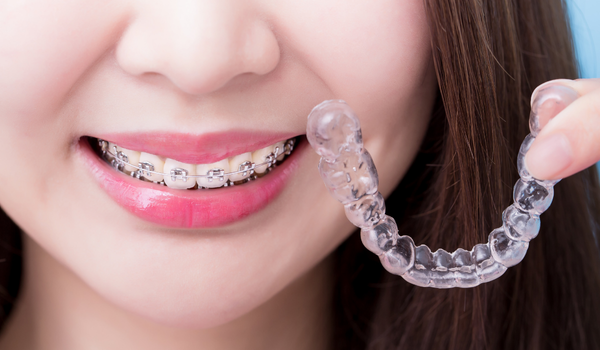
Preventive orthodontics includes early measures aimed at preventing dental and jaw problems in children or reducing the progression of developing problems. It focuses on monitoring dental growth, maintaining space after premature loss of baby teeth, managing harmful oral habits, and identifying bite or jaw development concerns. Not every child needs early orthodontic appliances; the goal is to intervene only when necessary and at the appropriate time.
What Is Preventive Orthodontic Treatment?
Preventive orthodontics aims to identify and reduce risk factors before a significant orthodontic problem develops. The orthodontist's role during childhood is not limited to correcting teeth that are already crowded. Recognizing problems early can sometimes prevent them from becoming more severe.
For example, when a baby tooth is lost much earlier than expected because of decay or trauma, neighboring teeth may drift into the empty space. This can reduce the room available for the permanent successor. Long-standing thumb sucking, abnormal swallowing, or tongue thrusting may also influence tooth position and jaw development.
At Dentsmile in Üsküdar, Istanbul, children's orthodontic assessments consider the primary teeth, eruption of permanent teeth, jaw development, and oral habits together. The guiding principle is to prevent avoidable problems rather than waiting until they become more complicated.
What Does Preventive Orthodontics Involve?
Preventive orthodontics addresses risk factors before a clearly established orthodontic disorder appears. It does not mean that every young child should receive an appliance. Instead, the child's development is monitored, risks are recognized early, unnecessary treatment is avoided, and intervention is provided when it is genuinely needed.
Many children require observation rather than immediate treatment. An early examination is valuable because it can help determine the most appropriate time to act.
What Are the Goals of Preventive Orthodontics?
The main goals are to preserve space for permanent teeth, reduce the consequences of premature baby tooth loss, manage harmful oral habits, maintain normal eruption pathways, recognize factors that may affect jaw growth, and reduce the severity of future crowding.
Preventive measures do not guarantee that orthodontic treatment will never be necessary. In suitable cases, however, they may limit the progression of a problem or make future treatment less complicated.
Why Are Baby Teeth Important for Orthodontic Development?
Primary teeth are not simply temporary teeth used for chewing during childhood. One of their important functions is to maintain the space needed by permanent teeth.
When a baby tooth is lost prematurely, adjacent teeth may move into the gap. As a result, a permanent tooth may have insufficient space, erupt in an unusual position, remain impacted, or contribute to crowding.
For this reason, it is important to assess the stage of permanent tooth development and whether space preservation is necessary after early baby tooth loss.
What Is a Space Maintainer?
A space maintainer is an orthodontic appliance designed to preserve the gap left by a prematurely lost primary tooth. Its purpose is to reduce the risk of neighboring teeth drifting into the space required by a permanent tooth.
Space maintainers may be fixed or removable. The choice depends on the missing tooth's position, the child's age, the development of the permanent successor, the number of missing baby teeth, and the current alignment of the teeth.
Does Every Prematurely Lost Baby Tooth Require a Space Maintainer?
No. Early loss of a primary tooth does not automatically mean that a space maintainer is necessary. The decision depends on the child's age, the time remaining before the permanent tooth erupts, the width of the space, the tendency of nearby teeth to move, the available space in the dental arch, and the opposing bite.
In some situations, regular monitoring is sufficient. Clinical examination and, when indicated, radiographic assessment should guide the decision.
How Long Is a Space Maintainer Used?
A space maintainer is generally used until the permanent successor is ready to erupt, although the required period varies between children. The dentist monitors the permanent tooth's development at regular visits and removes or adjusts the appliance when appropriate.
Leaving a space maintainer in the mouth for a prolonged period without review is not recommended.
Does a Space Maintainer Cause Pain?
Fitting a space maintainer is generally not a painful procedure. During the first few days, the child may notice the appliance as a foreign object in the mouth. The tongue and cheeks may need a short period to adjust.
With fixed appliances, careful cleaning around the bands and other components is particularly important.
Can Thumb Sucking Cause Orthodontic Problems?
Sucking is a natural reflex in infancy. However, prolonged and intense thumb sucking beyond early childhood may affect tooth position and jaw development. The impact depends on how long the habit has continued, how frequently it occurs, and the amount of force applied.
Persistent thumb sucking may contribute to anterior open bite, forward inclination of the upper front teeth, narrowing of the upper arch, and abnormal relationships between the upper and lower teeth.
When Should a Child Stop Thumb Sucking?
Thumb sucking in a very young child does not automatically indicate an orthodontic problem. Nevertheless, if the habit continues for a long period, particularly as the eruption of permanent teeth approaches, it should be evaluated.
In some children, minor dental changes may improve after the habit stops. Its duration and intensity should therefore be assessed before deciding on an intervention.
What Is Tongue Thrusting?
During normal swallowing, the tongue has a coordinated resting and functional position. In some children, it moves between the front or back teeth during swallowing. This pattern is commonly described as tongue thrusting or atypical swallowing.
If it persists, it may contribute to maintenance of an anterior open bite, changes in tooth position, or recurrence of a problem after orthodontic treatment. However, tongue thrusting is not the sole cause of every open bite. Jaw structure, breathing patterns, and other habits must also be considered.
What Is a Tongue Habit Appliance?
Special fixed or removable appliances may sometimes be used to discourage tongue positioning between the teeth or help children overcome harmful oral habits.
An appliance alone may not resolve every problem. The underlying behavior and swallowing function must also be evaluated, and collaboration with other healthcare professionals may be appropriate in selected cases.
How Can Parents Recognize Abnormal Swallowing?
Possible signs include placing the tongue between the front teeth during swallowing, front teeth that do not meet, excessive contraction of the lips when swallowing, or unusual pronunciation of certain sounds.
These findings are not sufficient for a diagnosis on their own. A clinical examination is needed to determine whether an abnormal swallowing pattern is present.
Does Mouth Breathing Affect Orthodontic Development?
Persistent mouth breathing may be associated with changes in facial and jaw development in some children, but it is not accurate to assume that every mouth-breathing child will develop an orthodontic problem.
If a child regularly sleeps with their mouth open, snores, or has difficulty breathing through the nose, the nasal passages and upper airways may need assessment. An ear, nose, and throat evaluation may be recommended. Orthodontic appliances do not independently eliminate the underlying cause of breathing problems.
Can Pacifier Use Affect Tooth Alignment?
Prolonged and frequent pacifier use may influence dental and jaw development. As with thumb sucking, the child's age, the frequency of use, and how long the habit continues all matter.
In some children, continued pacifier use can contribute to an open bite or crossbite. Stopping the habit at an appropriate stage is therefore important.
Can Tooth Decay in Baby Teeth Affect Orthodontics?
Yes, indirectly. Severe decay can lead to the premature loss of a baby tooth, which may result in reduced space for the permanent successor.
Treating decay in children is therefore important not only for preventing pain and infection but also for supporting healthy permanent tooth eruption. Preserving primary teeth until their natural shedding time whenever possible is an important component of preventive orthodontics.
What Causes Premature Loss of Baby Teeth?
Common causes include advanced tooth decay, dental infections, trauma, and certain developmental disorders.
Whenever a baby tooth is lost early, the dentist should assess the permanent tooth developing beneath it and the amount of space remaining.
Are Preventive Orthodontics and Early Interceptive Treatment the Same?
Not exactly. Preventive orthodontics aims to reduce risk factors before a problem develops, such as maintaining space after premature loss of a primary tooth.
Interceptive orthodontics aims to stop or modify a problem that has already begun. Correcting a crossbite during growth may be an example. Although these terms are sometimes used interchangeably in clinical practice, their objectives are not identical.
What Are Extraoral Orthodontic Appliances?
Some children may benefit from orthodontic appliances that obtain support from outside the mouth to influence tooth and jaw relationships during growth. One familiar example is orthodontic headgear.
Extraoral appliances are not required for every jaw problem. Their selection depends on the type of discrepancy, the child's growth stage, jaw relationships, and the goals of treatment.
Can Extraoral Appliances Harm a Child?
Extraoral orthodontic appliances can be used appropriately when prescribed and fitted correctly, but following safety instructions is essential.
Headgear and similar devices should use the safety mechanisms recommended by the manufacturer and orthodontist. Children should not wear them during sports, running, contact activities, or other situations where the appliance could become unsafe. Wearing hours must be determined by the orthodontist. No appliance should be described as entirely risk-free.
Must Children Wear Extraoral Appliances at School?
In many treatment protocols, wearing extraoral appliances at school is not necessary. Use can often be scheduled at home during the hours recommended by the orthodontist.
However, the required daily duration varies from one patient to another. Children and parents should not reduce the prescribed wearing time without professional advice.
At What Age Should Preventive Orthodontic Treatment Begin?
There is no single age at which preventive treatment must start. The appropriate timing depends on the problem.
Space maintenance may need immediate assessment after early primary tooth loss. Harmful habits can be monitored during preschool and early school years, while a narrow upper jaw or crossbite may warrant timely treatment during growth.
It is therefore incorrect to assume that children should only receive an orthodontic assessment after all permanent teeth have erupted.
How Can I Tell Whether My Child Needs an Orthodontic Examination?
An orthodontic assessment may be helpful when a baby tooth has been lost early; crowding is obvious; the front teeth do not meet; the lower teeth close in front of the upper teeth; a crossbite is present; the jaws appear unusually prominent or retruded; thumb sucking continues; permanent teeth are delayed or erupt in unusual positions; or persistent mouth breathing occurs.
These signs do not automatically mean that treatment is necessary. They indicate that an early evaluation could be beneficial.
Does an Early Orthodontic Examination Mean Every Child Needs Treatment?
No. An orthodontic examination does not mean a child will immediately need braces or another appliance. Often, the orthodontist's task is to monitor growth, identify the best time for intervention, and avoid unnecessary early treatment.
Keeping a child in orthodontic appliances for an unnecessarily long period during growth is not appropriate.
Does Preventive Orthodontics Eliminate the Need for Braces Later?
Not always. Wearing a space maintainer or using a habit-breaking appliance does not guarantee that braces will never be needed.
Tooth size, jaw structure, and genetic factors may still create a need for orthodontic treatment later. The purpose of prevention is to reduce avoidable problems or their severity, not to promise that all future treatment can be avoided.
What Are the Benefits of Preventive Orthodontic Treatment?
For suitable patients, preventive care may preserve eruption space for permanent teeth, reduce the effects of harmful habits, limit progression of some bite problems, reduce the extent of later treatment, and support closer monitoring of tooth and jaw development.
The true benefit of early care is not simply that it is provided early. It is that the right intervention is performed for the right problem at the right time.
How Should Preventive Orthodontic Appliances Be Cared For?
Children using fixed or removable appliances need to maintain good oral hygiene. Food particles and bacterial plaque may collect around fixed space maintainers.
Regular brushing, careful cleaning around appliance components, and attendance at follow-up appointments are essential. Removable appliances should also be cleaned regularly and stored in an appropriate case when not in use.
Preventive Orthodontics at Dentsmile Clinic
At Dentsmile Clinic in Üsküdar, Istanbul, the aim of preventive orthodontic assessment is not to treat every possible problem as early as possible, but to intervene at the correct time.
For some children, preserving space after premature baby tooth loss may be sufficient. Others may need help stopping a harmful oral habit. In certain cases, the most appropriate approach is simply to monitor jaw growth and permanent tooth eruption without active treatment.
The evaluation considers primary and permanent tooth eruption, jaw development, crowding, bite relationships, and oral habits. Successful pediatric orthodontic care involves avoiding unnecessary treatment as well as providing necessary care at the right time.
The Importance of Proper Timing in Preventive Orthodontics
Some orthodontic problems develop during childhood as the jaws grow and permanent teeth erupt. Waiting until the teeth become severely crowded is therefore not always the best approach. However, starting treatment for every minor irregularity is not appropriate either.
The fundamental principle is to monitor development, identify risks early, and intervene only when indicated. The best orthodontic treatment for a child is often not the earliest treatment, but the treatment delivered at the right time.
Frequently Asked Questions
What is preventive orthodontics?
Early measures intended to prevent or reduce future dental and jaw problems.
Why is a space maintainer used?
To protect space for permanent teeth after early loss of primary teeth.
Is a space maintainer needed after every baby tooth extraction?
No. The decision depends on eruption timing, age, and available space.
Can thumb sucking affect teeth?
Prolonged, intense thumb sucking may contribute to open bite, protruding incisors, and a narrow upper arch.
What is tongue thrusting?
The tongue moves between the teeth during swallowing and may contribute to some bite problems.
Are extraoral appliances safe?
They can be used safely with appropriate indications and strict safety precautions.
When does preventive orthodontic treatment begin?
There is no fixed age; timing depends on the specific problem.
Can early treatment always prevent braces?
No. Genetics and jaw development may still make later treatment necessary.
Does a child without visible problems need an examination?
An orthodontic assessment during the eruption of permanent teeth can help monitor development.