
Q&A
Can Gingivitis Cause Tooth Loss?
Can gingivitis lead to tooth loss? Learn the differences between gingivitis and periodontitis, warning signs, bone loss risks, and treatment options.
 Answered by:
Dr Sema Tekin
Answered by:
Dr Sema Tekin
Published:
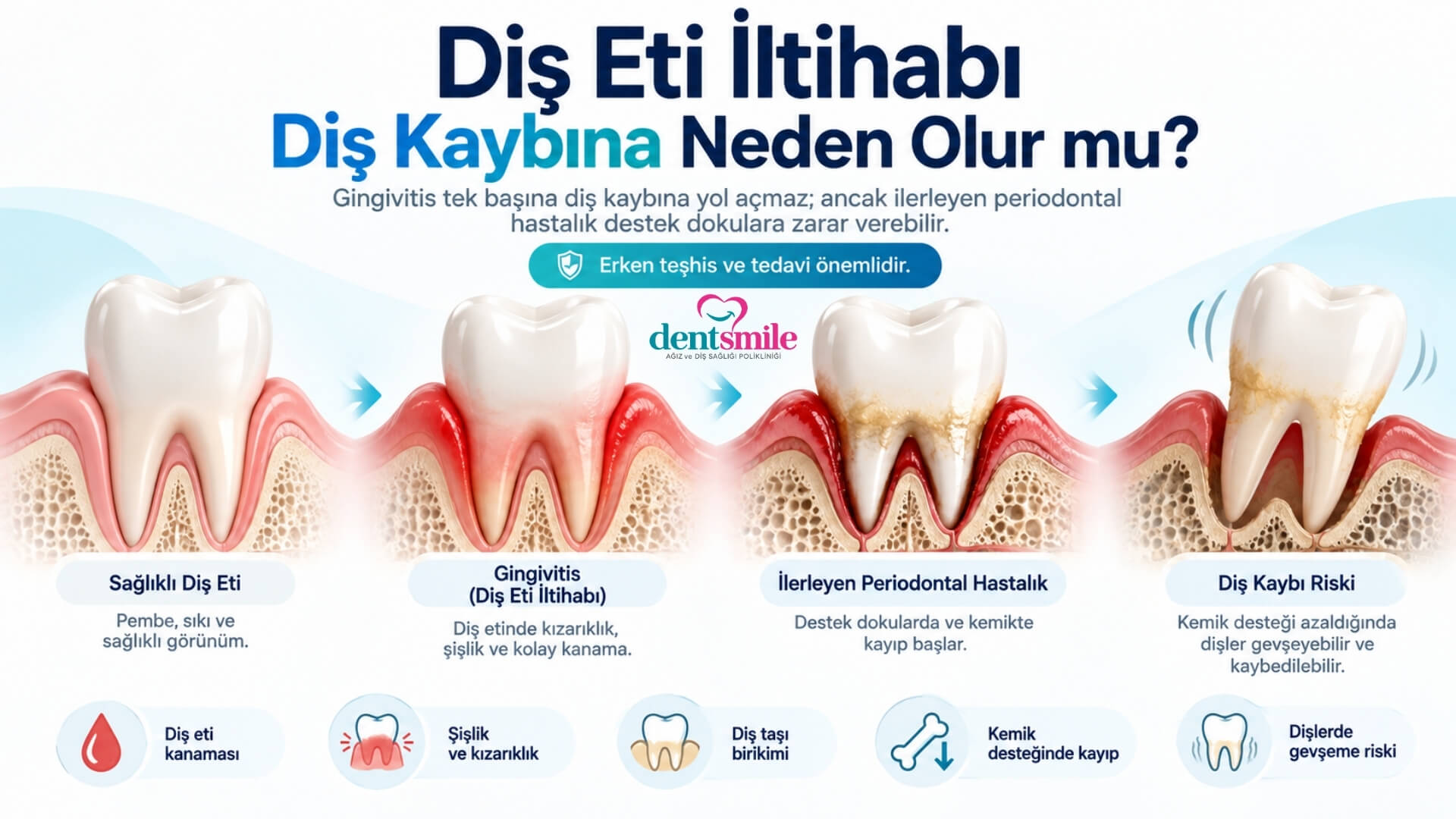
Gingivitis is an early form of gum disease that can cause redness, swelling, and bleeding. It does not directly cause tooth loss because it does not involve destruction of the bone and supporting tissues around the teeth. However, periodontal disease may progress to periodontitis in some patients, potentially leading to bone loss and, in advanced cases, tooth loss.
Can Gingivitis Cause Tooth Loss?
Gingivitis does not directly cause tooth loss. It is an inflammatory condition affecting the gums surrounding the teeth. At this stage, there is no disease-related loss of periodontal attachment or supporting jawbone.
However, persistent gum inflammation should not be ignored. In some patients, periodontal disease may progress to a more serious condition known as periodontitis.
Periodontitis affects the tissues and bone supporting the teeth. As the disease progresses, teeth may become loose, shift position, or eventually be lost.
It is important to understand that not everyone with gingivitis develops periodontitis. Smoking, diabetes, genetic susceptibility, bacterial plaque accumulation, and individual health factors can influence disease progression.
How Does Gingivitis Develop?
The most common cause of gingivitis is the accumulation of bacterial plaque along the gumline.
When plaque is not removed effectively, the body's inflammatory response can cause the gums to become red, swollen, and more likely to bleed.
Common symptoms include bleeding during brushing or flossing, gum tenderness, redness, swelling, and occasionally bad breath.
Because gingivitis often causes little or no pain, many patients underestimate its importance.
What Is the Difference Between Gingivitis and Periodontitis?
The main difference is whether the tissues supporting the teeth have been damaged.
Gingivitis is limited to gum inflammation and does not cause periodontal bone loss. With effective oral hygiene and appropriate professional treatment, it is generally reversible.
Periodontitis, on the other hand, affects the periodontal ligament and supporting bone. It can cause deep periodontal pockets, gum recession, bone loss, and eventually tooth mobility.
Although periodontal treatment can control inflammation and stabilize the disease, previously lost supporting tissues cannot always be fully restored.
Is Bleeding from the Gums a Warning Sign?
Bleeding gums do not automatically mean that tooth loss will occur.
However, frequent bleeding may indicate gum inflammation or an underlying periodontal problem.
If bleeding is accompanied by gum recession, loose teeth, persistent bad breath, or changes in tooth position, a periodontal examination is particularly important.
Smokers should also be aware that gum bleeding may be less noticeable even when periodontal disease is present.
Can Treatment Help Prevent Tooth Loss?
Treating gingivitis early helps restore gum health and reduce the risk of periodontal disease progression.
Treatment generally focuses on controlling bacterial plaque through correct brushing, interdental cleaning, and professional tartar removal when needed.
Patients with periodontitis may require deeper cleaning below the gumline and ongoing periodontal maintenance.
Regular follow-up is particularly important because controlling inflammation does not always reverse existing bone loss.
Gum Disease Treatment in Üsküdar
At Dentsmile Oral and Dental Health Polyclinic in Üsküdar, gum health is evaluated by examining plaque and tartar accumulation, bleeding, periodontal pocket depths, and the condition of the supporting tissues.
Treatment is planned according to whether the patient has gingivitis or periodontitis.
Gingivitis itself does not cause tooth loss, but recognizing and treating periodontal problems early is important for preserving natural teeth.