
Blog
The Importance of Bone and Gum Health in Dental Implant Treatment
Explore the importance of jawbone and gum health in dental implant treatment, including bone loss, peri-implantitis risks, and long-term implant maintenance.
Published:
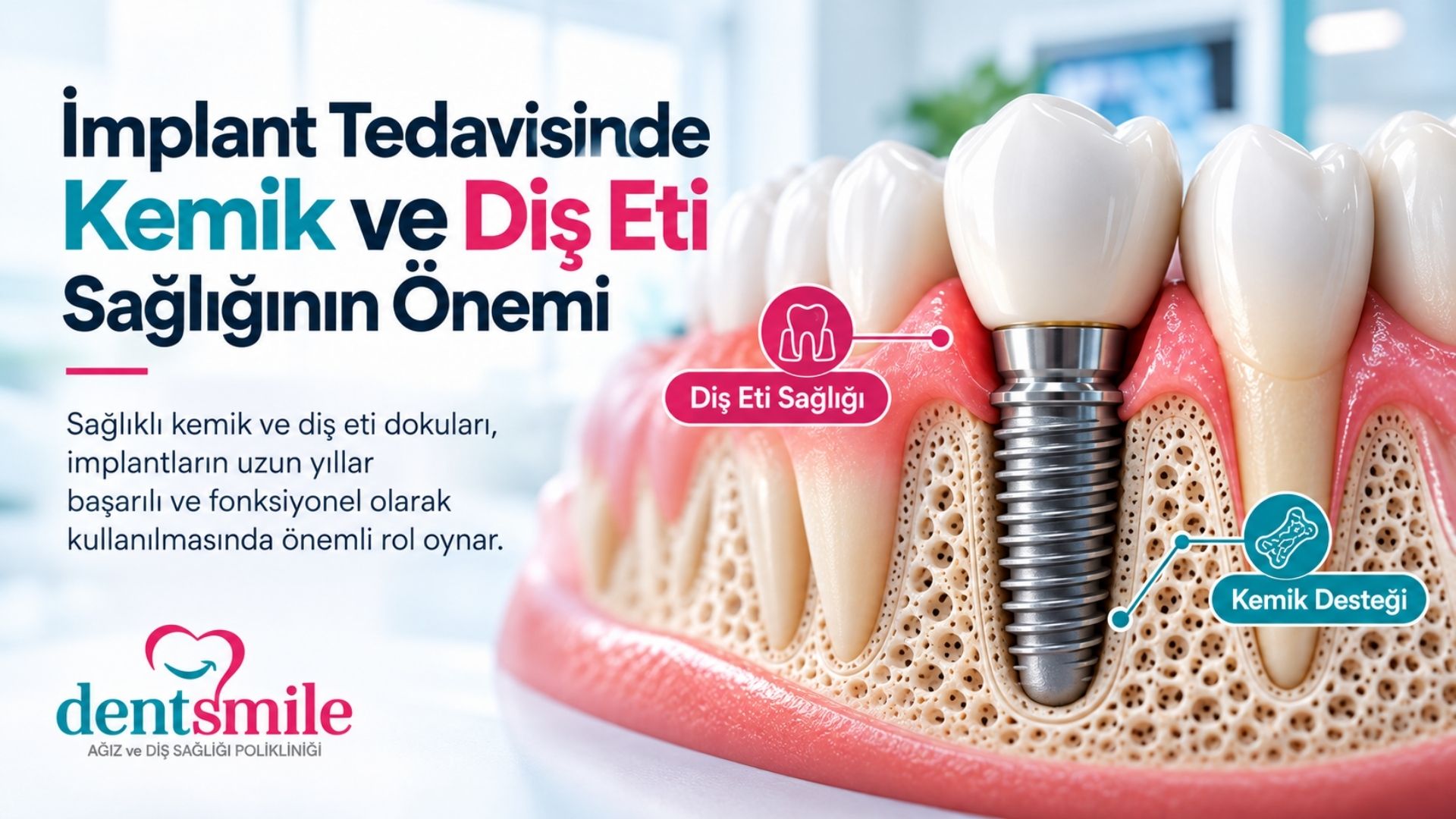
The long-term success of dental implant treatment depends not only on the placement of the implant but also on the health of the surrounding bone and gum tissues. Healthy tissues, careful treatment planning, and regular maintenance help dental implants maintain their function over many years.
Dental implants are among the most widely used treatment options in modern dentistry for restoring the function and aesthetic appearance of missing teeth. However, the success of implant treatment depends on more than the characteristics of the implant itself or the correct execution of the surgical procedure.
The health of the surrounding bone and gum tissues plays an important role throughout the treatment process, from initial planning to long-term maintenance. The development of a stable biological connection between the implant and the bone, the preservation of the surrounding soft tissues, and effective oral hygiene are essential elements of successful treatment.
For this reason, dental implant treatment should not be viewed simply as placing an artificial tooth root into the jawbone. It also involves preparing the biological conditions of the implant site and maintaining these conditions over time.
The Role of Jawbone Health in Dental Implant Treatment
Dental implants are structures placed into the jawbone under suitable conditions to support dental restorations. For an implant to function properly, it must establish a stable biological connection with the surrounding bone.
This process is known as osseointegration. Osseointegration refers to the direct structural and functional connection formed between living bone tissue and the implant surface.
Having sufficient bone volume at the implant site is important for placing the implant in an appropriate position. However, bone quantity alone is not the only consideration. Its anatomical structure, density, existing health, and relationship with surrounding tissues must also be evaluated.
In areas where teeth have been missing for a long time, a reduction in jawbone volume may occur. This is because the bone undergoes gradual remodeling after the loss of a natural tooth.
These changes can make implant placement more challenging for some patients or require additional procedures before treatment.
Changes in Bone Tissue After Tooth Loss
Natural teeth are connected to the jawbone through the periodontal ligament. When a tooth is lost, part of this supporting system also disappears.
Following tooth extraction, the bone undergoes a natural healing and remodeling process. Changes in bone width and height may occur, particularly during the first few months after extraction.
The extent of bone loss varies between patients. Factors such as the reason for extraction, anatomical characteristics of the area, existing infections or periodontal disease, and the patient's general health may influence this process.
Therefore, when planning dental implant treatment, the current condition of the bone at the implant site is just as important as the amount of time that has passed since tooth loss.
Dental Implant Treatment in Patients with Insufficient Bone
Insufficient jawbone volume does not necessarily mean that dental implant treatment is impossible.
In some patients, surgical procedures such as bone grafting and bone regeneration may be used to increase bone volume or create more suitable conditions for implant placement.
In the posterior regions of the upper jaw, the position of the maxillary sinus and the available bone height may require a sinus lift procedure.
However, these procedures are not necessary for every implant patient. The need for bone augmentation depends on the implant location, available bone volume, nearby anatomical structures, and the overall treatment plan.
When clinically indicated, three-dimensional dental imaging, such as cone-beam computed tomography (CBCT), can be used to assess the bone structure and surrounding anatomical features in greater detail.
The primary objective is not simply to place an implant into the bone, but to create conditions that allow the implant and its restoration to function successfully over the long term.
Gum Health Is an Essential Part of Dental Implant Treatment
The health of the gums and surrounding soft tissues is just as important as the condition of the bone in dental implant treatment.
As with natural teeth, a protective soft tissue barrier exists around dental implants, separating the oral environment from the deeper supporting tissues.
Healthy soft tissues help maintain effective plaque control and reduce the risk of inflammation around the implant.
The structure, thickness, amount of keratinized tissue, and mobility of the soft tissues surrounding an implant can vary between patients. The ease with which the implant restoration can be cleaned is also important.
Adequate and healthy soft tissue conditions around an implant may make it easier for patients to maintain their daily oral hygiene.
However, not every patient requires the same amount of gum tissue. Whether soft tissue augmentation or gum grafting is necessary must be determined through clinical evaluation.
The Effect of Gum Disease on Dental Implant Treatment
Gum disease is an important consideration before dental implant placement.
In particular, periodontitis is a chronic inflammatory disease associated with damage to the supporting tissues of the teeth and progressive bone loss.
A history of periodontitis does not automatically prevent a patient from receiving dental implants. However, these patients may have a higher risk of developing peri-implant diseases.
For this reason, active periodontal disease should be treated and inflammation brought under control before implant placement.
Professional periodontal treatment, personalized oral hygiene instruction, and regular follow-up appointments can help establish healthier conditions for implant treatment.
The importance of controlling bacterial plaque does not disappear once an implant has been placed. On the contrary, maintaining good oral hygiene remains essential for the long-term health of dental implants.
Inflammatory Diseases Around Dental Implants
Just as inflammatory conditions can develop around natural teeth, similar problems may affect the tissues surrounding dental implants.
These conditions are generally classified into two main categories.
Peri-Implant Mucositis
Peri-implant mucositis is an inflammatory condition affecting the soft tissues surrounding a dental implant.
Symptoms may include redness, swelling, and bleeding, particularly during clinical examination. At this stage, there is no progressive loss of the supporting bone.
Inflammation may be controlled through improved plaque removal, professional maintenance, and appropriate treatment.
Peri-Implantitis
Peri-implantitis is a more serious inflammatory disease in which inflammation of the soft tissues around the implant is accompanied by progressive loss of supporting bone.
As the disease progresses, the amount of bone supporting the implant may decrease. Some patients experience bleeding, swelling, discharge, or discomfort around the implant.
However, peri-implantitis does not always cause noticeable pain. For this reason, waiting until pain develops before visiting the dentist is not sufficient.
Early diagnosis, regular periodontal assessment, and individualized treatment planning play an important role in preserving the tissues surrounding dental implants.
Factors Affecting the Long-Term Health of Dental Implants
The long-term health of dental implants depends on several factors that must be considered together.
Oral hygiene: Regular removal of bacterial plaque around dental implants is essential for maintaining healthy soft tissues.
Smoking: Smoking may negatively affect wound healing and increase the risk of peri-implant diseases.
Poorly controlled diabetes: Inadequate blood glucose control may affect healing processes and increase susceptibility to infection.
History of periodontal disease: Patients with a history of periodontitis require particular attention to plaque control and regular maintenance.
Teeth grinding and excessive chewing forces: Habits such as bruxism may increase the risk of mechanical complications affecting implant-supported restorations.
Prosthetic design: Implant-supported restorations should be designed to allow effective cleaning of the surrounding tissues.
The presence of these factors does not necessarily mean that implant treatment is unsuitable. However, they should be considered during treatment planning and when determining follow-up intervals.
The Relationship Between Implant-Supported Restorations and Gum Health
The prosthetic phase of implant treatment is just as important as the surgical phase.
The relationship between implant-supported crowns or bridges and the surrounding gum tissues, the creation of areas that can be cleaned effectively, and the appropriate distribution of chewing forces are essential aspects of treatment.
Restorations that make cleaning difficult may encourage bacterial plaque accumulation around implants.
Therefore, implant-supported restorations should be evaluated not only for their aesthetic appearance but also for their ability to support gum health and facilitate daily oral hygiene.
Patients should receive instructions on how to clean around their implants and which products are appropriate for their individual needs. Interdental brushes, specialized dental floss, or other oral hygiene aids may be recommended when suitable.
The Importance of Regular Check-Ups for Bone and Gum Health
Regular dental check-ups remain important after implant treatment has been completed.
During these appointments, the dentist evaluates the surrounding gum tissues, plaque accumulation, signs of bleeding, the condition of the implant-supported restoration, and bone levels when necessary.
Radiographic examinations are not required at every routine appointment. The need for imaging should be determined according to clinical findings and previous records.
The frequency of follow-up appointments should also be based on each patient's individual risk factors.
Patients with a history of periodontal disease, those who smoke, or those who have difficulty maintaining effective plaque control may require more frequent monitoring.
The purpose of regular maintenance is not only to identify existing problems but also to reduce the risk of peri-implant disease and allow early intervention when necessary.
Bone and Gum Assessment for Dental Implant Treatment in Üsküdar
Every patient has a different anatomical structure and oral health condition. Therefore, before selecting the dimensions of an implant or the type of restoration, the biological conditions of the treatment area must be carefully evaluated.
At Dentsmile Oral and Dental Health Polyclinic in Üsküdar, Istanbul, dental implant treatment is planned by considering the existing jawbone structure, gum health, condition of neighboring teeth, and the patient's general health.
When necessary, three-dimensional imaging may be used to examine bone volume and surrounding anatomical structures. In patients with periodontal problems, appropriate treatment may be recommended to improve gum health before implant placement.
The objective is not simply to replace a missing tooth but to preserve the long-term health of the implant together with its surrounding bone and soft tissues.
Healthy Dental Implants Depend on Healthy Supporting Tissues
Dental implants are an important treatment option for restoring the function and appearance of missing teeth when clinical conditions are suitable. However, the long-term presence of an implant in the mouth does not, by itself, represent an ideal treatment outcome.
Preserving the surrounding bone levels, maintaining healthy gum tissues, ensuring proper function of the restoration, and allowing the patient to perform daily oral hygiene effectively are all essential elements of long-term success.
For this reason, successful dental implant treatment requires careful surgical planning, healthy bone and gum tissues, appropriate prosthetic design, and consistent maintenance.
With proper patient selection, individualized treatment planning, and regular long-term follow-up, it is possible to support the health of the tissues surrounding dental implants and identify potential complications at an early stage.