
Blog
Same-Day Dental Crowns with CEREC: Fast and Precise Restorations in Digital Dentistry
Discover same-day dental crowns with CEREC, digital impressions, CAD/CAM technology, and how ceramic dental restorations are designed and manufactured.
Published:
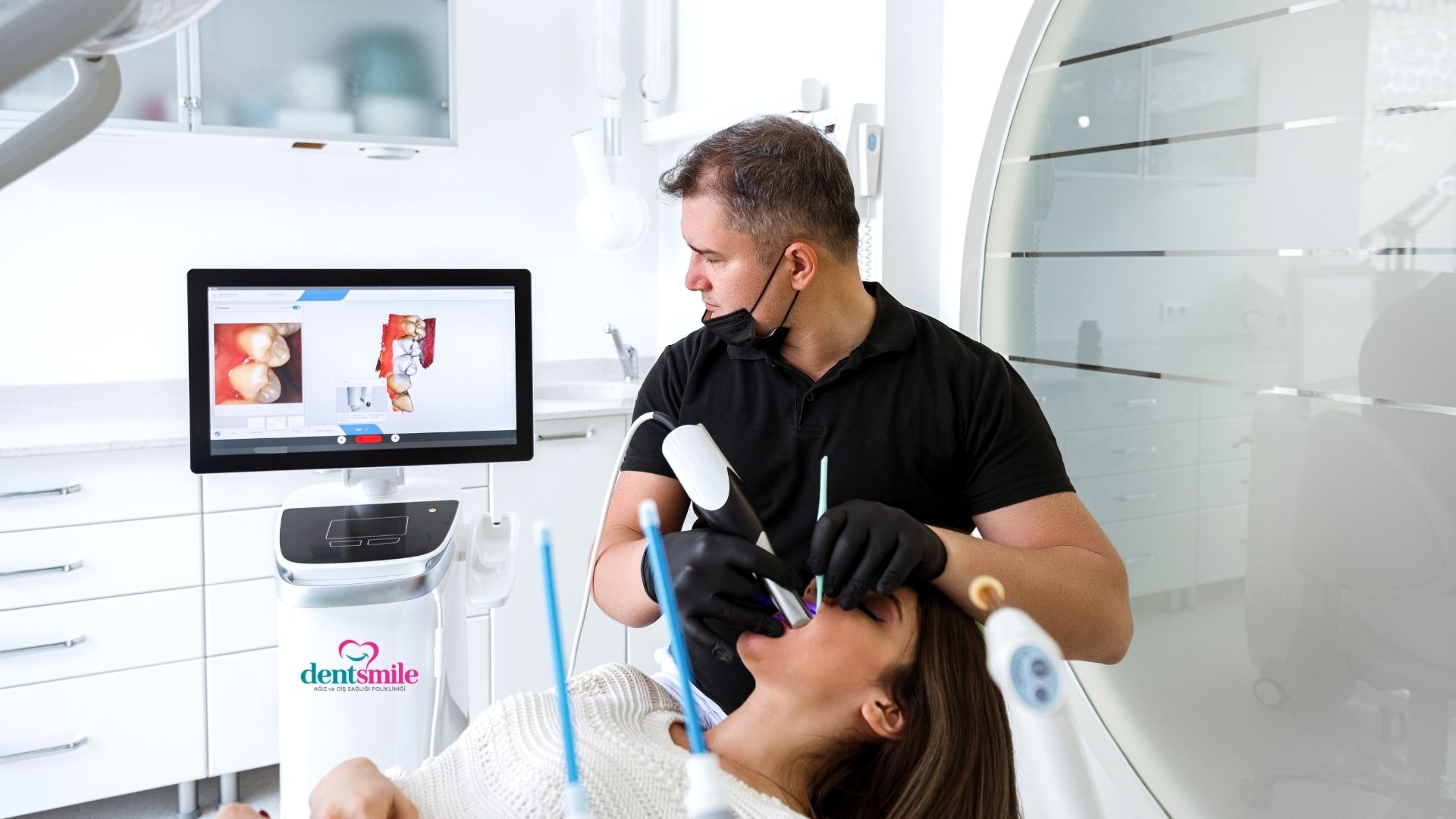
CEREC technology combines digital intraoral scanning, computer-aided design, and ceramic manufacturing systems, allowing dental crowns to be produced in a single appointment for suitable patients. This approach is an important part of modern restorative dentistry, which focuses on preserving natural tooth structure.
Advances in digital technology have transformed many aspects of traditional dental treatment. In particular, digital impression systems and computer-aided manufacturing technologies used in dental crown production have made it possible to complete certain restorations in a shorter period of time.
Traditional dental crown treatments may require multiple appointments due to impression-taking, laboratory procedures, and the manufacturing of the restoration. CEREC technology, on the other hand, allows digital impressions, restoration design, and production to be completed within the same treatment session when clinical conditions are suitable.
However, the purpose of same-day dental crowns is not simply to accelerate treatment. Accurate planning, appropriate material selection, preservation of natural tooth structure, and compatibility with surrounding tissues remain fundamental principles of modern digital dentistry.
CEREC Technology and Digital Dentistry
CEREC is a digital system that enables dental restorations to be designed and manufactured with computer assistance. It is based on CAD/CAM (Computer-Aided Design / Computer-Aided Manufacturing) technology.
CAD refers to computer-aided design, while CAM refers to computer-aided manufacturing.
With this system, digital impressions obtained from the mouth are transferred to specialized software. A three-dimensional restoration is designed by considering the tooth's anatomical characteristics, its relationship with adjacent teeth, and the patient's bite.
The restoration can then be manufactured using an appropriate ceramic material.
CEREC technology is not limited to dental crowns. Depending on the clinical situation and the equipment used, it can also be employed to produce inlays, onlays, and certain other ceramic restorations.
The digital workflow helps integrate several stages of treatment, from impression-taking to final production.
The Same-Day Dental Crown Procedure
Same-day dental crown treatment with CEREC involves several interconnected stages.
Clinical Examination of the Tooth
Before treatment begins, the existing condition of the tooth is carefully examined.
The dentist evaluates dental decay, fractures, tooth wear, existing restorations, gum health, and bite relationships. Radiographic examinations may be performed when necessary.
At this stage, the dentist determines not only whether the patient wants a crown but also whether the tooth genuinely requires a full-coverage restoration.
In some cases, where sufficient healthy tooth structure remains, more conservative alternatives such as composite fillings, inlays, or onlays may be preferable.
Preparing the Tooth for Restoration
When a dental crown is considered necessary, the tooth is prepared according to the requirements of the selected restorative material.
During this procedure, the objective is to create sufficient space for the restoration while preserving as much healthy natural tooth structure as possible.
The amount of existing tooth damage, the type of restoration, and the characteristics of the ceramic material influence the extent of tooth preparation.
Digital Intraoral Scanning
After the tooth has been prepared, a digital impression is obtained using an intraoral scanner.
The scanner collects information from the tooth surfaces and helps create a three-dimensional model within the software.
In suitable cases, this technique provides an alternative to conventional impression trays and impression materials.
Digital scanning may be more comfortable for patients who experience discomfort or a gag reflex during traditional impression procedures.
However, the accuracy of digital impressions can be influenced by factors such as visibility of the preparation margins, gum conditions, moisture control, and scanning technique.
Computer-Aided Crown Design
Once the digital scan is completed, the restoration is designed using specialized software.
The natural anatomy of the tooth, contact points with neighboring teeth, bite relationships with opposing teeth, and the required material thickness are all taken into consideration.
The objective is not simply to create a restoration that fits the prepared tooth.
The crown must also support chewing function, remain compatible with surrounding tissues, and provide an aesthetic appearance that harmonizes with the natural teeth.
Manufacturing the Ceramic Crown
After the digital design is completed, the selected ceramic block is processed in a computer-controlled milling unit to manufacture the restoration.
Depending on the material, additional procedures such as crystallization, sintering, staining, or polishing may be necessary after milling.
These procedures are important for achieving the required mechanical and aesthetic properties of the restoration.
Checking and Placing the Crown
The completed restoration is checked inside the patient's mouth.
The dentist evaluates the crown's fit, contact points with adjacent teeth, bite relationships, and aesthetic characteristics.
Once any necessary adjustments have been completed, the restoration is permanently fixed to the tooth using a bonding or cementation technique appropriate for the material and clinical conditions.
All of these stages may be completed on the same day in suitable cases. However, not every patient or restoration is appropriate for a single-appointment procedure.
Ceramic Materials Used in CEREC Technology
The materials used in digital dental crown treatment are selected according to the location of the restoration and the patient's clinical requirements.
Glass ceramics may be preferred for suitable restorations, particularly because of their aesthetic properties. Lithium disilicate-based ceramics are among the materials used for certain crowns, inlays, and onlays.
Zirconium dioxide-based ceramics offer additional options with different mechanical and optical characteristics. They can be manufactured using digital systems when the necessary equipment and production processes are available.
However, each material has different manufacturing and finishing requirements. Therefore, not every ceramic restoration can be completed within the same amount of time.
The appropriate material should be selected according to aesthetic expectations, tooth location, chewing forces, and the amount of remaining healthy tooth structure.
Differences Between Digital and Traditional Dental Crown Methods
In traditional dental crown treatment, an impression is usually taken after the tooth has been prepared, and the restoration is manufactured in a dental laboratory.
Some patients may require a temporary crown until the laboratory work is completed.
With chairside digital manufacturing systems such as CEREC, the design and production of suitable restorations can be completed within the same clinical workflow.
This may reduce the number of appointments required for certain patients and eliminate the need for a temporary restoration in selected cases.
The ability to store digital impressions, examine restoration designs in three dimensions, and make specific adjustments within the software are additional advantages of digital systems.
However, conventional laboratory techniques remain an important part of modern dentistry.
For extensive aesthetic rehabilitation, complex bite problems, or restorations requiring specialized laboratory procedures, alternative manufacturing methods may be more appropriate.
Therefore, digital and traditional techniques should not be viewed as universally competing methods, but as different approaches selected according to clinical needs.
Inlay and Onlay Restorations with CEREC
One of the important applications of digital restorative dentistry is the production of inlay and onlay restorations.
These restorations may be considered when tooth structure loss is too extensive for a direct filling but does not necessarily require a full crown.
Inlays generally restore areas between the cusps on the chewing surface of a tooth.
Onlays cover a larger portion of the tooth and may include one or more cusps when necessary.
With CEREC technology, these restorations can be digitally designed and manufactured in suitable cases.
From the perspective of preserving natural tooth structure, it is important to evaluate whether a more limited restoration can provide sufficient protection instead of placing a full crown.
How Same-Day Dental Crowns Contribute to Patient Comfort
One of the main advantages of digital dentistry for patients is the possibility of completing suitable treatments with fewer appointments.
This can be particularly convenient for people with demanding work schedules or patients traveling from other cities for dental treatment.
Digital impressions may also improve the treatment experience of patients who find traditional impression materials uncomfortable.
In certain cases, the final restoration can be placed without requiring a temporary crown.
However, patient comfort involves more than reducing treatment time.
Careful treatment planning, preservation of healthy tissues, accurate crown placement, and the ability to chew comfortably after treatment are equally important.
Are Same-Day CEREC Crowns Suitable for Every Patient?
Although CEREC technology can be used for many restorative procedures, the same treatment approach is not appropriate for every patient.
For example, patients with active gum disease, teeth requiring additional treatment before restoration, or extensive prosthetic rehabilitation needs may require multiple appointments.
The condition of the tooth roots, the depth of existing decay or fractures, the remaining healthy tooth structure, and bite relationships must also be evaluated.
Some teeth may require root canal treatment or periodontal therapy before crown preparation can begin.
Therefore, the decision to provide a same-day dental crown should not be based solely on the availability of digital technology.
The biological health of the tooth and the suitability of the final restoration must always remain the priority.
Maintaining the Long-Term Health of Digital Dental Crowns
The long-term performance of a dental crown manufactured using CEREC does not depend solely on the fact that digital technology was used.
The design of the restoration, material properties, marginal fit, bonding procedure, oral hygiene habits, and chewing forces may all influence the outcome.
A tooth restored with a crown is not completely protected against future decay. New cavities may develop in the natural tooth structure near the crown margins if bacterial plaque is not adequately controlled.
For this reason, regular toothbrushing, interdental cleaning, and attending dental check-ups at individually recommended intervals remain important.
Additional protective measures may also be considered for patients who grind or clench their teeth.
Same-Day Dental Crowns with CEREC in Üsküdar, Istanbul
At Dentsmile Oral and Dental Health Polyclinic in Üsküdar, Istanbul, the digital restorative dentistry approach emphasizes preserving natural tooth structure while considering each patient's aesthetic and functional requirements.
CEREC technology may be used in suitable cases to evaluate same-day dental crown options through digital impressions, computer-aided restoration design, and ceramic manufacturing processes.
Before treatment, the existing condition of the tooth, the amount of remaining healthy structure, gum health, bite relationships, and the requirements of the planned restoration are carefully assessed.
The objective is not simply to complete dental treatment in a shorter time, but to create a restoration suitable for long-term use while preserving as much natural tooth structure as possible.
The Future of Digital Restorative Dentistry
The development of digital technologies in modern dentistry has not only made it possible to complete certain treatments more quickly but has also created a more integrated approach to restoration planning and manufacturing.
Intraoral scanners, computer-aided design software, and ceramic manufacturing systems provide important opportunities for producing personalized dental restorations.
However, digital technology alone does not guarantee a successful treatment outcome.
The fundamental goal of modern dentistry is to use technology while preserving natural tooth structure, selecting the appropriate treatment method, and maintaining the long-term compatibility of restorations with oral health.
Same-day dental crowns with CEREC represent an important example of this approach. Under suitable clinical conditions, digital planning and ceramic manufacturing can be combined to produce aesthetic and functional restorations within a shorter treatment period.