
Blog
Natural Smile Aesthetics in Cosmetic Dentistry: Veneers, Zirconia, E-max and Composite Bonding
Explore natural smile aesthetics, porcelain veneers, zirconia crowns, E-max and composite bonding at Dentsmile in Üsküdar, Istanbul
Published:
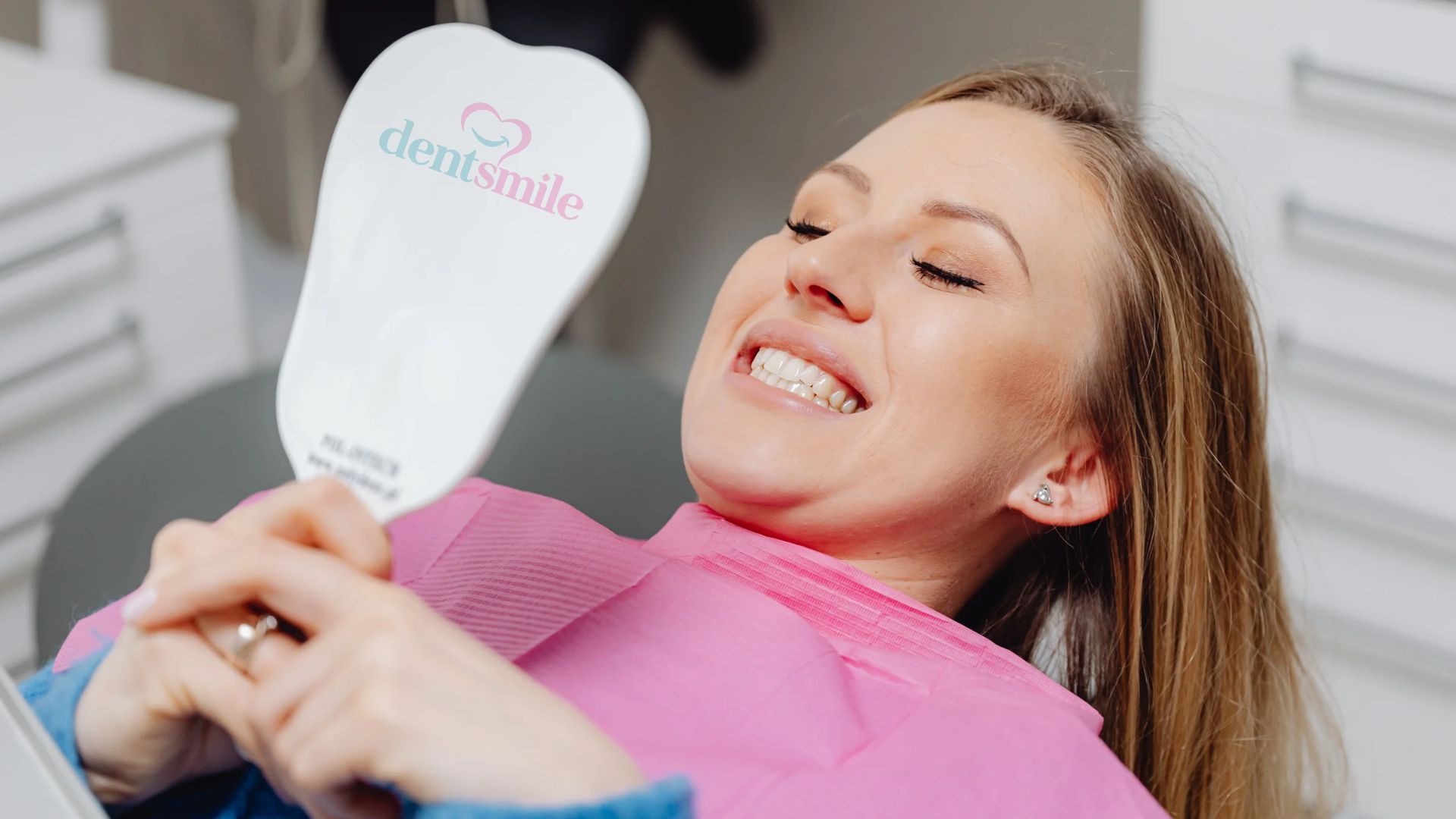
Achieving a natural-looking smile in cosmetic dentistry involves much more than whitening teeth or changing their shapes. Tooth proportions, facial harmony, alignment, translucency, gum levels, and chewing function must all be evaluated together. Porcelain veneers, zirconia crowns, E-max restorations, and composite bonding are treatment options used to address different aesthetic and functional needs. Each method has its own indications, material characteristics, and requirements for tooth preparation. The fundamental approach to natural smile aesthetics is to preserve as much healthy tooth structure as possible while achieving results that complement the patient's facial features, support oral health, and remain sustainable over the long term.
Cosmetic dentistry has developed considerably in recent years thanks to advances in ceramic materials, digital impression systems, and restorative techniques. However, successful aesthetic treatment does not necessarily mean making teeth as white as possible or giving every tooth exactly the same appearance. A natural smile may include subtle variations between teeth, different ways of reflecting light, and an overall appearance that harmonizes with the face.
When evaluating a patient's smile, it is not enough to examine only the color of the front teeth. Tooth length and width, gum contours, lip movements, jaw relationships, and the condition of existing tooth structures must also be considered during treatment planning. For some patients, a small composite bonding procedure may be sufficient, while others may require porcelain veneers or full ceramic crowns.
The choice of restorative material is particularly important in the front tooth region, where aesthetic expectations are often high. Porcelain veneers, zirconia, E-max, and composite bonding are not interchangeable procedures. Each can offer advantages under different clinical conditions, and the most suitable option varies from patient to patient.
What Is Natural Smile Aesthetics?
Natural smile aesthetics is an approach that aims to create a healthy, balanced appearance in which the teeth harmonize with the patient's individual facial features.
In smile aesthetics, tooth shape, surface texture, and interaction with light are just as important as tooth color. Natural teeth are not uniformly colored or completely opaque structures. The different optical properties of enamel and dentin give teeth their depth and vitality.
For this reason, simply selecting a very light shade for an aesthetic restoration does not always produce a natural result. The restoration's compatibility with neighboring teeth, its translucency, and its surface characteristics must also be evaluated.
Tooth dimensions and proportions also influence the overall appearance of the smile. The length of the front teeth, their relationship with the lateral incisors, the position of the canine teeth, and the visibility of the gums should be considered together.
In some people, slight asymmetries are part of a natural appearance. Preparing every tooth with exactly the same length and shape is therefore not always the most appropriate aesthetic approach.
The objective of successful smile design is to create a healthier and more balanced appearance while preserving characteristics that resemble the patient's own natural teeth.
How Is the Appropriate Cosmetic Dental Treatment Selected?
Before beginning aesthetic dental treatment, the existing condition of the teeth must be evaluated carefully.
The dentist examines whether the teeth have cavities, old fillings, fractures, wear, or discoloration. Gum health, bite relationships, and teeth-clenching habits can also influence the available treatment options.
For example, composite bonding may be considered for a patient who is concerned only about a small gap between the front teeth. Conversely, a tooth with extensive existing restorations and significant structural loss may require a full crown.
Porcelain veneers may be appropriate when the teeth are generally healthy but certain changes in their shape or color are desired. More extensive restorative needs may call for ceramic systems such as E-max or zirconia.
The important principle is to avoid removing more natural tooth structure than necessary to achieve the patient's aesthetic goals.
The right cosmetic dental treatment is not simply one that looks attractive. It should also preserve natural tooth structure as much as possible and remain compatible with long-term oral health.
What Are Porcelain Veneers and When Are They Used?
Porcelain veneers are thin ceramic restorations that are generally bonded to the front surfaces of teeth. They are commonly considered for improving the aesthetic appearance of the anterior teeth.
Porcelain veneers may be used to manage certain types of discoloration, modify tooth shape, close small spaces, and correct particular surface irregularities.
Instead of covering the entire tooth, a veneer is prepared mainly for its front surface. In suitable patients, this can provide a more conservative approach than a full crown.
However, it should not be assumed that porcelain veneers can always be applied without removing any tooth structure. Depending on tooth position, existing enamel, underlying tooth color, and the intended result, some preparation may be required.
Preserving enamel is particularly important for achieving reliable bonding of ceramic veneers to the tooth. The existing tooth structure must therefore be carefully evaluated during planning.
In patients with severe dental crowding or unfavorable bite relationships, orthodontic treatment may be a more appropriate first step than immediately placing veneers.
The natural appearance of porcelain veneers does not depend solely on the thinness of the ceramic. Tooth shade, ceramic thickness, bonding material, and surface characteristics all contribute to the final result.
What Are Zirconia Dental Crowns?
Zirconia crowns are dental restorations manufactured using zirconium dioxide-based ceramic materials.
Zirconia belongs to a group of all-ceramic restorative systems that do not require a metal substructure. Different types of zirconia are available, with varying strength and translucency properties.
These characteristics allow zirconia to be used in both anterior and posterior teeth, depending on the patient's clinical needs.
Zirconia systems may be considered for restoring teeth with substantial structural loss, manufacturing certain dental bridges, and creating suitable implant-supported restorations.
Nevertheless, not all zirconia crowns have the same aesthetic and mechanical properties. Material composition, manufacturing method, restoration thickness, and design all influence the result.
Some zirconia materials traditionally selected for high-strength restorations can have a more opaque appearance. Modern high-translucency zirconia systems may offer more suitable options for certain aesthetic requirements.
However, greater translucency does not always come with greater mechanical strength. The technical characteristics of the specific zirconia material must therefore be considered during selection.
Planning a zirconia crown requires an evaluation not only of the tooth's appearance but also of chewing forces, remaining tooth structure, and relationships with adjacent teeth.
What Are E-max Dental Restorations?
E-max is an all-ceramic restorative system used in aesthetic dentistry. Products such as IPS e.max CAD and IPS e.max Press are manufactured from lithium disilicate-based glass ceramics.
One of the important characteristics of lithium disilicate ceramics is their ability to provide optical translucency that can resemble the natural appearance of teeth.
E-max restorations may therefore be preferred in selected patients with high aesthetic expectations, particularly in the anterior region.
E-max is not used exclusively for full dental crowns. Under suitable clinical conditions, it can also be used to fabricate porcelain veneers, inlays, onlays, and partial crowns.
The remaining tooth structure, required restoration thickness, and chewing forces in the treatment area determine whether E-max is an appropriate option.
It is important to remember that E-max refers to a particular all-ceramic system and that commonly used lithium disilicate restorations include specific products within this system.
It would also be incorrect to state that E-max is always more aesthetic or more suitable than zirconia. Material selection should depend on the location of the tooth and the specific requirements of treatment.
What Is Composite Bonding and How Is It Performed?
Composite bonding is a restorative dental procedure in which tooth-colored composite resin materials are bonded to the tooth surface and shaped to achieve the desired result.
It may be used to repair small tooth fractures, close limited spaces between teeth, reshape tooth edges, and correct certain irregularities in tooth form.
One of the important advantages of composite bonding is that, in suitable cases, it can be performed with minimal or no removal of natural tooth structure.
During treatment, the tooth surface is prepared, appropriate adhesive procedures are performed, and the composite material is applied and carefully shaped. The material is then light-cured, and the restoration is finished and polished.
For some patients, bonding can be completed in a single appointment.
The possibility of repairing composite restorations when necessary can also be an advantage in certain clinical situations.
However, not every bonding procedure is completely reversible. The preparation performed on the tooth surface and the existing clinical condition influence whether the procedure can be reversed without lasting changes.
Composite restorations may also develop staining, surface wear, or minor fractures over time. Long-term maintenance and the possible need for polishing or repairs should therefore be considered.
Differences Between Veneers, Zirconia, E-max and Bonding
Although these four options play important roles in cosmetic dentistry, they are not simply different names for the same treatment.
A porcelain veneer is primarily a restoration design applied to the front surface of a tooth. Zirconia and lithium disilicate-based E-max are ceramic material systems that can be used to manufacture different types of restorations. Bonding, on the other hand, usually refers to a technique in which composite resin is applied directly to the tooth.
Therefore, choosing between a veneer and E-max is not always an either-or decision. A suitable porcelain veneer can itself be manufactured from lithium disilicate ceramic.
Composite bonding can be a more conservative option for limited changes in tooth shape and small restorative needs. Porcelain veneers may be considered for more extensive surface aesthetics in anterior teeth with sufficient enamel.
For teeth requiring full crowns, a suitable material may be selected from options such as E-max and zirconia.
This decision is influenced by the amount of remaining tooth structure, the location of any fracture, previous root canal treatment, and the chewing forces expected to act on the restoration.
These materials should therefore not be compared solely according to their appearance or popularity.
The correct approach is to first determine which type of restoration the tooth needs and then select an appropriate material for that restoration.
Do Teeth Need to Be Reduced for Cosmetic Dental Treatments?
One of the most common concerns among patients considering cosmetic dentistry is how much healthy tooth structure will need to be removed.
There is no single answer that applies to every procedure.
Composite bonding can be performed with very little intervention to the tooth in suitable cases. Porcelain veneers may require some preparation of the front tooth surface, depending on tooth position and the desired aesthetic result.
Full crown restorations generally require more extensive tooth preparation because the restoration is designed to surround the tooth.
However, the necessary amount of tooth reduction varies according to the ceramic material and the tooth's existing condition.
Insufficient restoration thickness may compromise the mechanical properties of the material, while unnecessary removal of tooth structure may negatively affect long-term tooth health.
The amount of preparation must therefore balance the technical requirements of the restoration with the principle of preserving healthy tooth structure.
Particularly for healthy anterior teeth, the decision to place full crowns solely to achieve a lighter color or a different appearance should be considered carefully.
Digital Smile Design and Treatment Planning
Digital dentistry provides important tools that can support the planning of aesthetic dental treatments.
Intraoral digital scanners can create three-dimensional models of teeth. Along with clinical photographs and other records when required, these models allow the dentist to evaluate tooth dimensions, relationships between teeth, and the smile line.
Using these data, the shape of the planned restorations and their overall appearance can be studied before treatment.
In some cases, preliminary designs prepared using digital or physical models can help patients better understand the appearance being targeted.
However, images produced during digital smile design should not be regarded as guarantees of the final treatment result.
Gum levels, the characteristics of natural tooth tissues, existing color differences, and manufacturing limitations can all influence the eventual appearance.
In successful smile design, digital technologies are tools that support clinical examination and professional judgment rather than replace them.
Why Is a Natural Tooth Shade Important?
Selecting the appropriate shade during aesthetic treatment requires balancing the patient's expectations with the appearance of natural teeth.
Preparing teeth in an extremely light shade does not always create a more attractive result.
Natural teeth do not have exactly the same color intensity in every region. Translucency may be more noticeable near the incisal edges, while the middle portion of the tooth may exhibit greater color depth.
Ceramic and porcelain restorations aim to reproduce these features through appropriate material selection and surface characterization.
Factors such as skin tone, lip shape, the appearance of adjacent teeth, and personal preferences may be considered during shade selection.
The color of natural teeth that will not receive restorations is also important.
Where appropriate, more conservative procedures such as tooth whitening may be considered, potentially changing the need for more extensive restorative treatment.
However, whitening does not change the color of existing porcelain or composite restorations in the same way as natural teeth. Shade planning is therefore important from the beginning of treatment.
The Relationship Between Gum Aesthetics and a Natural Smile
In a natural-looking smile, the appearance of the gums is important alongside the teeth.
The position of the gum margins can influence the visible length and proportions of the teeth.
In some patients, differences in gum levels may make the teeth appear uneven in shape even when the underlying tooth dimensions are relatively similar.
However, the cause of these differences should be assessed before performing any gum-contouring procedure.
Gum recession, periodontal disease, tooth eruption patterns, and anatomical variations can all affect gum appearance.
When necessary, periodontal treatment, gum contouring, or crown lengthening procedures may be considered.
Nevertheless, not every aesthetic difference requires surgical intervention. Treatment must be planned within the biological limits of the tissues supporting the teeth.
Maintaining healthy gums during aesthetic restorative treatment is essential for both natural appearance and long-term clinical success.
Can Teeth Grinding and Bite Problems Affect Cosmetic Restorations?
When planning cosmetic dental restorations, the forces acting on the teeth must be considered.
In patients who clench or grind their teeth, the risk of wear, cracks, or fractures may increase in restorations as well as natural teeth.
For this reason, treatment planning in patients with significant signs of bruxism should not be based solely on aesthetic expectations.
Tooth contacts during biting, jaw movements, and existing wear patterns should be examined.
Protective approaches, such as night guards, may be considered for selected patients. However, using these appliances does not necessarily eliminate teeth-clenching activity completely.
Similarly, for patients with significant dental crowding or bite problems, orthodontic treatment may offer a more conservative first step than immediately changing the appearance of teeth with crowns.
The long-term success of cosmetic treatment depends on considering dental function as well as appearance.
How Long Do Veneers, Zirconia, E-max and Bonding Last?
No restorative material used in cosmetic dentistry can be guaranteed to remain problem-free for a lifetime in every patient.
The long-term performance of restorations depends on the material's characteristics, the technique used, the existing tooth structure, and the patient's oral care habits.
For porcelain veneers, the bonding surface, ceramic thickness, and bite relationships are important. With zirconia and E-max crowns, restoration design, marginal fit, material properties, and chewing forces affect the outcome.
Composite bonding restorations may develop staining, wear, or small fractures over time. However, the repairability of certain composite restorations is an important advantage.
The possibility of tooth decay beneath a restoration or around its margins is not completely eliminated by cosmetic treatment.
Regular toothbrushing, interdental cleaning, attending recommended dental appointments, and managing habits that may place excessive stress on restorations are therefore important.
The lifespan of a restoration is not determined solely by the material's brand or strength. Appropriate treatment planning and long-term care also influence the outcome.
What Should Patients Consider After Cosmetic Dental Treatment?
Daily oral hygiene habits should be maintained after cosmetic dental treatment.
Having porcelain, zirconia, E-max, or composite restorations does not mean that the surrounding tissues no longer require care.
Keeping gum margins clean is particularly important for reducing bacterial plaque accumulation around restorations.
Biting hard objects, using teeth to open packaging, or uncontrolled teeth clenching may contribute to mechanical problems.
Composite bonding restorations may require polishing or minor repairs over time.
With ceramic restorations, the relationship with the gums, marginal integrity, and bite contacts should be checked regularly.
If cracks, fractures, sensitivity, mobility, or noticeable changes around the gums develop, the restoration should be assessed by a dentist.
Cosmetic Dentistry and Natural Smile Design in Üsküdar
At Dentsmile Oral and Dental Health Polyclinic in Üsküdar, Istanbul, aesthetic dental treatment options are evaluated by considering the patient's natural tooth structure, gum health, aesthetic expectations, and chewing function together.
Porcelain veneers, zirconia crowns, E-max restorations, and composite bonding are considered according to each patient's clinical circumstances.
For some patients, correcting small irregularities in tooth shape may be sufficient. Others may require more extensive restorative treatment.
The priority in treatment planning is to preserve healthy tooth structure wherever possible and ensure that restorations harmonize with neighboring teeth and gum tissues.
Particularly in the front tooth region, tooth color, form, proportions, and translucency are assessed together to achieve a natural appearance.
Patients considering cosmetic dentistry in Üsküdar or elsewhere in Istanbul require a detailed dental examination and individualized treatment planning to determine whether veneers, zirconia, E-max, or bonding are most appropriate.
The Right Approach to Natural Smile Aesthetics
A successful result in cosmetic dentistry involves more than making teeth appear whiter or straighter. A healthy smile requires an evaluation of natural tooth anatomy, the relationship with surrounding tissues, and chewing function.
Porcelain veneers, E-max restorations, zirconia crowns, and composite bonding offer different options for different clinical needs. Their suitability depends on the existing tooth structure and the treatment objectives.
For some patients, a small composite restoration may be the most appropriate solution. Others may require a ceramic restoration. When tooth position is the main concern, orthodontic treatment may provide a better starting point.
The fundamental question in smile aesthetics is therefore not which material is more popular or produces the whitest teeth, but which treatment can provide a suitable aesthetic and functional outcome while preserving the patient's natural teeth.
A natural smile is not achieved by making every tooth look identical. It is created by preserving a healthy, individualized appearance in which the teeth, gums, and face harmonize with one another.