Blog
E-max Dental Restorations: Lithium Disilicate Ceramic Technology for Natural-Looking Teeth
Learn about E-max dental crowns, lithium disilicate ceramics, natural-looking tooth aesthetics, and treatment stages at Dentsmile in Üsküdar, Istanbul.
Published:
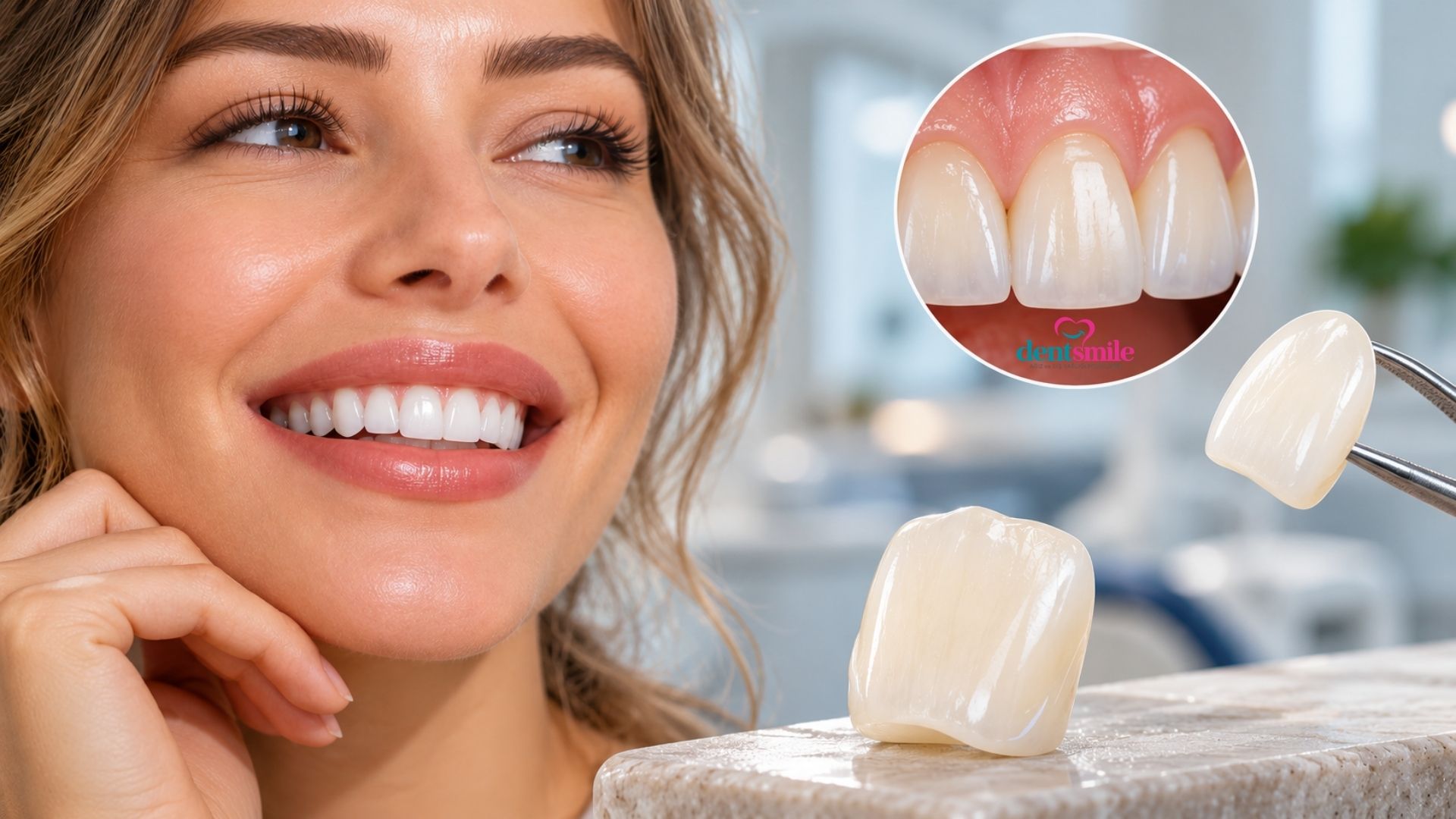
E-max dental crowns are restorations manufactured from lithium disilicate-based glass ceramics that can closely reproduce the translucency and aesthetic characteristics of natural teeth. Particularly suitable for certain cases requiring high aesthetic standards in the front teeth, these restorations are among the modern dental treatment options that aim to preserve as much natural tooth structure as possible.
Materials used in dental crown treatments have developed significantly in recent years, both aesthetically and mechanically. Alongside traditional porcelain-fused-to-metal crowns, all-ceramic systems that do not require a metal framework are increasingly used. Among these materials, E-max occupies an important place in aesthetic dentistry because of its ability to reproduce the color depth and interaction with light seen in natural teeth.
However, successful E-max crown treatment involves more than simply creating white, evenly shaped teeth. Evaluating the existing tooth structure, preserving healthy tissues, determining the appropriate material thickness, and considering bite relationships are essential for the long-term success of treatment.
What Is an E-max Dental Crown?
E-max is a brand name referring to specific all-ceramic restorative systems used in dentistry. IPS e.max CAD and IPS e.max Press, commonly used in aesthetic dental restorations, are manufactured from lithium disilicate-based glass ceramics.
Lithium disilicate ceramics are materials that can be used in different restorative treatments because of their aesthetic characteristics and mechanical properties.
One of their most notable features is their ability to transmit light in a way that can resemble natural tooth structure. In natural teeth, enamel and dentin have different optical properties, preventing teeth from appearing completely opaque or uniform in color. With appropriate shade selection, thickness, and surface characteristics, E-max materials can help reproduce this natural appearance.
E-max restorations are not limited to full dental crowns. Under suitable clinical conditions, they may also be used for porcelain veneers, inlays, onlays, and partial crowns.
However, E-max should not be regarded as the most appropriate treatment option in every situation. Material selection must consider tooth position, the amount of existing structural damage, bite relationships, and the patient's habits.
How E-max Crowns Contribute to a Natural Tooth Appearance
The objective of aesthetic dentistry is not merely to produce straight, white teeth. In a healthy-looking smile, tooth dimensions, anatomical characteristics, translucency, and harmony with surrounding tissues must be evaluated together.
One of the aesthetic advantages of E-max crowns is their potential to create an appearance that resembles the way natural tooth enamel interacts with light.
Particularly in the anterior region, light transmission through the restorative material is as important as light reflection from its surface. A highly opaque restoration may appear different from natural teeth even when its shape and color have been carefully selected.
Lithium disilicate-based ceramics are available in different shades and translucency levels. This allows the existing tooth color, the appearance of neighboring teeth, and the intended aesthetic result to be considered together when selecting the material.
However, the final appearance depends on more than the ceramic itself. The underlying tooth color, restoration thickness, properties of the bonding material, and surface characterization performed by the dental technician may all affect the outcome.
A natural-looking E-max crown should be evaluated not simply by its whiteness, but by how well its color, shape, and optical properties harmonize with the surrounding teeth.
Differences Between E-max and Zirconia Crowns
E-max and zirconia are two important ceramic restorative options used in modern dentistry. However, they differ in composition and clinical characteristics.
Lithium disilicate glass ceramic, commonly used in E-max restorations, may be preferred for aesthetic treatments because of its optical properties.
Zirconia crowns are manufactured from zirconium dioxide-based ceramics. Zirconia materials are available in different formulations with varying strength and translucency.
It would therefore be inaccurate to claim that E-max is always more aesthetic or that zirconia is always stronger in every clinical situation. The specific material, restoration design, and clinical conditions determine the result.
Lithium disilicate ceramics may offer advantages for front teeth when aesthetic expectations are high and the remaining tooth structure is suitable.
By contrast, an appropriate zirconia material may be preferred for certain posterior restorations, situations with greater mechanical requirements, or other prosthetic applications.
The most appropriate choice must be based not only on the patient's aesthetic expectations but also on the tooth's current condition and the functional requirements of treatment.
When Can E-max Dental Crowns Be Used?
E-max crowns can be considered in various restorative treatments intended to restore the natural appearance and function of teeth.
When front teeth have extensive restorations, fractures, significant shape irregularities, or discoloration, E-max crowns may be an option if the existing tooth structure is suitable.
The material may also be used to replace certain older crowns that no longer provide satisfactory aesthetic or functional results.
Teeth with substantial structural loss may require full crowns. However, when sufficient healthy tooth structure remains, a more limited restoration may be preferable.
For example, porcelain veneers may be considered for patients whose aesthetic concerns are limited to particular surfaces of the front teeth. Inlays or onlays may be appropriate for certain localized structural defects in posterior teeth.
The primary objective is to achieve the necessary aesthetic and functional outcome without removing healthy tooth structure unnecessarily.
How Is E-max Crown Treatment Planned?
The first stage of E-max crown treatment involves a detailed examination of the mouth and teeth.
The dentist evaluates the existing structure of the tooth, previous restorations, the presence of decay or fractures, gum health, and bite relationships. Radiographic examinations may also be used when necessary.
Treatment planning begins by determining whether the tooth genuinely requires a full crown. Not every patient seeking an aesthetic improvement needs the entire circumference of a tooth to be prepared.
When crown treatment is indicated, the tooth is prepared according to the requirements of the selected ceramic material. During this stage, the dentist aims to preserve as much healthy tooth structure as possible.
An impression of the prepared tooth can be obtained using conventional impression materials or, where appropriate, an intraoral digital scanner.
The anatomical shape of the restoration, contact points with neighboring teeth, occlusal surfaces, and aesthetic characteristics are then planned using the collected information.
The E-max restoration is subsequently manufactured using the selected production method. In the CAD/CAM process, a ceramic block is milled using computer-aided equipment, while the pressing technique involves a different sequence of laboratory procedures.
Once manufacturing is complete, the restoration is checked in the patient's mouth for fit, marginal adaptation, contact points, bite relationships, and appearance.
Following any necessary adjustments, the crown is attached to the tooth using a fixation technique appropriate for the material and clinical circumstances.
Digital Dentistry and CAD/CAM Technology in E-max Restorations
Advances in digital dentistry have contributed significantly to the design and manufacturing processes of E-max restorations.
CAD/CAM technology stands for Computer-Aided Design and Computer-Aided Manufacturing. The system allows three-dimensional restoration designs to be created using digital information collected from the mouth.
During digital design, the tooth's anatomy, relationship with adjacent teeth, and occlusal surfaces can be evaluated.
Materials such as IPS e.max CAD can be manufactured from ceramic blocks using suitable milling systems. Following milling, additional procedures such as crystallization, surface finishing, and polishing may be necessary depending on the properties of the material.
In suitable clinical circumstances, and where the required equipment is available, certain E-max restorations may be completed on the same day.
However, the use of digital systems does not mean that treatment can be completed in a single visit for every patient. The condition of the tooth, any additional treatment requirements, and the characteristics of the restoration determine the treatment duration.
Furthermore, digital manufacturing alone does not guarantee a successful restoration. Appropriate indications, careful tooth preparation, material selection, and clinical verification remain essential.
Tooth Preparation and Preservation of Natural Structure with E-max Crowns
One of the main concerns among patients considering dental crowns is how much natural tooth structure will need to be removed.
For full crowns, a certain amount of tooth preparation is necessary to create sufficient space for the restoration.
However, the required amount is not the same for every tooth or material.
For E-max restorations, the necessary ceramic thickness may vary depending on the existing tooth anatomy, tooth color, functional requirements, and type of restoration selected.
Removing excessive tooth structure can negatively affect the long-term health of the natural tooth. Conversely, providing less space than required for the material may compromise the restoration's mechanical performance.
The objective is therefore not to reduce the tooth unnecessarily, but to prepare it sufficiently to meet the technical requirements of the restoration.
Particularly in patients seeking aesthetic improvements, more conservative options should be considered before deciding on a full crown.
E-max Crowns and Gum Health
In aesthetic dental crown treatment, gum health is just as important as the appearance of the teeth.
Regardless of how natural a crown looks, problems may develop over time if it is not properly compatible with the surrounding gum tissues.
Crown margins must be appropriately adapted, areas that are difficult to clean should be avoided, and the restoration must be placed in harmony with the biological tissues.
Poor marginal adaptation or inaccessible cleaning areas may encourage bacterial plaque accumulation. This can contribute to gum inflammation and other problems affecting the surrounding tissues.
For this reason, existing gum disease should be evaluated and treated when necessary before crown placement.
After treatment, regular toothbrushing, appropriate interdental cleaning, and dental check-ups remain important.
Are E-max Crowns Suitable for Every Patient?
Although E-max is a restorative material with excellent aesthetic potential, it may not be appropriate for every patient.
When a tooth has lost a substantial amount of its structure, the bite is irregular, or high chewing forces are present, other materials and treatment options may need to be considered.
The forces acting on restorations should be evaluated carefully, particularly in patients who clench or grind their teeth.
Active gum disease, untreated cavities, the need for root canal treatment, and other oral health problems should also be addressed before crown treatment.
Which teeth can receive E-max restorations, and which restoration design should be used, must be determined according to the technical requirements of the material and the patient's individual clinical circumstances.
A crown must be biologically and mechanically appropriate for the tooth being restored, not merely aesthetically attractive.
Factors Affecting the Longevity of E-max Crowns
The lifespan of E-max crowns varies from patient to patient. A strong, aesthetic material does not mean that a restoration will function without problems for a lifetime.
The restoration design, ceramic thickness, marginal fit, bonding technique, chewing forces, and the patient's oral hygiene habits may all influence its long-term performance.
In addition, a tooth covered by a crown is not completely protected against decay. New cavities may develop in the natural tooth structure near the crown margins if bacterial plaque is not adequately removed.
Consistent oral hygiene, dental floss or suitable interdental cleaning methods, and check-ups scheduled according to individual risk are therefore important.
Patients who clench or grind their teeth may require additional protective measures following a dentist's assessment.
The purpose of aftercare is not only to preserve the appearance of the crown, but also to maintain the health of the underlying natural tooth and surrounding tissues.
E-max Dental Crown Treatment in Üsküdar, Istanbul
At Dentsmile Oral and Dental Health Polyclinic in Üsküdar, Istanbul, E-max crown treatment is planned by considering the patient's natural tooth structure, aesthetic expectations, gum health, and chewing function.
Particularly in cases where the appearance of front teeth is important, lithium disilicate-based E-max restorations may be considered among the available options for suitable patients.
The aim of treatment planning is not simply to change tooth color or shape. The objective is to create aesthetic and functional restorations that are compatible with healthy tissues while preserving as much natural tooth structure as possible.
The choice between restorative options such as E-max, zirconia, composite bonding, and porcelain veneers should be based on the patient's clinical needs.
For patients considering dental crowns in Üsküdar or elsewhere in Istanbul, a detailed dental examination is essential to determine the most appropriate material.
The Role of E-max Technology in Modern Aesthetic Dentistry
The development of aesthetic dental restorations is not simply about creating whiter or straighter teeth. Today, the primary objective is to provide treatments that reproduce the optical characteristics of natural teeth while meeting functional requirements and preserving healthy tooth structure.
E-max crowns are among the important restorative options that combine the aesthetic properties of lithium disilicate ceramics with modern manufacturing technologies.
However, no material alone can guarantee successful treatment. Appropriate patient selection, careful clinical planning, precise tooth preparation, and consistent oral hygiene are determining factors for long-term outcomes.
A successful E-max dental crown is not simply a natural-looking restoration. It is part of a treatment that harmonizes with neighboring teeth, supports chewing function, and preserves as much remaining healthy tooth structure as possible.