
Blog
Orthodontic Treatment for Children and Adults: From the Initial Examination to Retention
Learn about orthodontic treatment for children and adults, braces, clear aligners, treatment duration, and retention at Dentsmile in Üsküdar, Istanbul.
Published:
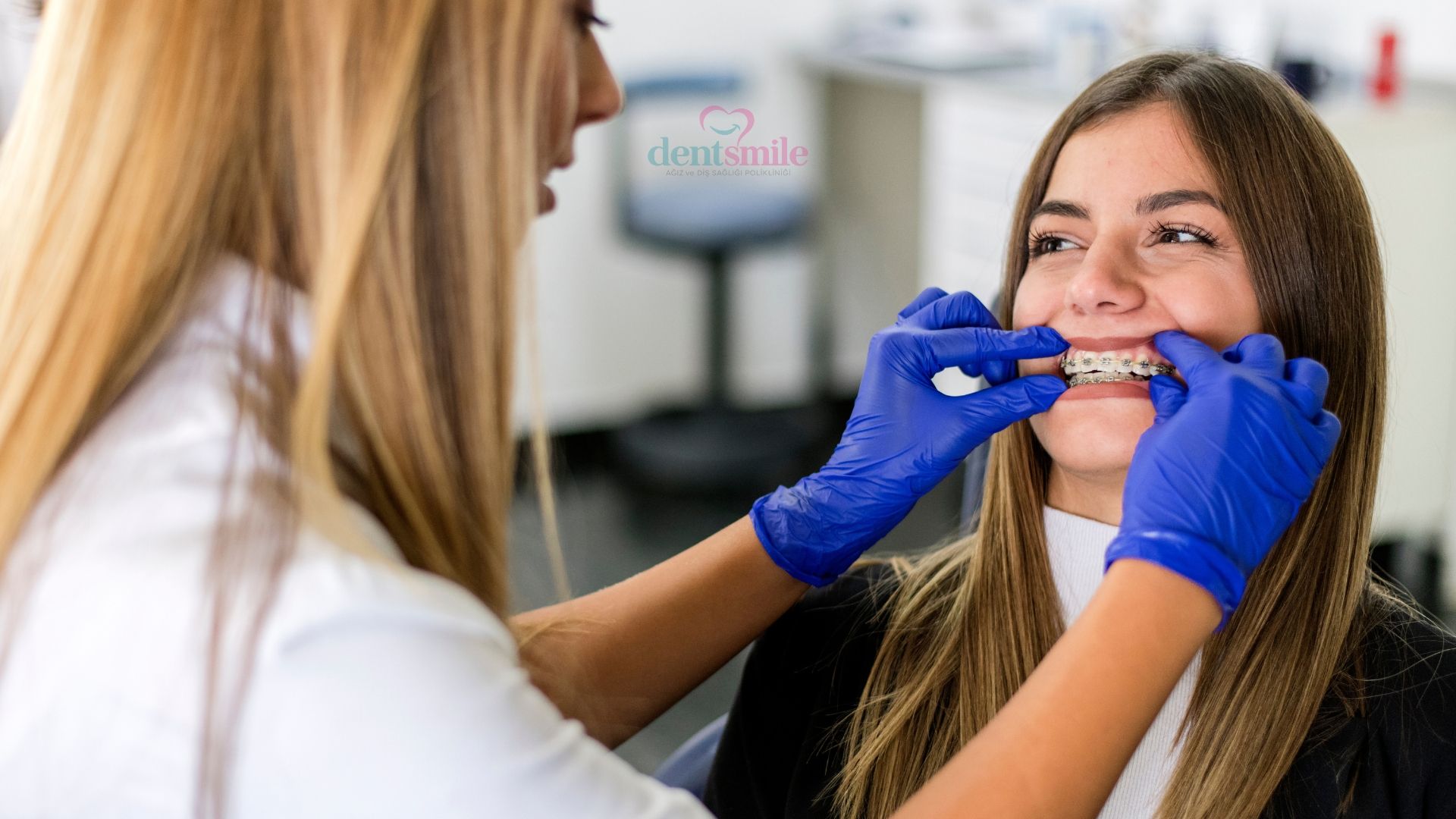
Orthodontic treatment is a field of dental care that aims to correct tooth positions and the bite relationship between the upper and lower jaws. It can be performed in different age groups, from childhood through adulthood. Orthodontic assessment may be recommended when there is dental crowding, spacing, malocclusion, or a problem associated with jaw development. The treatment process includes an initial examination, detailed planning, selection of appropriate appliances, active tooth movement, and retention to maintain the new tooth positions after treatment. While growing children may benefit from the developmental potential of their jaws, treatment in adults places particular emphasis on the health of existing teeth, bone, and periodontal tissues. Successful orthodontic treatment aims not only to align the teeth but also to establish a healthy, balanced bite and preserve the results over the long term.
When people think of orthodontics, braces and straight teeth are often the first things that come to mind. However, orthodontics is not simply a treatment intended to create an attractive smile. The relationships between teeth, chewing function, jaw development, and the health of surrounding supporting tissues are also important parts of treatment planning.
Teeth are biological structures that can move under specific conditions throughout life. During orthodontic treatment, controlled forces are applied to gradually change their positions within the jawbone. This process occurs through the remodeling of the surrounding periodontal tissues and bone.
Although the fundamental principles of orthodontic treatment are similar for children and adults, treatment timing, objectives, and available methods may differ. Evaluating jaw development is particularly important in growing children. In adults, existing bone support, gum health, missing teeth, and previous dental restorations must also be considered.
What Is Orthodontic Treatment and Which Problems Can It Correct?
Orthodontics is the dental specialty concerned with the prevention, assessment, and treatment of problems involving tooth position and the bite relationships between the jaws.
When there is insufficient space within the dental arch, teeth may become crowded. Other patients may have excessive spaces between their teeth. When the upper and lower teeth do not contact each other appropriately, different types of malocclusion may develop.
Conditions that may require orthodontic assessment include crowded teeth, significant spacing, protruding front teeth, deep bite, open bite, and crossbite.
Some of these problems result primarily from tooth positions, while others are associated with the developmental relationships between the upper and lower jawbones.
In cases involving significant skeletal discrepancies between the jaws, moving the teeth alone may not be sufficient. Depending on the patient's age and the characteristics of the condition, options such as growth modification, orthodontic camouflage, or orthognathic surgery may need to be evaluated.
Orthodontic treatment should therefore not be planned solely according to visible tooth crowding.
When Should Children Have Their First Orthodontic Examination?
It is not always appropriate to wait until all primary teeth have fallen out before arranging an orthodontic evaluation.
The American Association of Orthodontists recommends that children receive their first orthodontic assessment when a problem is noticed and no later than seven years of age.
At this age, children generally have both primary and permanent teeth in their mouths. This stage, known as mixed dentition, is important for evaluating jaw growth and the eruption pattern of permanent teeth.
An early orthodontic examination does not mean that every child needs to begin wearing braces immediately.
Some children may not require orthodontic treatment at all, while others may only need periodic monitoring of their development. In certain circumstances, early intervention may help manage a developing problem.
Crossbites, significant jaw discrepancies, excessively protruding incisors that are at greater risk of trauma, and problems affecting the eruption of permanent teeth may particularly benefit from early assessment.
The objective is not to begin treatment automatically at a particular age, but to determine the most appropriate developmental stage for addressing an existing problem.
Jaw Development and Early Orthodontic Treatment in Children
The jawbones continue to grow throughout childhood and adolescence. This creates opportunities to make use of growth and development when managing certain orthodontic problems.
Early orthodontic treatment may be planned as a preventive or interceptive approach in selected situations.
For example, in certain cases involving a narrow upper jaw, suitable expansion appliances used during growth may be intended to modify the upper jaw and dental arch.
Similarly, functional appliances or other orthodontic approaches may be considered for particular problems involving jaw relationships.
However, early orthodontic treatment is not necessary for every child. Furthermore, receiving early intervention does not guarantee that additional orthodontic treatment will never be needed.
In some children, treatment may be organized into two separate phases.
The first phase may address a particular developmental problem, while the second phase, performed after most permanent teeth have erupted, may focus on arranging the final positions of the teeth.
The orthodontic approach for children must therefore take into account growth potential, tooth eruption, and the severity of the existing problem.
Can Adults Receive Orthodontic Treatment?
It is incorrect to assume that orthodontic treatment can be performed only during childhood or adolescence.
Adult teeth can also be moved using controlled orthodontic forces when appropriate biological conditions are present.
One important difference between children and adults is that jaw growth is largely complete in adulthood. Consequently, growth-dependent jaw modification techniques cannot be used in adult patients in the same way.
Nevertheless, crowded teeth, spaces between teeth, and certain bite problems can also be corrected using orthodontic methods in adults.
Gum and bone health are particularly important during adult orthodontic treatment planning. Previous periodontal disease, gum recession, missing teeth, implants, bridges, and crowns may influence the available treatment options.
Especially in patients with active periodontal disease, it is important to assess the supporting tissues and complete any necessary periodontal treatment before beginning orthodontic tooth movement.
The suitability of adult orthodontic treatment therefore depends not simply on chronological age, but on the existing conditions within the mouth.
What Happens During the Initial Orthodontic Examination?
The first stage of orthodontic treatment is a detailed clinical examination.
During this assessment, the dentist evaluates tooth alignment, the relationship between the upper and lower jaws, bite characteristics, chewing function, and any existing oral health problems.
In children, the sequence of tooth eruption, the condition of the primary teeth, and jaw development are also assessed. For adults, existing dental restorations, missing teeth, and periodontal supporting tissues are important considerations.
An orthodontic examination involves more than looking at the front surfaces of the patient's teeth.
The positions of teeth from different angles, relationships between the upper and lower dental arches, and contacts occurring during biting are examined together.
The patient's expectations, previous dental treatments, and general medical history are also considered.
The purpose of the initial examination is to identify not only the visible consequences of an orthodontic problem but also its underlying causes and other conditions that may affect treatment.
The Importance of X-Rays and Digital Impressions in Orthodontic Planning
Following the clinical examination, different types of records may be required for detailed treatment planning.
Panoramic radiography may be used to assess teeth and surrounding structures. Cephalometric radiographs may also be obtained when appropriate for orthodontic analysis.
These images provide information about tooth positions, root structures, and relationships between the jaws.
However, the same imaging procedures are not necessary for every patient. Radiographic examinations should be planned according to clinical necessity and radiation protection principles.
Digital intraoral scanning systems are also used in modern orthodontic planning.
Digital scanners allow three-dimensional models of the teeth to be created. These models can help assess tooth alignment, existing spaces, the extent of crowding, and the movements planned during treatment.
Digital models are particularly important when planning orthodontic treatment with clear aligners.
Nevertheless, a digital simulation showing teeth in their intended final positions does not guarantee that every movement will occur in exactly the same way during actual treatment.
The biological response of the teeth and the patient's cooperation are important factors determining the result.
Metal and Ceramic Braces in Orthodontic Treatment
Fixed orthodontic treatments use brackets attached to the teeth and archwires connecting those brackets.
Metal brackets have been used for many years and make it possible to perform a wide range of orthodontic tooth movements.
Controlled forces are transmitted to the teeth through the brackets. During treatment, the properties of the archwires and any necessary auxiliary components are adjusted to guide tooth movements in stages.
Ceramic brackets may be preferred by patients with aesthetic concerns because their appearance is closer to natural tooth color.
However, choosing between metal and ceramic brackets should not depend on appearance alone.
The mechanical characteristics of the brackets, movements required by the treatment, the patient's oral hygiene habits, and the clinical conditions should all be evaluated.
Regular follow-up appointments and effective oral hygiene are important with both systems.
Orthodontic Treatment with Clear Aligners
Clear aligner treatment is a removable orthodontic system designed to move teeth according to a predetermined plan.
With this approach, the intended movements are planned using digital models of the patient's teeth, and different sets of aligners are prepared for successive treatment stages.
Each aligner is designed to produce small, controlled changes in tooth position.
Patients must wear their aligners in the prescribed sequence and according to the recommended schedule throughout treatment.
One important feature of clear aligners is that they can be removed during meals and oral hygiene procedures.
This can make them an attractive option for some adults and younger patients who prefer not to use visible brackets.
However, clear aligners are not automatically the most suitable treatment for every orthodontic case.
The required tooth movements, characteristics of the bite problem, and the patient's ability to wear aligners consistently all influence treatment success.
Insufficient aligner wear may interfere with the planned tooth movements and extend the treatment period.
Suitability for clear aligner treatment must therefore be determined after a detailed orthodontic assessment.
Is Tooth Extraction Sometimes Necessary for Orthodontic Treatment?
In certain patients, tooth extraction may be considered during orthodontic treatment planning.
A specific amount of space may be needed because of significant crowding, tooth positions within the dental arch, or existing bite relationships.
However, tooth extraction is not necessary in every orthodontic case.
In some situations, the required space can be obtained by appropriately adjusting the dental arch, performing limited interproximal enamel reduction, or using alternative orthodontic mechanics.
The decision to extract teeth should be made after evaluating the severity of crowding, facial profile, tooth positions within the bone, periodontal support, and the long-term objectives of treatment.
The fundamental aim is to position the teeth within a healthy and balanced bite relationship.
How Long Does Orthodontic Treatment Take?
The duration of orthodontic treatment depends more on the nature of the existing problem and the extent of the required tooth movements than on the patient's age alone.
Some mild alignment problems may be managed with relatively short treatment periods, while extensive crowding and complex bite problems may require longer treatment.
Comprehensive orthodontic treatment often takes approximately 12–30 months, although this range does not apply to every patient.
Treatment duration is influenced by the biological response to tooth movement, the treatment method, attendance at follow-up appointments, consistent appliance use, and any additional procedures required.
In children, certain treatments involving growth monitoring may take place in more than one phase.
In adults, periodontal or restorative treatment needs may also affect planning.
For these reasons, the most reliable estimate of treatment duration can be provided after the necessary clinical records have been reviewed.
Pain and Sensitivity During Orthodontic Treatment
Orthodontic treatment uses controlled forces to move teeth.
Temporary tenderness and a sensation of pressure may occur particularly after brackets are first fitted, after archwires are changed, or when switching to a new set of clear aligners.
For most patients, these sensations decrease over time.
However, every stage of orthodontic treatment is not expected to be painful. Severe, unusual, or progressively increasing pain should be reported to the treating clinician.
With fixed appliances, brackets and wires may occasionally irritate the soft tissues inside the mouth.
Appropriate protective measures and necessary clinical adjustments may help manage these symptoms.
Assessing discomfort during treatment is important for ensuring that appliances function correctly and that patients can continue their treatment comfortably.
Oral Hygiene with Braces and Clear Aligners
Maintaining oral hygiene throughout orthodontic treatment is an important part of achieving successful results.
Fixed brackets and archwires create additional areas around the teeth where food particles and bacterial plaque can accumulate.
If the teeth are not cleaned adequately, problems such as gingival inflammation, cavities, and white spot lesions on the enamel may develop.
Patients undergoing orthodontic treatment should therefore learn appropriate brushing techniques and use interdental brushes or other cleaning aids when necessary.
Patients using clear aligners must also clean both their teeth and aligners regularly.
In particular, consuming sugary or acidic beverages while aligners remain in place may, under certain conditions, expose tooth surfaces to an unfavorable oral environment for prolonged periods.
Monitoring gum health and identifying cavities early throughout orthodontic treatment can help ensure that the planned treatment proceeds appropriately.
What Happens When Orthodontic Treatment Is Completed?
The active phase of orthodontic treatment ends when the teeth have reached their intended positions and the bite relationship has been adjusted to an appropriate level.
In fixed orthodontic treatment, the brackets are removed.
In clear aligner treatment, the clinician evaluates whether the planned active movements have been completed.
However, completing active orthodontic treatment does not mean the entire process has ended.
After the teeth have been moved into new positions, the surrounding periodontal tissues continue to adapt.
Furthermore, teeth may shift throughout life as a result of natural biological changes and different forces acting on them.
For this reason, treatment proceeds to the retention phase, which aims to maintain the alignment achieved through orthodontics.
Retention is not an optional addition introduced after treatment; it is an essential stage of orthodontic planning.
What Is Orthodontic Retention?
Orthodontic retention is the process of maintaining tooth positions achieved during active orthodontic treatment.
The appliances used during this period are called retainers.
The primary purpose of retention is to reduce the tendency of teeth to return toward their previous positions and to limit unwanted movement that may develop over time.
Removable clear retainers may be preferred in some patients, while others may receive thin wires bonded to the inner surfaces of the teeth.
The most suitable method depends on tooth positions before treatment, the result achieved, bite relationships, periodontal conditions, and the patient's ability to follow appliance instructions.
Retention should not be regarded as a procedure that necessarily ends after a few months without further monitoring.
Because teeth can continue to change position throughout life, many patients require long-term retention and regular follow-up.
Fixed and Removable Retainers
Fixed retainers generally consist of thin wires bonded to the tongue-facing surfaces of the front teeth.
One of their main advantages is that patients do not need to insert and remove them every day.
However, the areas surrounding fixed retainers must be cleaned effectively.
If part of the wire becomes detached or changes shape, the positions of the teeth may be affected, making professional assessment important.
Removable retainers are appliances that patients can take out when necessary.
Clear removable retainers may be preferred because of their discreet appearance and practical characteristics.
Nevertheless, their effectiveness depends on following the recommended wearing schedule.
Losing the appliance, not wearing it for extended periods, or storing it incorrectly may negatively affect retention.
Some patients may use fixed and removable retainers together.
Can Teeth Become Misaligned Again Without a Retainer?
Teeth may move again after orthodontic treatment.
This is not related only to their tendency to return to their original positions.
Natural age-related changes, the properties of surrounding tissues, and forces acting on teeth can also contribute to changes in tooth alignment over time.
Retainers should therefore be used according to the orthodontist's instructions.
The necessary retention period and daily wearing schedule do not have to be identical for every patient.
Some patients may initially be advised to wear their removable retainer more frequently, followed by a different schedule over time.
Long-term follow-up and regular appliance checks can help preserve the treatment outcome.
The success of orthodontic treatment should not be evaluated solely by how straight the teeth appear on the day the braces are removed.
Maintaining the achieved alignment and bite relationship in the long term is also an important treatment objective.
Orthodontic Treatment for Children and Adults in Üsküdar
At Dentsmile Oral and Dental Health Polyclinic in Üsküdar, Istanbul, the orthodontic needs of children and adults are assessed by considering tooth alignment, bite relationships, jaw development, and existing oral health conditions.
For children, the transition from primary to permanent teeth and jaw growth are particularly important.
For adults, gum health, bone support, existing dental restorations, and the functional objectives of treatment are significant considerations.
Following orthodontic assessment, metal brackets, ceramic brackets, clear aligner systems, or other suitable orthodontic methods may be evaluated according to individual needs.
Treatment planning considers not only improvements in the aesthetic appearance of the teeth but also the preservation of existing teeth and their supporting tissues.
Once active orthodontic treatment has been completed, planning the retention phase and maintaining appropriate follow-up care are important for preserving the results.
Children and adults considering orthodontic treatment in Üsküdar or elsewhere in Istanbul require a detailed orthodontic examination to determine suitable individualized options.
The Importance of Long-Term Success in Orthodontic Treatment
Orthodontic treatment should not be regarded solely as a cosmetic procedure for making teeth appear straighter.
Establishing a healthy bite, positioning teeth appropriately within the jawbones, and preserving oral health are also important objectives.
In children, early assessment may help certain developing orthodontic problems be managed at an appropriate time.
Adults may also benefit from different orthodontic methods according to the condition of their teeth and periodontal tissues.
Metal braces, ceramic brackets, and clear aligners offer appropriate options for different patients.
However, treatment success depends on more than the appliance selected. Accurate diagnosis, detailed planning, recognition of biological limitations, patient cooperation, and regular follow-up appointments all matter.
Orthodontic treatment is a long-term approach to oral health that begins with the initial examination and continues through retention after active tooth movement has been completed. Preserving the outcome is just as important as planning the treatment itself.