
Blog
Smoking and Oral Cancer: The Effects of Tobacco Use on Oral Health and the Importance of Early Detection
Learn how smoking increases oral cancer risk, recognize early warning signs, persistent mouth sores, and discover the importance of prevention and early detection.
Published:
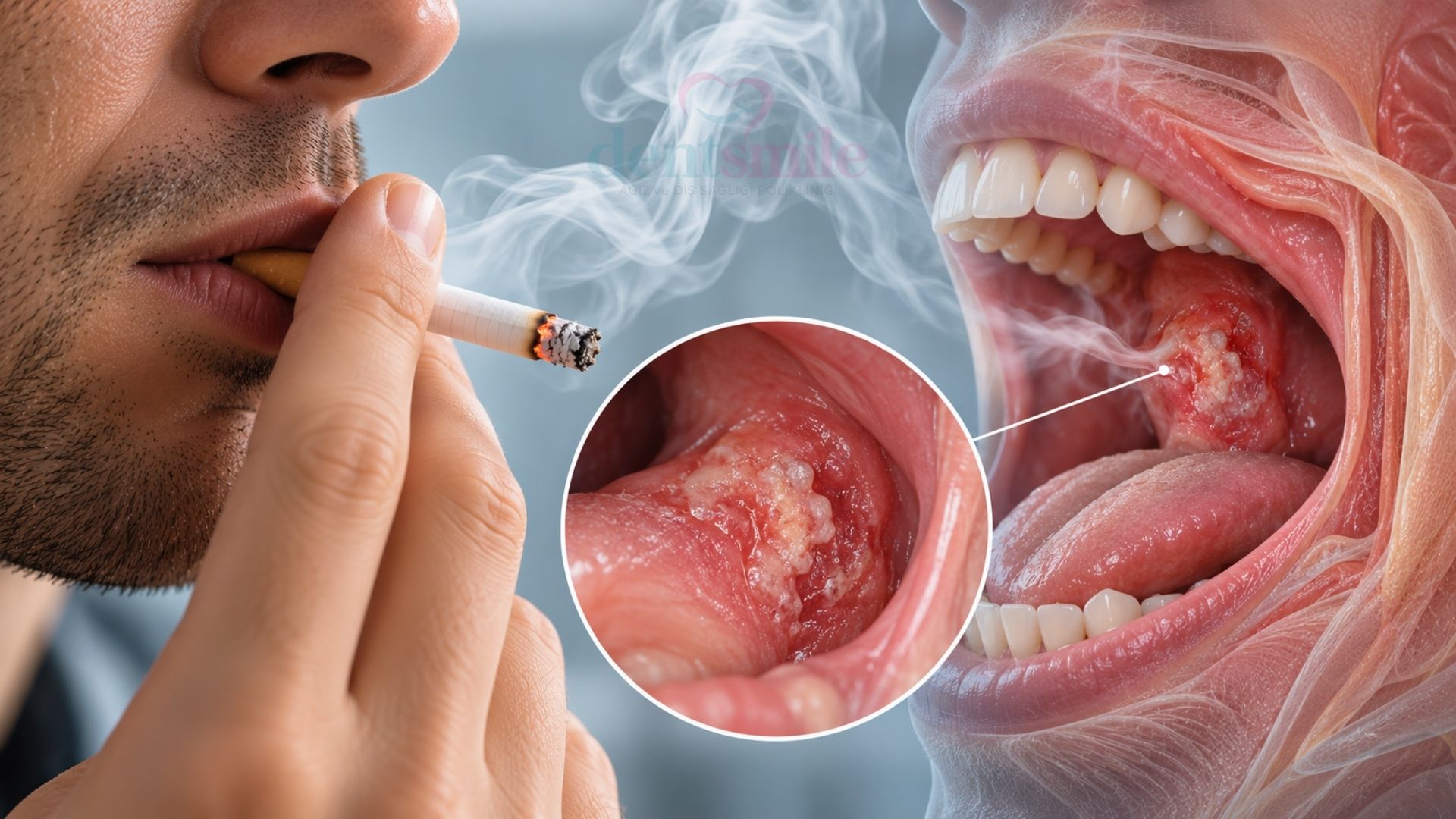
Smoking is one of the most important preventable risk factors for oral cancer. Carcinogenic substances in tobacco smoke can gradually cause genetic damage to cells in the mouth. Sores that do not heal, changes in color, and unusual tissue growths, particularly on the tongue, floor of the mouth, inner cheeks, gums, and lips, should be carefully evaluated. Quitting smoking, attending regular oral examinations, and promptly investigating suspicious changes play an important role in reducing oral cancer risk.
The harmful effects of smoking on the lungs and cardiovascular system are widely recognized. However, its effects on the mouth, one of the first areas directly exposed to tobacco smoke, are often overlooked. Chemicals found in cigarette smoke repeatedly come into contact with tissues throughout the oral cavity, from the gums and tongue to the inner cheeks and floor of the mouth.
Long-term smoking is associated with periodontal disease, bad breath, tooth discoloration, delayed wound healing, and various changes in the oral mucosa. Among the most serious health concerns linked to tobacco use is oral cancer.
Oral cancer can develop without causing significant pain or discomfort in its early stages. As a result, some patients may not notice changes in their mouth or may consider them unimportant. Individuals who smoke should therefore be particularly attentive to persistent or unusual changes in their oral tissues.
What Is Oral Cancer and Where Can It Develop?
Oral cancer refers to malignant tumors that develop when cells in the tissues of the oral cavity begin to grow uncontrollably.
Oral cancer can occur in the front portions of the tongue, the floor of the mouth beneath the tongue, the inner cheeks, the gums, the hard palate, and the lips. A substantial proportion of oral cavity cancers are squamous cell carcinomas, which arise from the cells lining these tissues.
The location of the cancer can influence its initial symptoms and the problems that may develop as the disease progresses.
For example, a lesion along the side of the tongue may initially resemble a small ulcer, while a change on the floor of the mouth may occur in an area that is difficult for patients to inspect themselves.
Cancers of the oral cavity are anatomically distinct from oropharyngeal cancers, which affect areas such as the tonsils and base of the tongue. This distinction is important when assessing risk factors and treatment approaches.
How Does Smoking Cause Oral Cancer?
Cigarette smoke contains numerous chemical substances, some of which are known to be carcinogenic to humans.
During smoking, these substances come into direct contact with the oral mucosa. Prolonged exposure can cause damage to the genetic material of cells.
Healthy cells grow, divide, and renew themselves through carefully regulated biological mechanisms. However, certain changes in cellular DNA can disrupt the normal controls governing cell growth.
Cancer development is generally not the result of a single cellular change. Rather, genetic and biological alterations may accumulate over time, allowing some cells to multiply uncontrollably.
Tobacco smoking is an important risk factor in this process.
According to assessments by the United States National Cancer Institute, tobacco use is a major risk factor for cancers of the oral cavity and certain other head and neck regions. Risk is also associated with the duration and intensity of tobacco exposure.
However, not everyone who smokes will develop oral cancer. Likewise, oral cancer can occur in people who have never smoked.
The important point is that tobacco use substantially increases the likelihood of developing the disease.
How Do Smoking Duration and Quantity Affect Cancer Risk?
When evaluating the risk of oral cancer, it is important to consider not only whether a person smokes but also how much tobacco they use and for how many years.
In general, higher daily cigarette consumption and longer periods of smoking increase the risk of tobacco-related cancers.
However, smoking only a small number of cigarettes should not be considered completely safe. There is no established risk-free level of tobacco exposure with regard to cancer.
Some individuals believe that occasional smoking or low daily consumption means they are not at risk of oral cancer. Yet even limited tobacco use exposes oral tissues to carcinogenic substances.
Cigars, pipes, and smokeless tobacco products can also increase the risk of cancers affecting the mouth and certain head and neck regions.
For this reason, prevention should focus not merely on reducing cigarette consumption but on stopping tobacco use completely.
Does Combining Smoking and Alcohol Increase Oral Cancer Risk?
Smoking and alcohol consumption are independent risk factors for oral cancer.
When these habits occur together, however, the risk can rise further. Research indicates that the combined effects of tobacco and alcohol on oral cancer and certain other head and neck cancers can be greater than the sum of their individual effects.
The effects of alcohol on the oral mucosa and simultaneous exposure to tobacco-related carcinogens are important considerations in understanding this relationship.
People who have smoked and consumed large amounts of alcohol over many years may face particularly elevated risks.
Reducing oral cancer risk therefore involves addressing alcohol consumption as well as tobacco use.
What Are the Early Signs of Oral Cancer?
Early symptoms of oral cancer can sometimes be mistaken for ordinary mouth sores.
For example, accidentally biting the cheek, having a sharp tooth edge, or wearing an ill-fitting dental prosthesis can cause an oral ulcer. Many such sores heal once the source of irritation is removed.
However, lesions that persist or repeatedly return may have other causes.
Possible signs of oral cancer include sores that do not heal, white or red patches on the tongue or inner cheeks, and unexplained lumps or areas of hardening.
Some patients may experience difficulty swallowing, discomfort when chewing, restricted tongue movement, numbness in the mouth, or unexplained bleeding.
Persistent changes along the sides of the tongue and on the floor of the mouth deserve particular attention.
A mouth sore that has not healed within two weeks, or an unexplained change in oral tissue, should be assessed promptly by a dentist or an appropriate medical specialist.
These symptoms do not necessarily indicate cancer. However, a professional examination is necessary to determine their cause.
Why Are White and Red Patches in the Mouth Important?
Areas of the oral mucosa may sometimes develop a color that differs from the surrounding healthy tissues.
Leukoplakia is a clinical term used for white plaques that cannot be explained by another identifiable condition and meet specific diagnostic criteria. Some leukoplakic lesions may contain cellular changes associated with an increased risk of cancer.
Erythroplakia refers to a red area of oral mucosa that cannot be explained by another specific condition. Such lesions require particularly careful evaluation because of their potential association with significant cellular abnormalities.
However, not every white patch is leukoplakia, and not every red patch is erythroplakia.
Fungal infections, friction-related irritation, inflammatory disorders, and several other conditions may produce similar changes.
A definitive diagnosis should therefore never be made from appearance alone.
The dentist evaluates the lesion's location, size, surface characteristics, and duration. Additional investigations or a biopsy may be recommended when necessary.
Oral Cancer May Not Cause Pain at First
One of the most common misconceptions about oral cancer is that a serious disease must always cause severe pain.
In fact, some oral cancers may be painless during their early stages.
A patient may ignore a small ulcer on the side of the tongue or a discolored area inside the cheek because it causes no noticeable discomfort.
This can be particularly concerning among smokers. If changes are taken seriously only after pain develops, professional assessment may be delayed.
This is one reason regular dental examinations are important.
Dentists examine not only teeth and gums but also the soft tissues of the mouth.
Suspicious changes may be identified while examining the tongue, floor of the mouth, inner cheeks, palate, and lips.
However, a normal examination does not guarantee that cancer will not develop later. Any new suspicious symptom should be assessed without waiting for the next routine appointment.
What Other Oral Health Problems Can Smoking Cause?
The oral effects of smoking extend beyond cancer risk.
Tobacco use can negatively affect the gums and tissues supporting the teeth. It is an important risk factor for both the development and progression of periodontitis.
Smoking can influence immune responses and healing processes in gingival tissues. As a result, some smokers may have substantial periodontal disease without obvious gum bleeding.
Tooth staining, persistent bad breath, and changes in taste perception may also accompany tobacco use.
Smoking can also interfere with healing after certain oral surgical procedures and contribute to an increased risk of complications in dental implant treatment.
These effects demonstrate that quitting smoking is important not only for reducing cancer risk but also for protecting oral health more broadly.
Are Electronic Cigarettes and Hookah Safe Regarding Oral Cancer?
Awareness of the harms of conventional cigarettes sometimes leads people to consider electronic cigarettes or hookah as safer alternatives.
However, these products should not be regarded as harmless.
Hookah smoking can involve exposure to various toxic and carcinogenic substances. Passing smoke through water does not make it safe.
Electronic cigarettes have exposure characteristics that differ from conventional tobacco cigarettes. Depending on the device, liquid composition, and pattern of use, they can generate aerosols containing nicotine and various chemical substances.
Evidence concerning the long-term oral cancer risk of electronic cigarettes remains more limited than evidence for conventional cigarettes. It would therefore be inappropriate either to claim that their risk is identical or to describe them as completely safe.
Individuals who want to overcome tobacco or nicotine dependence should seek professional advice about smoking cessation methods supported by scientific evidence.
How Is Suspected Oral Cancer Diagnosed?
When a suspicious sore or tissue change is identified in the mouth, the first step is a detailed clinical assessment.
The dentist or relevant medical specialist examines the lesion's location, size, surface characteristics, and relationship with surrounding tissues.
The patient's smoking and alcohol history, the duration of the lesion, previous similar symptoms, and general health are also considered.
Additional investigations may be necessary to determine whether the suspicious area has another underlying cause.
Biopsy and pathological examination of the collected tissue are essential when a definitive diagnosis of suspected oral cancer is required.
A biopsy involves removing a tissue sample from the suspicious area and examining it microscopically.
Not every mouth sore requires a biopsy. However, lesions with suspicious characteristics or persistent unexplained changes should be investigated without unnecessary delay.
If cancer is diagnosed, determining the extent of the disease and planning appropriate treatment may require collaboration among several medical specialties.
Does Quitting Smoking Reduce Oral Cancer Risk?
Quitting smoking is one of the most important measures for reducing the risk of oral cancer.
When tobacco exposure stops, ongoing contact with smoking-related carcinogenic substances is eliminated, and the risk of certain tobacco-related cancers decreases over time.
However, the rate and extent of risk reduction depend on factors such as previous smoking intensity and duration.
People who have smoked for many years should not assume that their risk immediately becomes equivalent to that of someone who has never smoked.
Nevertheless, the belief that it is too late to quit is also incorrect.
Smoking cessation can provide important benefits not only in relation to cancer risk but also for gum health, wound healing, cardiovascular health, and respiratory function.
Behavioral counseling, appropriate medications prescribed by a healthcare professional, and structured support for nicotine dependence can be considered during the quitting process.
The Importance of Oral Examinations for Smokers
Regular dental examinations can help identify unusual changes in the oral mucosa, as well as supporting the assessment of tooth decay and periodontal disease.
For individuals with a long history of smoking, clinical examination of areas such as the tongue, floor of the mouth, inner cheeks, gums, and palate is particularly important.
However, no examination method can guarantee that every oral cancer will be detected at an early stage.
Examination intervals should therefore be determined according to individual risk factors and clinical findings. New symptoms should be assessed promptly rather than postponed until the next routine visit.
Patients' awareness of persistent changes in their own mouths and their willingness to seek professional care are also important for timely assessment.
Oral Health Examinations and Assessment of Suspicious Lesions in Üsküdar
At Dentsmile Oral and Dental Health Polyclinic in Üsküdar, Istanbul, oral health assessments consider not only the condition of the teeth but also the health of the gums and soft tissues of the mouth.
In patients with a history of tobacco use, particular attention should be paid to changes in oral mucosal color, persistent sores, and unusual tissue formations.
If suspicious findings are identified, referral to an appropriate specialist for further investigation may be necessary.
Early evaluation of possible oral cancer can help ensure that diagnostic investigations and treatment planning take place at the appropriate time.
For patients living in Üsküdar and elsewhere in Istanbul, it is therefore important not to postpone a dental examination when a mouth sore persists or an unexplained tissue change develops.
An Informed Approach to Smoking and Oral Cancer Prevention
The relationship between smoking and oral cancer is an important public health issue supported by extensive scientific research.
Avoiding tobacco products, quitting smoking, reducing or stopping alcohol consumption, and paying attention to suspicious changes in the mouth are among the key measures for reducing risk.
Regular dental care, maintaining oral hygiene, and following healthy lifestyle habits also support general oral health.
However, brushing regularly or using oral care products does not eliminate the cancer risk associated with smoking. Ending tobacco exposure remains one of the most important preventive measures.
If a mouth sore does not heal, an unexplained white or red patch appears, or an unusual tissue change persists, professional examination is necessary without waiting for pain to develop.
Recognizing suspicious signs early, obtaining appropriate evaluation, and arranging necessary referrals without delay are important aspects of protecting oral health.