
Blog
The Effects of Daily Habits on Dental Aging
Learn how diet, teeth grinding, acidic drinks, smoking, coffee and dry mouth affect dental aging and how daily habits can protect your teeth.
Published:
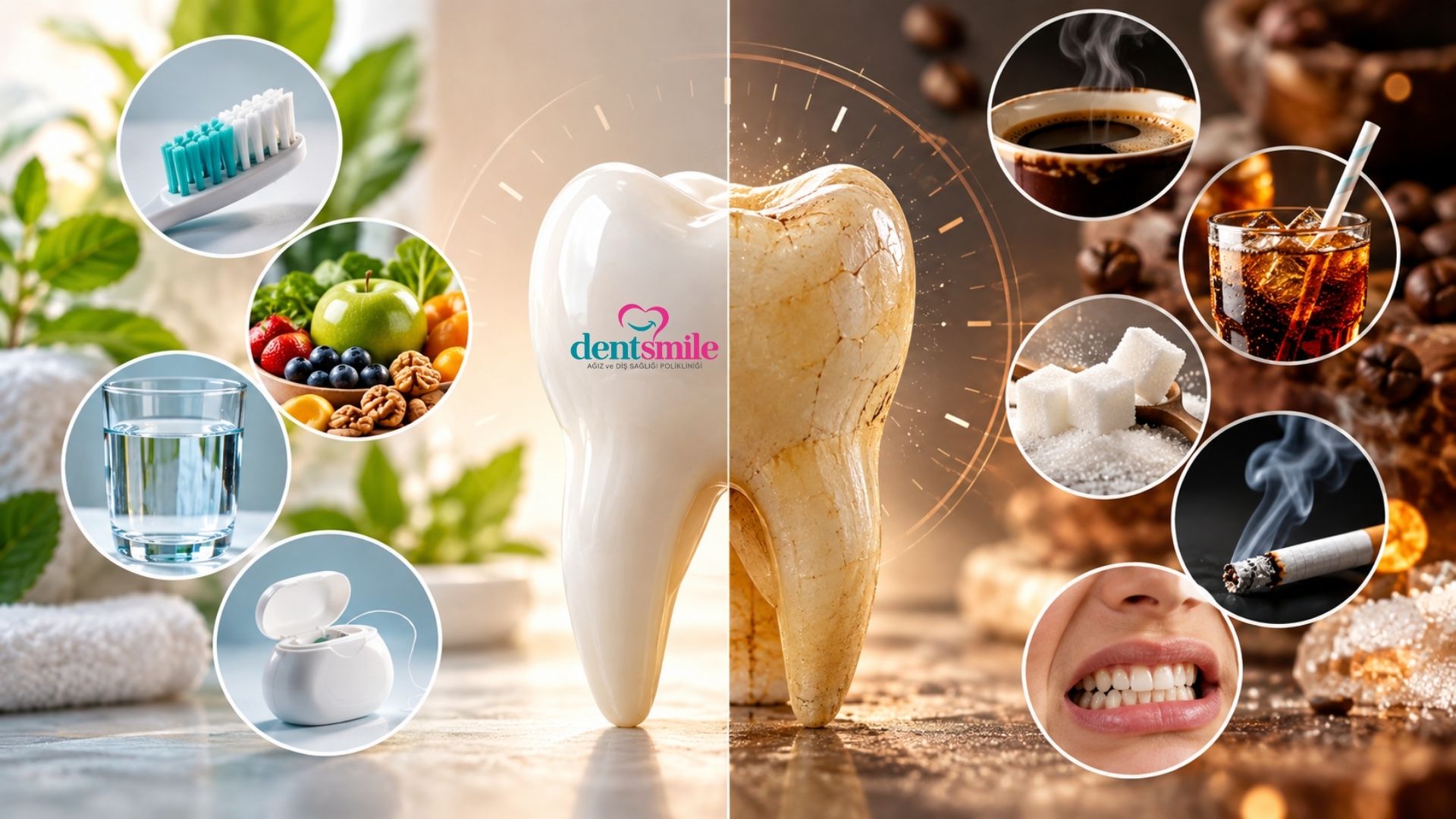
Discover how nutrition, teeth grinding, smoking, coffee consumption, dry mouth, and daily oral hygiene habits influence the way our teeth change over the years.
Our teeth also change as the years go by. However, it would be incorrect to consider every change we observe in our teeth simply a natural consequence of aging. Small habits that we repeat throughout the day can influence the future of our oral health, from tooth enamel and gums to chewing surfaces and tooth color.
Many factors, from coffee consumption and teeth clenching to acidic drinks and oral hygiene habits, may not cause significant problems individually. However, repeating the same behaviors over many years can substantially affect the extent of changes in our teeth.
For this reason, maintaining a healthy mouth as we age involves not only treating problems when they arise but also understanding how and why our teeth change over time.
Do Teeth Really Age?
Teeth are structured to maintain their vitality and integrity for many years. Nevertheless, they are constantly exposed to chewing forces, temperature changes, food and beverages, bacterial plaque, and individual habits throughout life.
Over time, a certain degree of wear may develop on the chewing surfaces of teeth. As enamel becomes thinner, the underlying dentin, which has a more yellowish shade, may become increasingly visible. The position of the gums may change, and older fillings or restorations may require replacement.
However, an important distinction must be made between chronological age and the biological condition of the mouth.
Two people of similar age may have teeth in very different conditions. In addition to genetic and systemic factors, oral hygiene, nutrition, smoking, teeth grinding, regular dental examinations, and dental diseases experienced over the years all contribute to these differences.
How Often We Eat Matters as Much as What We Eat
The impact of nutrition on dental health cannot be explained solely by the amount of sugar consumed.
When bacteria in the mouth use fermentable carbohydrates, acids can be produced, lowering the pH within dental plaque. This environment may promote the loss of minerals from tooth enamel.
For this reason, constantly consuming sugary or carbohydrate-rich snacks throughout the day may repeatedly expose teeth to an acidic environment.
From a dental health perspective, the question is not only "How much sugar do I consume?" but also "How frequently do I consume it during the day?"
When irregular snacking habits continue for years and are combined with inadequate oral hygiene, the risk of tooth decay may increase.
Acidic Drinks Can Gradually Affect Tooth Surfaces
Frequent consumption of carbonated drinks, energy drinks, and certain other acidic beverages can contribute to chemical wear of the tooth surface, known as dental erosion.
The mechanism involved differs from that of conventional tooth decay. Acids can affect the mineral structure of tooth surfaces independently of bacteria.
If this habit continues over a long period, thinning of tooth surfaces, sensitivity, changes in tooth shape, and a more yellowish appearance may develop.
Holding acidic drinks in the mouth for prolonged periods or sipping them continuously throughout the day can increase the amount of time teeth remain exposed to acids.
Brushing Too Hard Does Not Mean Cleaning Better
One of the most common misconceptions about oral hygiene is the belief that teeth can only be cleaned properly by applying considerable pressure while brushing.
The purpose of toothbrushing is not to wear away tooth surfaces but to remove bacterial plaque regularly and effectively.
Applying excessive force while brushing over many years, particularly when combined with improper technique and abrasive products, may contribute to damage to tissues near the gumline and to the tooth surfaces.
Therefore, correct brushing techniques, an appropriate toothbrush, and interdental cleaning are more important than the amount of force applied.
The Cumulative Effects of Teeth Clenching and Grinding (Bruxism)
Teeth can withstand considerable chewing forces. However, prolonged and repeated forces beyond those involved in normal chewing may have different consequences.
Bruxism includes teeth clenching and grinding behaviors that may occur during sleep or while awake.
In some individuals, years of these repeated forces may result in worn tooth surfaces, small fractures, or cracks. Dental restorations can also be affected by recurring high forces. Symptoms such as fatigue and pain in the jaw muscles may accompany these changes.
Not all tooth wear is caused by bruxism. However, in patients with significant dental wear, it is important to evaluate teeth clenching and other potential contributing factors together.
The Effects of Smoking Extend Beyond Tooth Discoloration
When patients think about smoking, one of the first dental consequences that comes to mind is tooth discoloration. However, its more significant long-term effects on oral health may occur in the tissues surrounding the teeth.
Smoking is an important risk factor for periodontal disease. It can negatively affect the health of the gums and bone tissues that support teeth and make healing more difficult.
Furthermore, smoking may cause signs of inflammation, such as gum bleeding, to appear less noticeable in some individuals. Therefore, the absence of obvious bleeding does not necessarily mean that the gums are healthy.
Do Coffee and Tea Make Teeth Age Faster?
Coffee and tea consumption can contribute to the development of external stains on tooth surfaces over time. However, discoloration alone does not mean that a tooth is unhealthy or has aged prematurely.
It is important to identify the actual cause of changes in tooth color.
Some surface stains can be reduced with professional cleaning, while changes in the tooth's intrinsic color may require different approaches. For this reason, frequently using abrasive or unregulated whitening products simply to make teeth look whiter is not an appropriate solution.
Dry Mouth May Become More Important with Age
Saliva is one of the mouth's natural defense mechanisms.
It helps keep oral tissues moist, supports the removal of food debris, and plays a role in neutralizing acids. It also contributes to maintaining the mineral balance of tooth surfaces.
Certain medications, systemic health conditions, and other factors that become more common with age may reduce saliva production.
Persistent dry mouth may contribute to an increased risk of tooth decay, bad breath, and discomfort in oral tissues in some individuals.
For this reason, ongoing dry mouth should not be dismissed as merely an unpleasant sensation.
A Missing Tooth Affects More Than Just One Tooth
When the space left by a missing tooth remains untreated for a long period, the balance within the mouth may change.
Adjacent teeth may shift or tilt toward the empty space, a tooth in the opposing jaw may extend into the gap, and chewing patterns may change. Bone volume in the area of the lost tooth can also decrease over time.
Therefore, tooth loss should not be evaluated solely from an aesthetic perspective.
Whether a missing tooth should be replaced with a dental implant, bridge, or another appropriate method should be considered according to the patient's individual oral condition.
Old Fillings and Crowns Should Be Checked Regularly
Dental restorations should not be expected to remain unchanged throughout a person's lifetime.
Fillings, crowns, bridges, and other restorations are exposed to chewing forces and the oral environment over many years. Changes may develop in the restoration itself or in the natural tooth tissues surrounding it.
However, it would also be incorrect to assume that every older restoration needs to be replaced.
During regular examinations, the dentist should assess the marginal fit of the restoration, surrounding teeth and gum tissues, the presence of decay, and the restoration's function before deciding whether intervention is actually necessary.
Dental Check-Ups Are Part of Healthy Aging
Many oral and dental diseases may not produce obvious symptoms during their early stages.
An early cavity, a periodontal problem, or changes around an existing restoration may go unnoticed by the patient.
The main purpose of regular examinations is not to provide treatment continuously, but to identify problems as early as possible and preserve natural tooth structure.
Examination intervals do not need to be the same for everyone. Personalized follow-up schedules can be determined according to factors such as cavity risk, periodontal health, existing restorations, oral hygiene, smoking habits, and general health.
Healthy Dental Aging Is Influenced by Daily Habits
It is not possible to stop the aging of teeth completely, and some changes that occur over time are natural. Nevertheless, daily habits have a significant influence on the condition in which our oral structures age.
Proper oral hygiene, balanced nutrition, controlling the frequency of sugary and acidic foods and beverages, avoiding smoking, evaluating habits such as teeth clenching, and attending regular dental examinations can help preserve natural teeth for many years.
At Dentsmile Oral and Dental Health Polyclinic in Üsküdar, Istanbul, our approach is not limited to treating existing dental problems. We also aim to preserve natural teeth and healthy oral tissues over the long term whenever possible.
A healthy mouth is not simply one that is free from pain or cavities today. Protecting teeth with the years ahead in mind is an important part of healthy aging.