
Blog
Restorative Dental Treatment: Modern Approaches to Preserving Natural Tooth Structure
Discover restorative dental treatments in Üsküdar, Istanbul, including composite fillings, ceramic inlays, onlays, and minimally invasive tooth restoration.
Published:
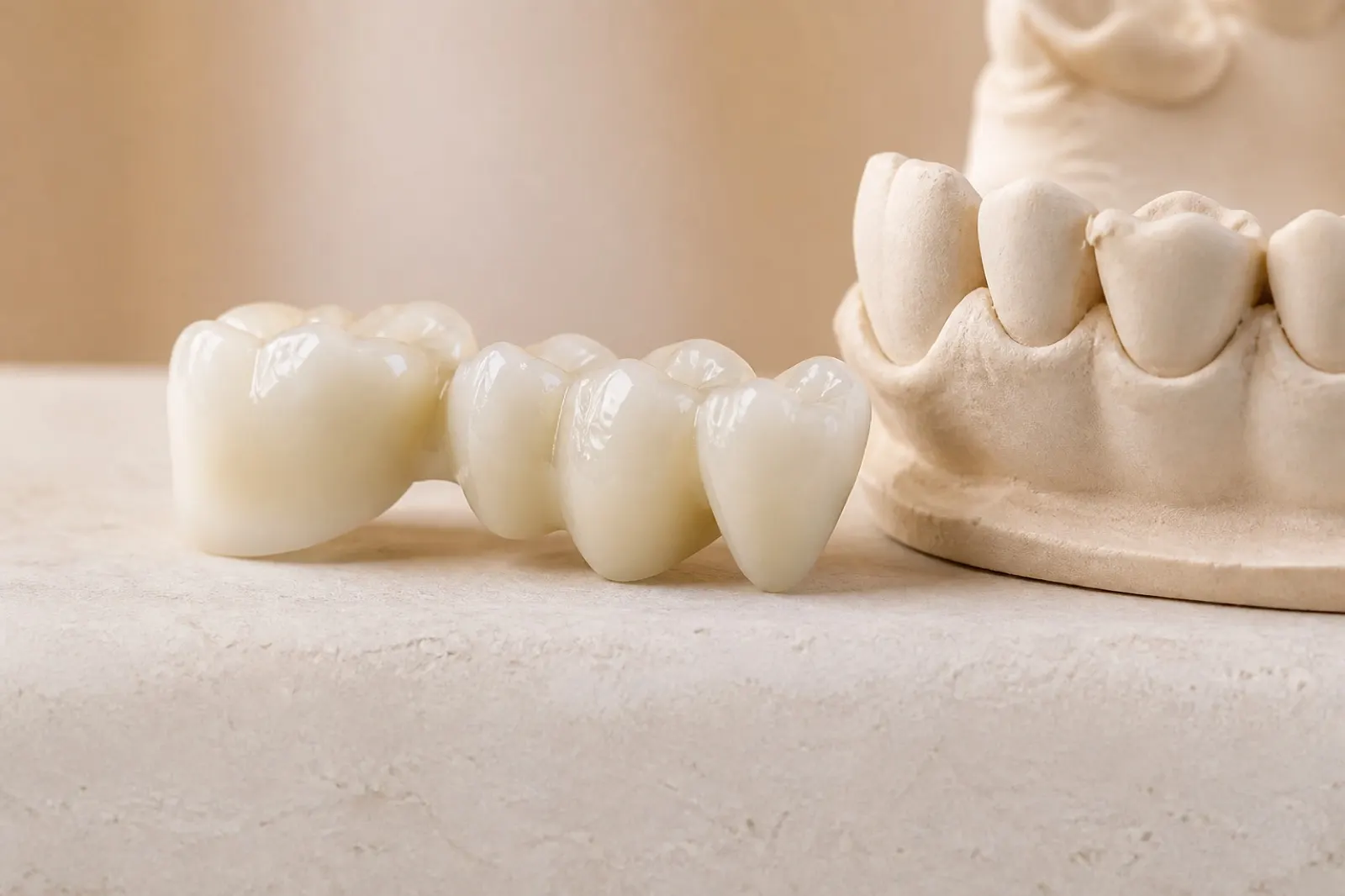
Restorative dental treatment aims to restore the appearance and function of teeth damaged by decay, fractures, or wear while preserving as much natural tooth structure as possible. Modern dental materials and digital technologies offer personalized, minimally invasive treatment options designed to protect long-term oral health.
One of the fundamental principles of successful dental treatment is not simply to eliminate an existing problem, but to preserve healthy tooth structure whenever possible. Today, restorative dentistry is one of the most important fields in which this philosophy is applied.
Dental decay, trauma, tooth wear, and deterioration of existing restorations can gradually affect the structure, appearance, and chewing function of teeth. Restorative dental treatment focuses on rebuilding damaged tooth structures using appropriate materials while maintaining the tooth's function within the mouth.
Modern restorative approaches involve more than replacing missing tooth structure. Protecting the remaining healthy tissues, distributing chewing forces appropriately, and ensuring that restorations are compatible with surrounding oral tissues are equally important.
The Primary Objective of Restorative Dental Treatment
Restorative dentistry includes treatments designed to restore the natural anatomy and function of teeth affected by decay, fractures, wear, or other forms of structural damage.
The fundamental principle is to preserve as much natural tooth structure as possible.
For example, when treating a small cavity, the objective is not to remove a large portion of the tooth unnecessarily. Instead, the dentist aims to remove only the tissue that requires treatment and restore the affected area using a suitable restorative material.
However, not every tooth can be treated using the same method.
The extent of tooth structure loss, the strength of the remaining tissues, the depth of decay, the tooth's position within the mouth, and the patient's chewing habits all influence the choice of treatment.
A successful restoration should therefore be planned according to the tooth's individual clinical condition rather than following a standard approach for every patient.
Minimally Invasive Dentistry and Tooth Preservation
One of the most important developments in restorative dental treatment is the increasing adoption of minimally invasive dentistry.
This approach focuses on preserving existing tooth structure by removing as little healthy tissue as possible.
In the early stages of dental decay, conventional filling treatment may not always be necessary. Certain initial carious lesions that have not yet developed into cavities may be monitored and managed through preventive measures and effective control of individual decay risk factors.
These measures may include fluoride applications, dietary guidance, improved oral hygiene, and regular clinical monitoring when appropriate.
When tooth structure has been lost and a restoration is required, the extent of treatment is determined according to the clinical condition of the tooth.
The objective is not merely to repair the immediate damage, but also to preserve enough natural tooth structure for the tooth's long-term health and any potential future treatment needs.
Preserving healthy tooth structure today can help maintain more treatment options in the future.
The Role of Composite Fillings in Restorative Dentistry
Composite fillings are tooth-colored restorative materials widely used for both anterior and posterior teeth.
Their ability to bond to dental tissues through adhesive systems makes more conservative tooth preparations possible in suitable cases.
Composite restorations can be used to repair tooth structure lost because of decay, restore small to moderate fractures, improve certain irregularities in the shape of anterior teeth, repair worn tooth surfaces, and replace existing restorations that are no longer functioning properly.
Their aesthetic properties allow the dentist to select shades that closely resemble natural tooth color, helping the restoration blend with the surrounding dental tissues.
However, the suitability of a composite filling is not determined solely by the patient's aesthetic expectations.
The forces acting on the tooth during chewing, the size of the cavity, the location of the restoration, and the amount of remaining healthy tooth structure must also be considered.
In extensive defects or situations involving high functional demands, alternative restorative techniques may provide more appropriate solutions.
Preserving Tooth Structure with Inlay and Onlay Restorations
When tooth structure loss is extensive but does not necessarily require a full dental crown, inlay and onlay restorations may be considered.
Inlays are generally designed to restore areas located between the cusps on the chewing surface of a tooth.
Onlays cover a larger portion of the tooth and may also protect one or more cusps when necessary.
Depending on the clinical requirements, these restorations can be manufactured from ceramic or composite-based materials.
One of the important advantages of inlay and onlay restorations is that, in suitable cases, they may allow more healthy tooth structure to be preserved compared with a full crown.
However, selecting the most appropriate restoration requires a careful evaluation of the remaining tooth structure, the presence of cracks, functional requirements, and other clinical factors.
The objective is to provide sufficient protection without removing more natural tooth tissue than necessary.
Evaluating Aesthetics and Function Together
Although aesthetics play an important role in restorative dentistry, appearance alone is not sufficient to determine the success of treatment.
A well-designed restoration should blend with natural teeth in terms of color, shape, and surface characteristics.
At the same time, it should support chewing function, establish appropriate contact with neighboring teeth, and avoid negatively affecting gum health.
For anterior tooth restorations, the goal is not simply to make the teeth appear whiter. Natural translucency, surface texture, anatomical proportions, and harmony within the smile must also be considered.
In posterior teeth, the restoration's ability to withstand chewing forces becomes particularly important, alongside the preservation of the remaining tooth structure.
Therefore, aesthetics and function are two inseparable components of successful restorative dental treatment.
A restoration that looks attractive but does not function appropriately cannot be considered a fully successful treatment.
The Contribution of Digital Technologies to Restorative Dental Treatment
Advances in digital dentistry have created new possibilities for planning and manufacturing dental restorations.
In suitable cases, intraoral scanners can be used to obtain digital impressions as an alternative to conventional impression methods.
The information collected during scanning can be evaluated using specialized software, allowing the restoration to be designed digitally.
CAD/CAM technology, which stands for Computer-Aided Design and Computer-Aided Manufacturing, enables certain ceramic inlays, onlays, and dental crowns to be digitally designed and manufactured.
Depending on the available equipment and clinical conditions, some restorations may be completed on the same day.
However, not every patient's treatment can be finished during a single appointment.
Although digital technologies support restoration planning and manufacturing, the success of treatment still depends on accurate diagnosis, appropriate material selection, clinical technique, and long-term maintenance.
Technology is an important tool in modern dentistry, but it does not replace careful clinical judgment.
The Importance of Restoration After Root Canal Treatment
Once root canal treatment has been completed, appropriately restoring the tooth is important for maintaining its long-term function within the mouth.
The restorative needs of a root canal-treated tooth are not determined simply by the fact that endodontic treatment has been performed.
Instead, the amount of remaining tooth structure and the forces acting on the tooth should be evaluated.
Some root canal-treated teeth can be restored using direct fillings.
However, teeth with extensive structural loss may require more comprehensive restorations, such as onlays or crowns.
This consideration is especially important for posterior teeth, which are exposed to substantial chewing forces.
Protecting the remaining natural tooth structure is a central part of treatment planning.
The assumption that every root canal-treated tooth must receive a crown is not correct. The type of restoration should be selected according to the individual tooth and patient's clinical needs.
Long-Term Care and Factors Affecting Restorative Treatment
The long-term performance of dental restorations depends on more than the material used during treatment.
Daily oral hygiene habits, dietary patterns, the patient's risk of developing new cavities, and the forces acting on restored teeth can all influence how restorations perform over time.
Even when a filling or ceramic restoration is properly placed, new decay may develop in the surrounding natural tooth structure if bacterial plaque is not adequately controlled.
Patients who clench or grind their teeth may also expose restorations to forces that differ from normal chewing loads.
In certain cases, this can increase the risk of wear, fractures, or damage to restorative materials.
For these reasons, restorative dental treatment should not be considered a process that ends on the day a filling or restoration is completed.
Regular dental examinations, appropriate preventive care, and consistent oral hygiene are important components of maintaining the long-term health of restored teeth.
Personalized Treatment Planning in Restorative Dentistry
Two dental fractures or cavities that appear similar in size may require different treatment approaches in different patients.
The position of the tooth, bite relationships, individual decay risk, periodontal health, remaining healthy tooth structure, and aesthetic expectations should all be evaluated together.
For example, a small fracture in an anterior tooth may be appropriately restored using composite bonding, while a structurally compromised posterior tooth may require a restoration that provides additional protection.
The same restorative material may therefore produce different outcomes depending on the clinical circumstances.
For this reason, it would be incorrect to claim that one material or technique is universally the best option for every patient.
The important consideration is to determine the most conservative and functional treatment approach based on the condition of the remaining natural tooth structure.
This individualized philosophy helps balance aesthetics, mechanical requirements, and the preservation of oral health.
Restorative Dental Treatment in Üsküdar: The Dentsmile Approach
At Dentsmile Oral and Dental Health Polyclinic in Üsküdar, Istanbul, restorative dental treatments are planned by considering the current condition of the tooth, the amount of remaining healthy structure, aesthetic requirements, and chewing function.
For treatments such as composite fillings, aesthetic restorations, inlays, and onlays, the primary objective is to preserve as much natural tooth tissue as possible whenever the clinical situation allows.
When necessary, digital imaging and restorative planning technologies can be used to evaluate treatment options appropriate to the patient's individual clinical needs.
Rather than focusing exclusively on the appearance of the restored tooth, treatment planning also considers its functional performance and compatibility with the surrounding oral tissues.
This approach reflects the principles of modern restorative dentistry, where maintaining natural tooth structure is a central aspect of long-term dental care.
The Future of Modern Restorative Dentistry: Less Intervention, Greater Preservation
The development of restorative dentistry is not limited to producing materials with improved aesthetics or mechanical strength.
It is also closely connected to a better understanding of the biological value of natural tooth structure and the importance of planning treatments around its preservation.
One of the fundamental objectives of modern restorative dental treatment is to maintain the health, function, and natural appearance of teeth with the least intervention necessary.
Advances in adhesive materials, ceramic restorations, diagnostic methods, and digital technologies continue to expand the available treatment options.
However, technological developments should always be evaluated alongside the principles of biological preservation and appropriate clinical treatment planning.
A successful restorative dental treatment is not simply the replacement of missing tooth structure. It is a comprehensive approach aimed at preserving the integrity, function, and long-term health of the natural tooth within the mouth.