Q&A
Which Is Better: Zirconia or E-max Dental Crowns?
Zirconia or E-max crowns: which is better? Compare aesthetics, durability, tooth preparation and suitable treatment options at Dentsmile Üsküdar.
 Answered by:
Dr Hasan Karatay
Published:
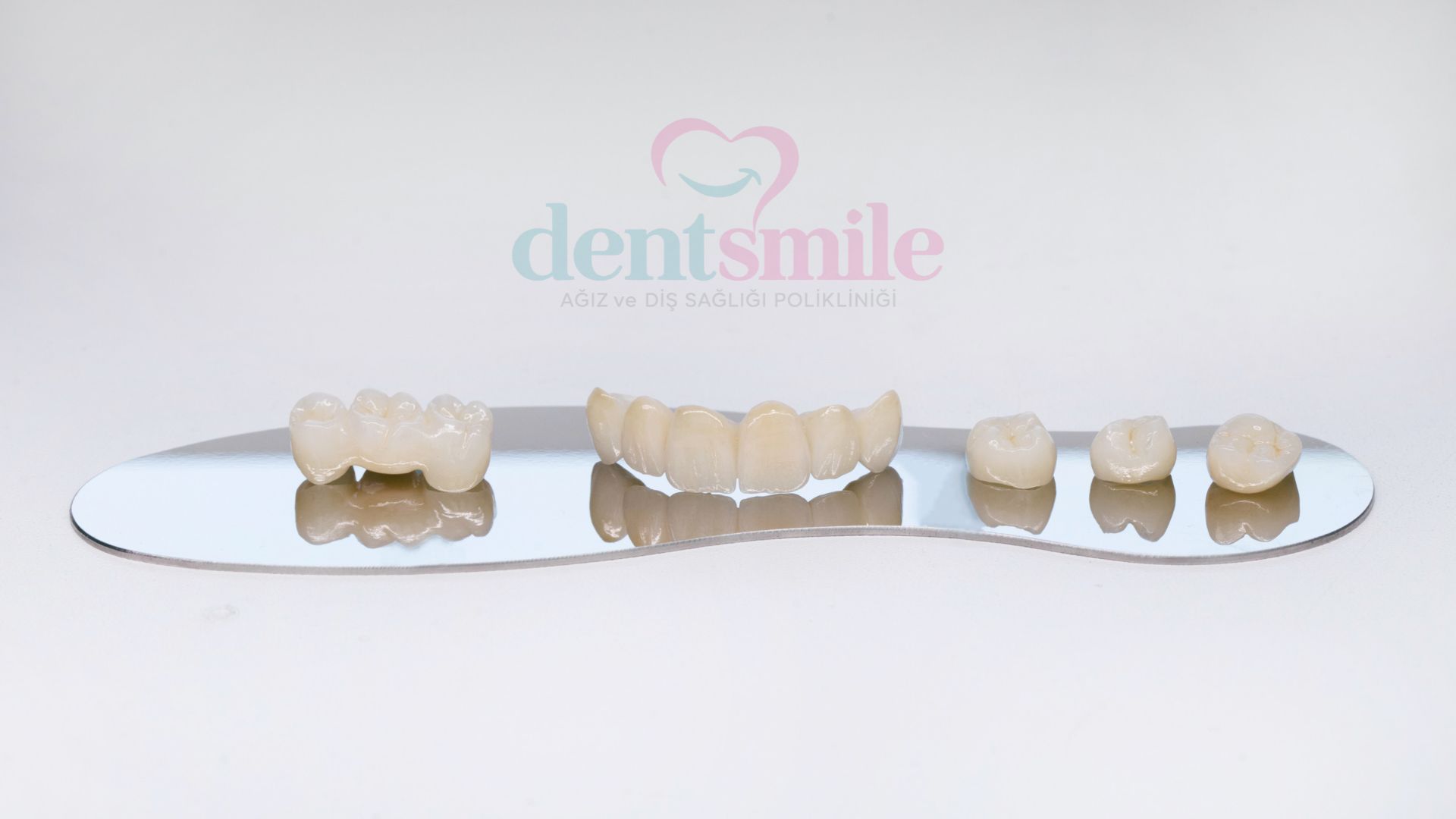
Zirconia and E-max crowns are two different all-ceramic restoration options frequently used in aesthetic dentistry. E-max crowns can offer advantages for front teeth, where a natural appearance is particularly important, while zirconia crowns may be preferred in areas exposed to greater chewing forces because of their high mechanical strength. However, the better option depends on the position of the tooth, the patient's oral condition, and their aesthetic expectations.
One of the most common questions among patients considering dental crowns is how zirconia and E-max differ. Both materials are metal-free, can reproduce the appearance of natural teeth, and may provide long-lasting restorations when used under appropriate conditions. However, their material properties differ, so choosing the same type of crown for every patient would not be appropriate. Crown selection should take into account not only aesthetics but also the remaining tooth structure, chewing forces, and the characteristics of the planned restoration.
Differences Between Zirconia and E-max Crowns
Zirconia crowns are manufactured from zirconium dioxide-based ceramic materials. Their high fracture resistance makes them suitable for posterior teeth, areas subjected to substantial chewing forces, and certain dental bridge restorations. Modern high-translucency zirconia materials can also produce aesthetic results in the front of the mouth. However, the balance between strength and light transmission varies depending on the type of zirconia used.
In dentistry, E-max generally refers to lithium disilicate glass-ceramic restorations. Their translucency and optical properties, which can closely resemble natural tooth structure, make them particularly useful for highly aesthetic anterior restorations. When properly planned, E-max can also be used for single crowns on posterior teeth. However, zirconia may be more suitable for certain long-span bridges or situations involving particularly high mechanical forces.
Which Is More Aesthetic: Zirconia or E-max?
Creating a natural appearance in the front teeth depends not only on the shade of the crown but also on the way it transmits and reflects light. E-max crowns can offer an advantage when the translucent appearance of natural enamel needs to be reproduced. Nevertheless, modern zirconia systems can also deliver excellent aesthetic outcomes. When the underlying tooth is dark, the ability of the ceramic to mask discoloration must also be considered. Therefore, it is not accurate to claim that one material always provides better aesthetics for every patient.
Which Crown Is Better in Terms of Durability?
Zirconia ceramics generally have higher flexural strength than lithium disilicate ceramics. This property can be particularly useful for back teeth and restorations exposed to strong chewing forces. However, the longevity of a crown depends on more than material strength alone. Tooth preparation, restoration thickness, teeth-grinding habits, bite alignment, and bonding or cementation techniques all influence clinical outcomes. E-max crowns can also offer successful long-term results when used for appropriate indications and placed with suitable techniques.
The Importance of Tooth Structure When Choosing a Crown
The amount of healthy tooth tissue remaining, existing fillings or root canal treatment, and gum health should all be considered when selecting a restorative material. In some patients, preserving natural tooth tissue is the main priority. In others, masking discoloration or withstanding heavy chewing forces may be more important. It is also incorrect to assume that one ceramic material always requires less tooth reduction. Preparation requirements depend on the specific ceramic system and the design of the restoration.
Zirconia and E-max Crown Treatment in Üsküdar
At Dentsmile Oral and Dental Health Polyclinic in Üsküdar, Istanbul, planning zirconia and E-max crown treatments involves evaluating the condition of the teeth, the patient's bite, gum health, and aesthetic expectations. Achieving a natural appearance for front teeth, providing suitable strength for back teeth, and preserving healthy tooth structure whenever possible are important considerations in treatment planning.
In conclusion, neither zirconia nor E-max is universally superior for every patient. E-max can be advantageous when highly natural aesthetics are the priority, while zirconia may offer benefits when greater mechanical strength is needed. The most suitable crown material should be selected individually following a clinical assessment by the dentist.