
Q&A
Which Is More Effective: Clear Aligners or Braces?
Are clear aligners or braces more effective? Compare treatment results, duration, comfort and suitability. Orthodontic options in Üsküdar.
 Answered by:
Uzman Dr. Dt. Akif Arslan
Published:
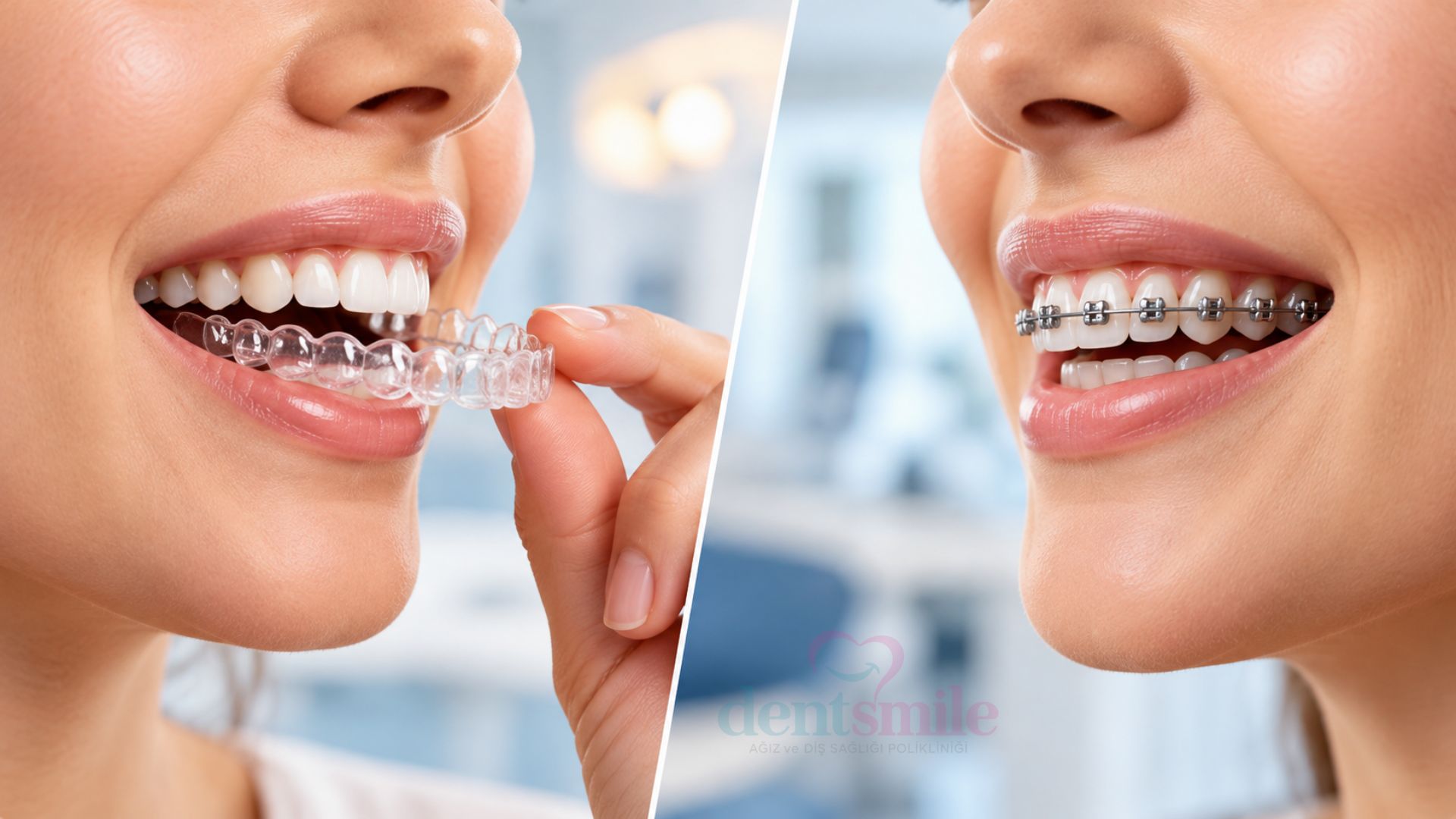
Clear aligners and traditional braces are both effective orthodontic treatments for correcting crooked teeth and bite problems. Clear aligners can achieve successful results in many mild to moderate cases, while fixed braces may offer advantages for complex tooth movements, significant bite discrepancies, and certain extraction cases. The best option depends on tooth position, jaw structure, treatment goals, and the patient's ability to wear aligners consistently.
Which Is More Effective: Clear Aligners or Braces?
One of the most common questions among patients considering orthodontic treatment is whether clear aligners are as effective as traditional braces. People who are unhappy with the appearance of their teeth but prefer not to have visible metal brackets are particularly interested in understanding whether aligners can deliver comparable results.
There is no single answer that applies to every patient. Successful orthodontic treatment is not simply about making teeth appear straight. It also involves establishing a healthy relationship between the upper and lower teeth, controlling tooth movements, and maintaining the result after treatment.
Clear aligners and braces can achieve similarly successful results in many mild to moderate cases of dental crowding. However, fixed orthodontic appliances may provide greater control in cases involving severe crowding, certain extraction treatments, or complex tooth movements.
For this reason, the treatment method should be selected according to the findings of an orthodontic examination rather than aesthetic preferences alone.
How Does Clear Aligner Treatment Work?
Clear aligner treatment begins with an assessment of the current positions of the teeth using digital intraoral scanning or an appropriate impression technique. A personalized series of aligners is then designed to gradually move the teeth toward their planned positions.
The aligners apply controlled forces to produce specific tooth movements. During treatment, the patient changes to new aligners according to the prescribed schedule. Small, tooth-colored attachments may also be placed on certain teeth to improve control of particular movements.
One important advantage is that clear aligners can be removed during meals and oral hygiene routines. However, this convenience also places considerable responsibility on the patient. Aligners generally need to be worn for approximately 20–22 hours each day. Failure to follow the orthodontist's instructions may delay planned movements or affect the final result.
How Does Traditional Braces Treatment Work?
Fixed orthodontic treatment uses brackets attached to the teeth and orthodontic wires that pass through them. Brackets may be made from metal, ceramic, or other suitable materials. Controlled forces gradually move the teeth into the intended positions.
Because braces cannot be removed by the patient during everyday activities, they remain attached throughout treatment. This may be an advantage for individuals who would struggle to wear removable aligners for the recommended number of hours.
Fixed appliances can also be combined with different archwires, elastics, and additional orthodontic components to control tooth movement. This versatility may be particularly valuable for certain root movements, pronounced rotations, and complex bite corrections.
However, fixed braces can make oral hygiene more demanding. Food particles and bacterial plaque may accumulate around the brackets, so careful, regular cleaning is essential.
Which Dental Problems Are Better Treated with Clear Aligners or Braces?
Clear aligners can effectively treat mild to moderate crowding, spaces between teeth, and certain bite irregularities. With digital planning and suitable attachments, more extensive tooth movements may also be possible.
Nevertheless, fixed braces may provide more predictable control in some complex cases. They may be particularly advantageous when closing large spaces after tooth extraction, positioning tooth roots precisely, or managing certain difficult rotations.
Scientific research has found no major difference in treatment quality between the two approaches in some non-extraction cases, while fixed appliances have demonstrated advantages in certain extraction cases. However, the findings depend on the patient groups studied and the measures used to assess treatment outcomes.
It would therefore be inaccurate to say that aligners work only for simple problems or that braces are always more effective. The complexity of the individual case is central to treatment selection.
Do Clear Aligners or Braces Produce Faster Results?
A definitive comparison of treatment duration is difficult because many factors influence how long orthodontic care takes. These include the amount of tooth movement required, the severity of the bite problem, the patient's age, periodontal health, and adherence to treatment instructions.
In some cases of mild crowding, clear aligners may achieve the desired result in a relatively short period. However, not every aligner treatment is faster than braces.
If aligners are not worn consistently or the teeth do not move as predicted, additional sets of aligners may be needed. These refinements can extend the overall treatment period.
With fixed braces, the patient cannot remove the appliance, but broken brackets, damaged wires, or missed appointments may still delay progress.
Treatment times provided at the beginning are estimates. Because the biological response of teeth varies between individuals, the actual duration may differ from the original plan.
Are There Differences in Comfort and Appearance Between Clear Aligners and Braces?
One of the main advantages of clear aligners is that they are less noticeable when worn. This makes them attractive to adults who prefer their orthodontic treatment to be discreet in professional and social settings.
Their removability also provides greater flexibility at mealtimes. Since aligners can be taken out for brushing and flossing, maintaining oral hygiene may be easier for some patients.
With fixed braces, brackets may initially rub against the inner surfaces of the cheeks and lips, causing temporary irritation. Clear aligners can also produce pressure and tenderness, particularly when a new set is first worn. Some patients notice a temporary change in speech during the initial adjustment period.
Clear aligners offer aesthetic and removable-appliance advantages, whereas braces are less dependent on consistent daily wear by the patient. Which method feels more comfortable varies from person to person.
Which Orthodontic Treatment Is More Suitable for Children and Adults?
Clear aligners and braces can both be used in adolescents and adults. However, treatment planning considers more than age. Tooth development, bite relationships, and the patient's ability to comply with the prescribed treatment also matter.
Adults may prefer clear aligners because they are concerned about appearance during treatment. However, the health of the gums and supporting bone must be evaluated. When periodontal disease is present, it may be necessary to bring the condition under control before beginning active orthodontic movement.
In children and adolescents, continuing jaw growth can influence the available orthodontic and orthopedic treatment options. Their ability to wear removable aligners consistently is also important. Frequently removing or losing aligners can interfere with treatment progress.
Age alone does not determine the ideal method. The most appropriate appliance is selected after evaluating dental development and the characteristics of the orthodontic problem.
Are Results Permanent After Clear Aligner or Braces Treatment?
After the teeth have reached their intended positions, retention is an important part of treatment with both clear aligners and fixed braces. Teeth may gradually shift after orthodontic treatment, even when the original result was successful.
Depending on the individual case, the orthodontist may recommend fixed or removable retainers. The required wearing schedule and duration are determined by the treatment history and each patient's needs.
Maintaining the corrected tooth positions does not depend only on whether aligners or braces were used. Following retention instructions, maintaining healthy teeth and gums, and attending recommended checkups are also important.
It is therefore incorrect to assume that teeth corrected with clear aligners will inevitably move back or that the results of fixed braces remain stable without retention.
Clear Aligner and Braces Treatment in Üsküdar
At Dentsmile Oral and Dental Health Polyclinic in Üsküdar, Istanbul, orthodontic treatment options are assessed by considering tooth alignment, upper and lower jaw relationships, bite discrepancies, gum health, and the patient's aesthetic expectations.
When choosing between aligners and braces, the objective is not simply to make the front teeth look straight. Controlled tooth movement, a functional bite relationship, and maintaining the achieved result are essential parts of the treatment plan.
Clear aligners can be as effective as braces in suitable cases. However, fixed braces may provide greater control for certain complex orthodontic problems. The most appropriate method is determined through an orthodontic examination and individualized treatment planning.