
Q&A
What Should You Consider Before and After Wisdom Tooth Extraction?
Learn what to consider before and after wisdom tooth extraction, including bleeding, swelling, pain, eating, oral hygiene, and recovery.
 Answered by:
Dr Hasan Karatay
Published:
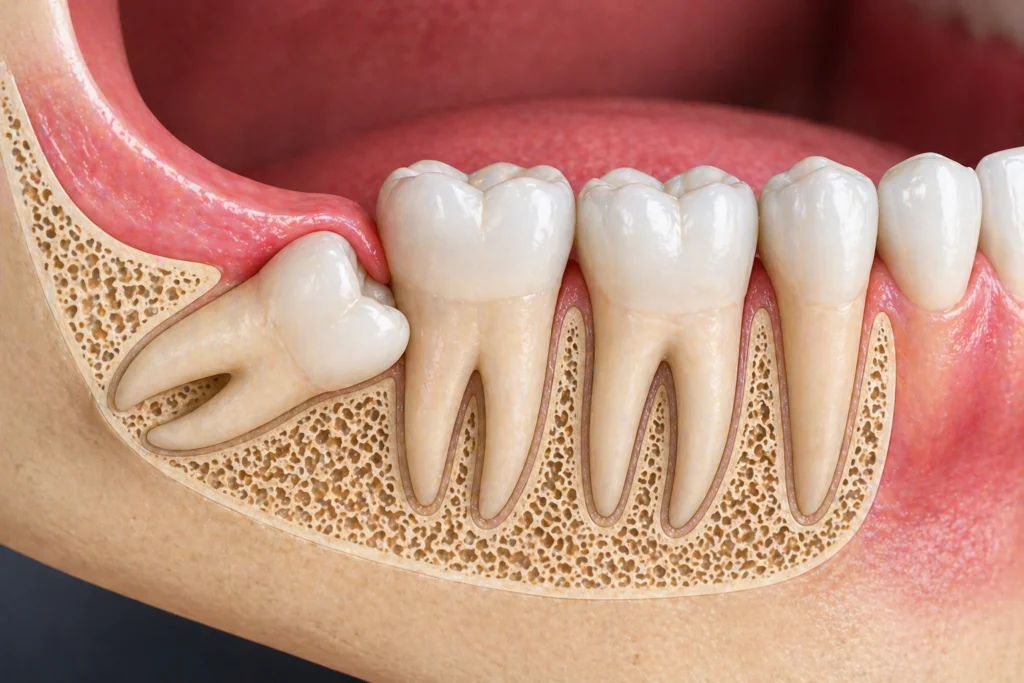
Before wisdom tooth extraction, the tooth's position, root anatomy, and relationship with surrounding bone, nerves, and sinuses should be carefully assessed. After extraction, controlling bleeding, protecting the blood clot, maintaining oral hygiene, and following dietary recommendations are important for proper healing.
What Should You Consider Before and After Wisdom Tooth Extraction?
Wisdom teeth are the third molars located at the back of the jaws. While some erupt normally, others may remain impacted, partially impacted, or positioned at an unfavorable angle.
Not every wisdom tooth needs to be removed. However, when extraction is necessary, careful examination and treatment planning are essential.
A panoramic X-ray is commonly used before extraction. In selected cases, cone beam computed tomography (CBCT) may also be required.
For lower wisdom teeth, the relationship between the roots and the inferior alveolar nerve canal is particularly important. For upper wisdom teeth, their proximity to the maxillary sinus may need to be evaluated.
Patients should inform their dentist about any medical conditions and medications they take, especially blood thinners. Prescription medications should not be stopped without professional medical advice.
What Should You Do Immediately After Extraction?
Following extraction, a blood clot forms in the socket and plays an essential role in healing.
During the first 24 hours, avoid vigorous rinsing, frequent spitting, and touching the extraction site with your tongue or fingers.
If your dentist places gauze over the area, bite down gently for the recommended period to help control bleeding.
If a small amount of bleeding or blood-stained saliva occurs, it is often expected during the early recovery period.
Eating, Smoking, and Oral Hygiene
For the first few days, choose soft foods and avoid very hot, hard, or irritating meals.
Smoking can interfere with healing and increase the risk of dry socket (alveolar osteitis). It should be avoided according to your dentist's postoperative instructions.
Oral hygiene should continue, but the extraction site must be treated carefully. Other teeth can be brushed normally, while direct, aggressive brushing over the surgical area should be avoided initially.
Pain and Swelling After Wisdom Tooth Removal
Some pain, swelling, and temporary difficulty opening the mouth may occur after surgical extraction.
Swelling may increase during the first two or three days before gradually improving.
Following prescribed medication and aftercare instructions can help make recovery more comfortable.
When Should You Contact Your Dentist?
Seek dental advice if you experience uncontrolled bleeding, increasing swelling, fever, a worsening or severe pain several days after extraction, or an unpleasant taste or odor.
Difficulty breathing or swallowing requires urgent medical attention.
At Dentsmile Oral and Dental Health Polyclinic in Üsküdar, wisdom tooth extraction is planned by assessing the tooth's position, root structure, surrounding bone, and proximity to nerves or sinuses.
Successful recovery depends on both appropriate surgical planning and careful postoperative care. A personalized evaluation is particularly important for impacted or anatomically complex wisdom teeth.