
Q&A
Do Teeth Need to Be Shaved Down for Porcelain Veneers?
Do teeth need to be shaved for porcelain veneers? Learn about enamel removal, no-prep veneers and tooth-preserving treatment at Dentsmile Üsküdar.
 Answered by:
Dr Hasan Karatay
Published:
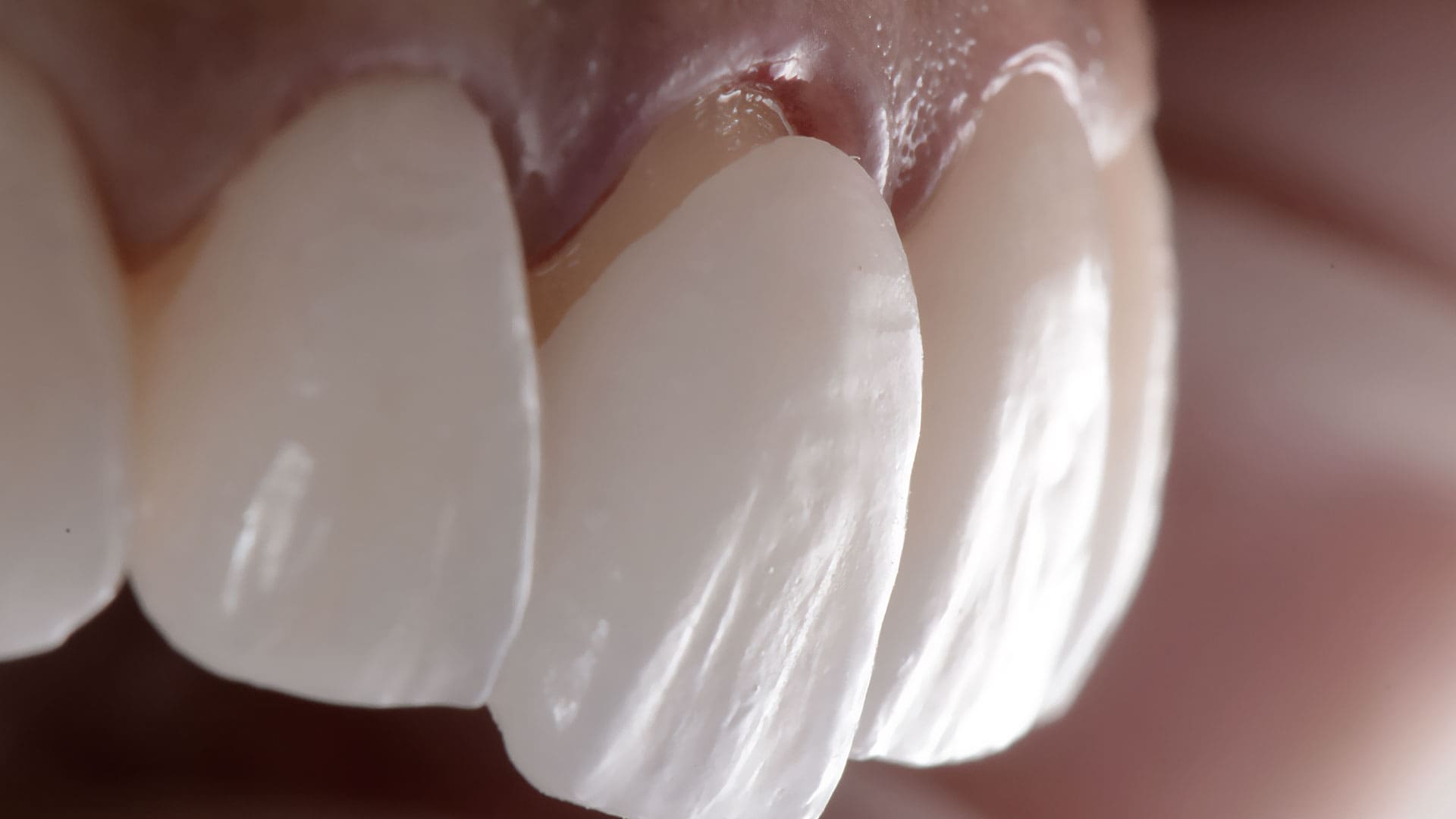
Porcelain veneer treatment does not always require teeth to be extensively reduced or shaved down. These thin ceramic shells, bonded to the front surfaces of teeth, can be placed with minimal enamel removal in suitable patients and, in certain cases, without any tooth preparation. However, the existing position, color and shape of the teeth, along with the thickness of the planned veneers, influence treatment planning. To achieve a natural appearance and a healthy result, a limited amount of tooth structure may need to be removed in some patients.
Preserving as much natural tooth structure as possible is one of the main objectives of aesthetic dentistry. Many patients considering porcelain veneers are concerned about whether their teeth will need to be reduced before treatment. Unlike conventional full crowns, porcelain veneers are thin ceramic restorations that are generally bonded to the front surfaces of teeth. Therefore, the purpose of porcelain veneer treatment is not to reduce the entire tooth but to achieve aesthetic and functional harmony with as little intervention as possible.
How Much Tooth Structure Is Removed for Porcelain Veneers?
When tooth preparation is necessary for porcelain veneers, the dentist generally aims to keep it within the enamel layer. Depending on the patient's tooth structure and the properties of the ceramic material, approximately 0.3–0.7 millimeters of enamel may be removed from the front surface. However, these measurements do not apply to every patient. Some areas may require less preparation, while others may need a different approach. The main objective is to provide enough space for the veneer to fit naturally without making the tooth appear unnecessarily bulky.
Can Porcelain Veneers Be Placed Without Shaving the Teeth?
In suitable patients, porcelain veneers may be applied without removing tooth structure. This approach, known as no-prep veneers, may be considered particularly when teeth are slightly set back, relatively small, or separated by minor gaps. However, no-prep veneers are not appropriate for everyone. If the teeth already protrude or there is insufficient space, veneers placed without preparation may make the teeth look excessively thick and create unwanted contours around the gums. For this reason, the decision to use a no-prep approach must be based on a detailed clinical evaluation rather than patient preference alone.
Differences in Tooth Preparation Between Porcelain Veneers and Zirconia Crowns
Porcelain veneers generally cover the front surfaces of teeth, whereas zirconia crowns may surround a much larger portion of the tooth. As a result, full-crown restorations usually require more extensive tooth preparation than porcelain veneers. However, the two treatments do not always serve the same purpose. If a tooth has lost a substantial amount of its natural structure, contains large restorations, or requires protection on several surfaces, a full crown may be more appropriate. For patients with sufficient healthy tooth structure who want aesthetic improvements, porcelain veneers may be considered a more conservative alternative.
Do Porcelain Veneers Damage Tooth Enamel?
Preparing a tooth for a porcelain veneer involves removing a certain amount of enamel, and this process is irreversible. Therefore, the need for treatment should be evaluated carefully. Keeping the preparation within the enamel whenever possible may support strong bonding between the ceramic restoration and the tooth. However, the long-term success of veneers depends on more than the amount of enamel remaining. Teeth-grinding habits, bite alignment, oral hygiene, ceramic thickness and bonding techniques are also important. Patients with porcelain veneers should continue attending regular dental examinations.
Porcelain Veneer Treatment in Üsküdar
At Dentsmile Oral and Dental Health Polyclinic in Üsküdar, Istanbul, porcelain veneer treatment is planned by evaluating tooth position, enamel structure, color characteristics, gum health and the patient's aesthetic expectations. When appropriate, digital impressions and smile design techniques may be used to plan the shape of the restorations and their relationship with the natural teeth in advance. The priority is to preserve natural tooth structure as much as possible while establishing a suitable balance between aesthetics and oral health.
In conclusion, teeth do not always need to be shaved down for porcelain veneers. No-prep treatment may be possible for some patients, while limited enamel preparation may provide a better result for others. The most appropriate approach should be determined individually according to tooth structure and the aesthetic changes being planned.