
Q&A
When Is Root Canal Treatment Necessary?
Root canal treatment may be necessary when the pulp tissue inside a tooth becomes irreversibly damaged or infected. The aim is to eliminate the source of infection and, whenever possible, preserve the natural tooth.
 Answered by:
Prof. Dr. Tahsin Yıldırım
Answered by:
Prof. Dr. Tahsin Yıldırım
Published:
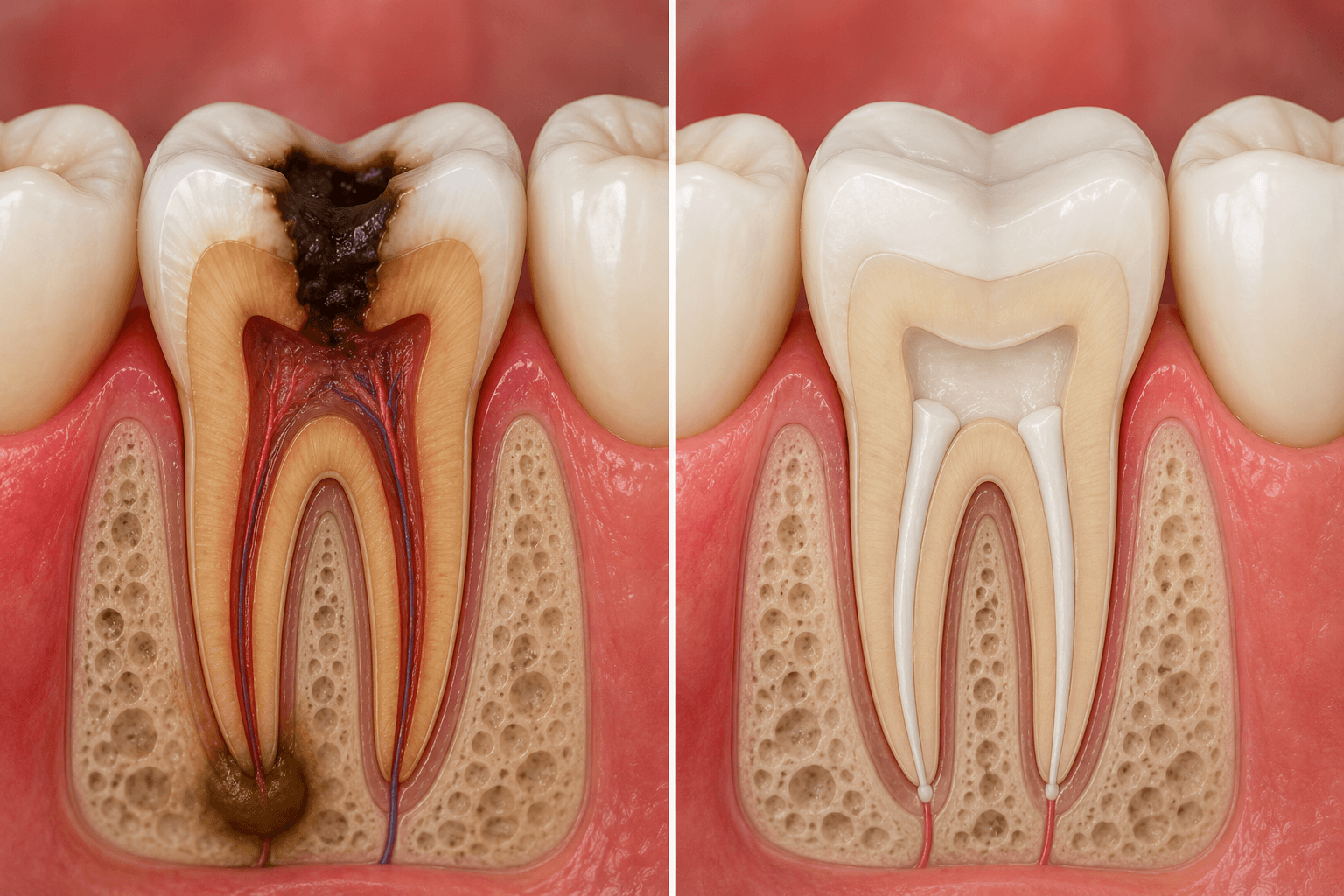
Root canal treatment involves not only the visible part of the tooth but also the pulp and root canal system inside the roots. The pulp is the living tissue containing nerves, blood vessels and connective tissue. When this tissue is irreversibly damaged by deep decay, trauma or other causes, root canal treatment may become necessary.
One of the most common reasons for root canal treatment is deep tooth decay. When decay progresses through the enamel and dentin and reaches the pulp, bacteria can cause inflammation or infection inside the tooth. At this stage, simply removing the decay and placing a filling may no longer be sufficient.
Severe toothache that starts spontaneously, becomes worse at night or persists for an extended period may indicate that the pulp is affected. Sensitivity to hot or cold that continues after the stimulus has been removed should also be evaluated. However, not every toothache requires root canal treatment. The final decision is made after a clinical examination and, when necessary, radiographic assessment.
An infection or abscess around the tip of the tooth root may also require root canal treatment. Symptoms can include gum swelling, pain when chewing, tenderness when biting, facial swelling or a small drainage opening on the gum. Some chronic infections cause little or no pain and may only be detected on an X-ray during a routine dental examination.
Trauma to a tooth can also damage the pulp and cause it to lose vitality. This is particularly relevant for front teeth. Discoloration after an injury or the development of an infection around the root tip may indicate the need for root canal treatment.
Teeth with large existing fillings or previous restorative procedures can also develop pulp problems over time. Recurrent decay beneath a filling, cracks in the tooth or irreversible damage to the pulp may make root canal treatment necessary.
The purpose of treatment is not simply to relieve pain. Damaged or infected pulp tissue is removed, the root canals are cleaned and disinfected, and the canal system is filled with suitable materials. Depending on how much tooth structure has been lost, the tooth may subsequently require a filling, onlay or crown.
At Dentsmile Oral and Dental Health Clinic in Üsküdar, the decision to perform root canal treatment is not based solely on the patient's symptoms. Pulp vitality, the depth of decay, the condition of the roots and the surrounding bone are evaluated together through clinical examination and appropriate imaging. Whenever possible, preserving a healthy pulp is preferred; when root canal treatment is necessary, the objective is to preserve the natural tooth.
Persistent or severe toothache, prolonged sensitivity to hot or cold, pain when chewing, gum swelling or an abscess should be evaluated by a dentist without unnecessary delay. Early diagnosis is important in determining the most appropriate way to preserve the tooth.