
Q&A
What Causes Bleeding from the Roof of the Mouth and How Is It Treated?
What causes bleeding from the roof of the mouth? Learn about injuries, burns, dentures, infections, and treatment options in Üsküdar.
 Answered by:
Dr Hasan Karatay
Published:
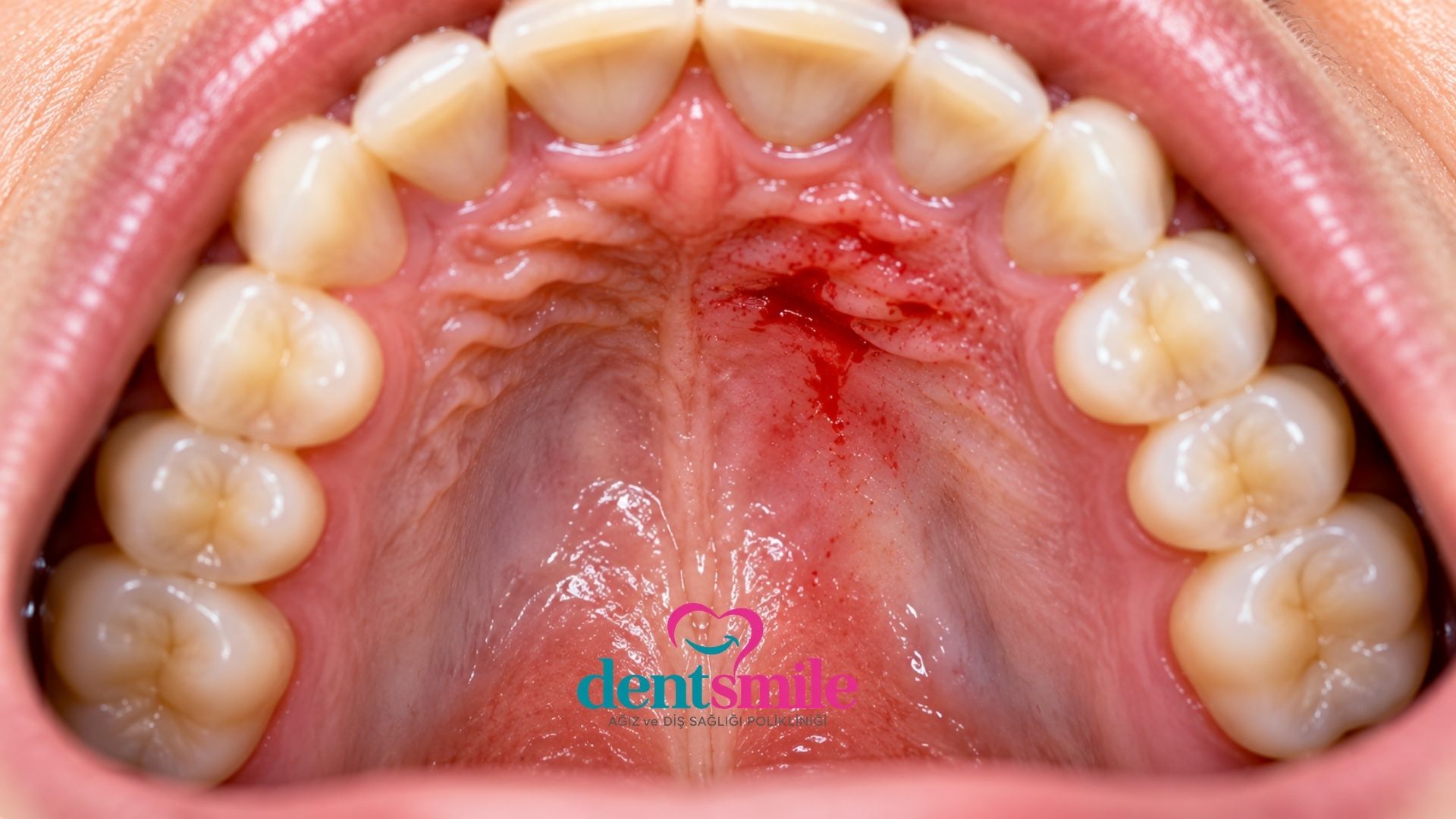
Bleeding from the roof of the mouth may result from injuries caused by hard foods, burns from hot food and drinks, oral ulcers, irritation from dental prostheses, or certain infections. Blood-thinning medications and clotting disorders may also increase bleeding or cause it to last longer. Treatment is planned according to the underlying cause. Recurrent, spontaneous, or persistent bleeding requires an examination by a dentist.
What Causes Bleeding from the Roof of the Mouth?
The palate forms the roof of the oral cavity and consists of two main regions: the hard palate and the soft palate. The hard palate is supported by bone, while the soft palate is more flexible and mobile. Both are covered by oral mucosa.
Many cases of palatal bleeding are associated with superficial injuries. Hard foods may scratch the palate, hot drinks may burn the tissue, and oral appliances that continually rub against the same area may cause small wounds and bleeding.
However, patients sometimes mistake gum bleeding for palatal bleeding. Inflammation of the gums on the inner side of the upper teeth may lead to bleeding during brushing. Identifying the exact source of the blood is therefore important for selecting appropriate treatment.
Can Hard Foods and Hot Drinks Cause Palatal Bleeding?
Hard bread crusts, crisps, crackers, and foods with sharp edges can scratch the surface of the palate. These injuries generally cause localized pain, tenderness, and mild bleeding. Small wounds often heal on their own.
Very hot tea, coffee, or food may also burn the palatal mucosa. Burns can cause superficial tissue damage, redness, pain, and sometimes bleeding. Repeated irritation of the damaged area by hard foods may delay healing.
During recovery, avoiding extremely hot, spicy, and hard foods is helpful. Oral hygiene should be maintained gently, without causing further injury. An examination is necessary if symptoms worsen or the wound does not heal.
Can Oral Ulcers and Infections Cause Bleeding from the Palate?
Ulcers, open wounds caused by trauma, and certain infections may damage the palatal mucosa and cause bleeding. Inflamed or repeatedly irritated lesions can become particularly sensitive and may bleed during eating or when touched.
Some viral infections may produce painful blisters or ulcers on the palate. Fungal infections can also cause mucosal sensitivity, particularly in people who wear dentures or have weakened local oral defenses. However, not every palatal lesion is caused by an infection.
Although many oral wounds heal within a short period, lesions that persist for more than two weeks, enlarge, become firm, or bleed spontaneously should be examined. Attempting to suppress the symptoms with mouthwash alone may delay the diagnosis of an underlying condition.
Can Dental Prostheses Cause Bleeding from the Roof of the Mouth?
Removable dentures may place excessive pressure on specific areas of the palate, particularly when they do not fit properly. Repeated movement during speaking or chewing can also cause friction, redness, and eventually sores.
Over time, the shape of the jawbone and soft tissues can change. Consequently, a denture that was comfortable when first fitted may become unsuitable after years of use.
When bleeding occurs in a patient wearing dentures, the areas in contact with the prosthesis should be examined carefully. If pressure from the denture is responsible, appropriate adjustments may be made. Continued irritation of a bleeding or injured area should be avoided.
Can Blood-Thinning Medications and Systemic Diseases Affect Palatal Bleeding?
In some patients, even a small injury to the palate may bleed longer than expected. Medications that affect blood clotting are one possible reason. Anticoagulant and antiplatelet medications can prolong bleeding.
Problems involving platelet count or function, clotting disorders, and certain blood diseases may also be associated with oral bleeding. A more comprehensive medical assessment may be required if bleeding begins without an obvious injury, particularly when accompanied by frequent nosebleeds, easy bruising, or bleeding elsewhere in the body.
Patients taking blood-thinning medications should not stop them on their own because of palatal bleeding. When necessary, the dentist and the patient's physician should assess the situation together.
How Can Bleeding from the Roof of the Mouth Be Stopped at Home?
If mild bleeding occurs after a small injury to the palate, the first step is to avoid further irritation. If the bleeding area is accessible, gentle but continuous pressure can be applied with clean gauze. Frequently removing the gauze to check the wound may disturb the developing blood clot.
After bleeding has stopped, it is helpful to avoid hot drinks, hard foods, and activities that may reopen the wound. Oral hygiene should continue, but the injured area should not be brushed vigorously or scraped.
Applying chemical substances, highly concentrated antiseptics, or irritating homemade mixtures without knowing the cause of bleeding is not recommended.
Bleeding that does not stop after approximately 15–30 minutes of direct pressure, heavy blood loss, dizziness, or breathing difficulties requires emergency assessment. If the mouth is continuously filling with blood, medical attention should not be delayed.
How Is Palatal Bleeding Treated?
Treatment begins by identifying the location and cause of the bleeding. During the examination, the dentist assesses the palate, upper teeth and gums, any dentures or oral appliances, and other relevant areas of the mouth.
Minor wounds caused by superficial trauma may require only removal of the source of irritation and monitoring of healing. When a denture causes injury, its fit may need adjustment. If an infection or another oral mucosal condition is diagnosed, treatment is planned accordingly.
For recurrent or spontaneous bleeding, the patient's medications, medical conditions, and any additional bleeding symptoms are reviewed. Blood tests or referral to an appropriate specialist may be necessary.
Palatal lesions that do not heal or have no clear cause may require further investigations and, in some cases, a biopsy.
What Is the Difference Between Palatal Bleeding and Gum Bleeding?
Although palatal bleeding and gum bleeding may be confused, they arise from different anatomical regions. Gum bleeding usually occurs in tissues surrounding the teeth and is frequently associated with plaque-related gingivitis or periodontitis.
Palatal bleeding originates from the mucosa covering the roof of the mouth. Trauma, burns, ulcers, denture pressure, or other mucosal diseases may be responsible.
Bleeding from the gums on the inner side of the upper teeth can be mistaken for bleeding from the palate. Distinguishing between the two is important because gum inflammation and palatal mucosal wounds may require different treatment approaches.
Examination and Treatment of Palatal Bleeding in Üsküdar
At Dentsmile Oral and Dental Health Polyclinic in Üsküdar, Istanbul, the assessment of palatal bleeding considers where the bleeding begins, how often it occurs, whether it is accompanied by pain or sores, and the patient's overall oral health. Existing dentures, gum conditions, and relevant medical information are also reviewed.
The goal is not merely to stop the bleeding temporarily but to identify its underlying cause. Mild superficial bleeding after a small injury should not be assessed in the same way as recurrent or unexplained bleeding.
Bleeding from the palate does not always indicate a serious disease. However, recurrent bleeding, spontaneous bleeding, or bleeding associated with a wound that does not heal should not be ignored. Early examination can help ensure that appropriate treatment is planned without unnecessary delay.