
Blog
The Relationship Between Sugar Consumption and Tooth Decay
We explore how sugar consumption affects tooth decay, from acid formation in the mouth to consumption frequency, and explain the key points for maintaining healthy teeth.
Published:
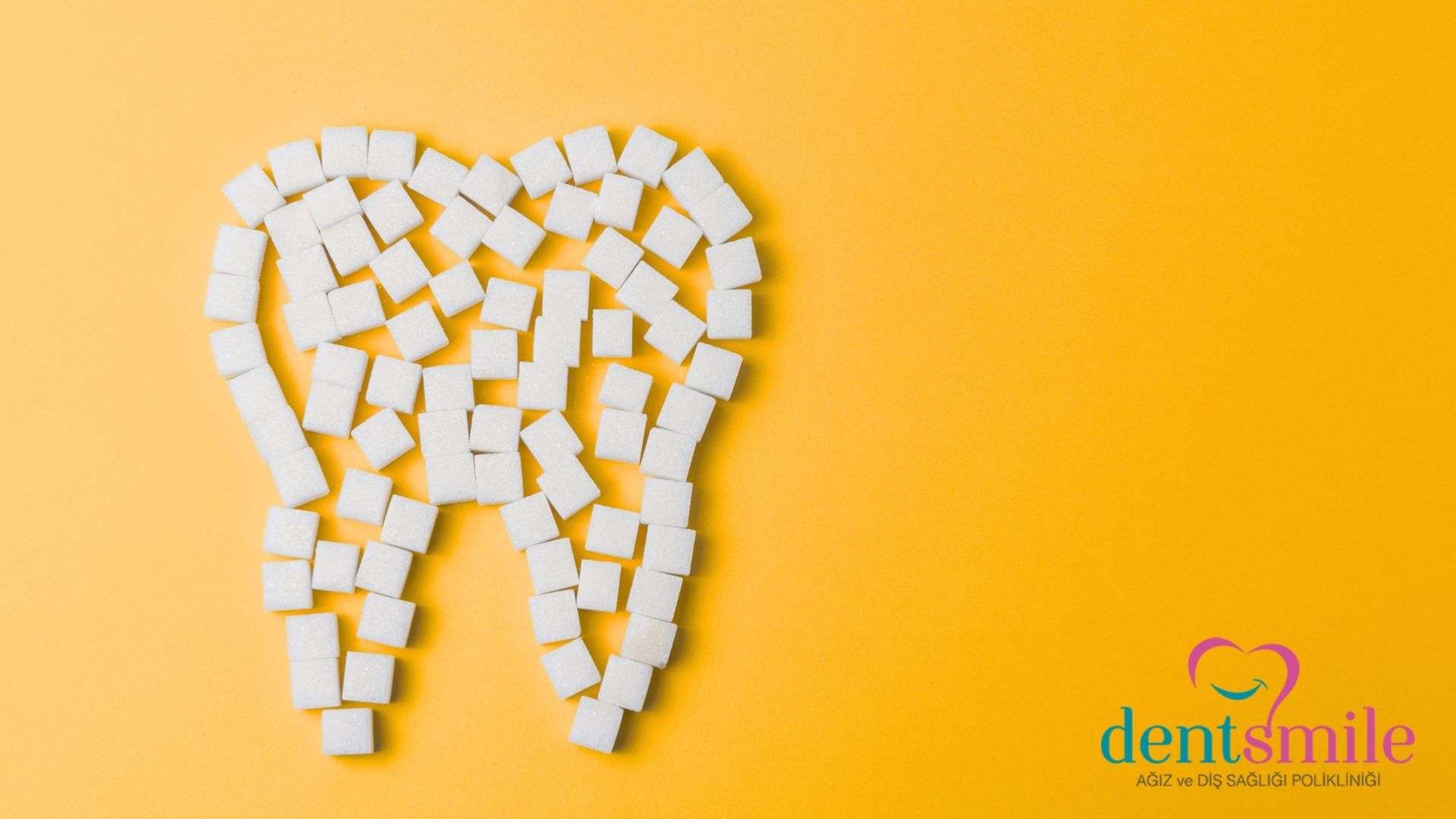
The relationship between sugar consumption and tooth decay has been known for many years. However, it is often simplified to the statement that “eating too much sugar causes cavities.” In reality, the development of tooth decay is a more complex biological process.
Sugar does not directly decay the teeth. The process begins when certain bacteria in the mouth use the carbohydrates we consume. As these bacteria metabolize sugars, they produce acids. These acids lower the pH around the tooth surface and can cause minerals in the enamel to dissolve. When this cycle occurs repeatedly throughout the day without enough time for the tooth surface to recover, tooth decay may gradually develop.
For this reason, dental health is influenced not only by how much sugar we consume, but also by how often and in what form we consume it.
How Does Tooth Decay Begin?
The mouth naturally contains many different microorganisms, and not all of them are harmful. In a healthy mouth, microorganisms, saliva, tooth surfaces and oral tissues exist in a complex balance.
When teeth are not cleaned effectively, an organized bacterial layer known as dental plaque or biofilm develops on the tooth surface.
When sugar and other fermentable carbohydrates are consumed, certain bacteria within this biofilm produce organic acids. As a result, the pH within the plaque can fall rapidly.
An acidic environment causes minerals such as calcium and phosphate to leave the tooth enamel. This process is called demineralization.
However, an important distinction should be made: demineralization does not automatically mean that a cavity has formed.
Saliva helps neutralize acids in the mouth and supports the return of minerals to the tooth surface. This repair process is known as remineralization.
Dental health therefore depends on the balance between:
Demineralization ↔ Remineralization
If mineral loss repeatedly exceeds mineral replacement over time, microscopic changes in the enamel may eventually progress into visible tooth decay.
Why Does Sugar Increase the Risk of Tooth Decay?
Bacteria within dental plaque can use fermentable carbohydrates as an energy source. Sucrose, commonly known as table sugar, is particularly important in this process.
Sucrose can contribute not only to acid production but also to the formation of substances that help certain bacteria adhere more effectively to tooth surfaces. This may influence the structure of dental biofilm and create conditions that favor the development of cavities.
However, it would be incorrect to assume a simple relationship such as “I ate sugar, therefore my tooth developed a cavity.”
Tooth decay is a multifactorial disease influenced by factors including:
Dietary habits,
Oral hygiene,
Saliva flow and composition,
Fluoride exposure,
Tooth anatomy,
Existing dental biofilm,
Frequency of sugar consumption.
This is why two people consuming similar amounts of sugar may have very different experiences with tooth decay.
Is the Amount of Sugar or the Frequency of Consumption More Important?
Both matter, but the frequency of exposure deserves particular attention.
Someone who consumes sugary foods and drinks repeatedly throughout the day may expose their teeth to frequent acidic conditions.
For example, eating a dessert with a main meal is not necessarily equivalent to consuming the same amount in small portions throughout the day.
After sugar is consumed, plaque pH can decrease. Saliva then needs time to help restore a more balanced environment.
If another sugary food or drink is consumed before this recovery occurs, another cycle of acid production can begin.
For this reason, frequent snacking on sugary foods may negatively affect dental health even when the total quantity does not appear particularly high.
Sugar Is Not Found Only in Sweets
When people think of sugar, chocolate, candy and desserts often come to mind. However, sugar is present in many foods and drinks consumed as part of everyday life.
Carbonated drinks, flavored coffees, packaged fruit drinks, energy drinks, some breakfast cereals, biscuits, cakes and many processed foods may contain significant amounts of free or added sugars.
Sipping sugary drinks throughout the day is particularly relevant to dental health because the teeth are repeatedly exposed to sugar.
Some carbonated and flavored drinks are also acidic themselves. In these situations, tooth surfaces may be exposed both to the acidity of the beverage and to acids produced by bacteria from its sugar content.
Why Do Sticky Foods Matter?
The amount of sugar in a food is not the only consideration. How long that food remains in the mouth can also be important.
Foods that adhere to tooth surfaces, particularly the grooves of back teeth, may take longer to clear from the mouth.
Similarly, food trapped between teeth can remain in place when interdental cleaning is inadequate.
Therefore, when considering the relationship between diet and tooth decay, the amount of sugar, frequency of consumption and how long food remains around the teeth should be evaluated together.
How Does Saliva Protect the Teeth?
Saliva is one of the mouth's most important natural protective mechanisms against tooth decay.
It helps neutralize acids after eating and contains minerals such as calcium and phosphate that contribute to the remineralization of tooth surfaces.
For this reason, people experiencing dry mouth may have an increased risk of tooth decay.
Certain medications, systemic conditions, radiotherapy to the head and neck region and other medical factors can reduce saliva production. For these patients, reducing sugar intake alone may not be sufficient, and an individualized preventive dental care program may be necessary.
Does Early Tooth Decay Always Require a Filling?
No.
In the early stages of tooth decay, mineral loss may begin before a physical cavity develops in the enamel. These early changes can sometimes appear as white spot lesions on the tooth surface.
In suitable cases, improving oral hygiene, modifying dietary habits and using appropriate fluoride measures can help control progression and support remineralization.
Once irreversible physical loss of tooth structure has occurred, however, restorative treatment may become necessary.
Modern dentistry therefore focuses not only on removing decay and placing fillings but also on identifying individual risk factors and preventing the disease from developing or progressing whenever possible.
Why Is Sugar Consumption Particularly Important in Children?
Dietary and oral hygiene habits established during childhood can have a significant influence on dental health later in life.
The aim is not necessarily to eliminate sugar completely from a child's diet. A more realistic approach is to control how frequently sugary foods are consumed and avoid turning them into a constant snacking habit.
Sugar-containing foods and drinks before bedtime deserve particular attention. Saliva flow naturally decreases during sleep, meaning that the mouth's natural cleansing and buffering mechanisms are less active than during the day.
It is also incorrect to ignore decay in primary teeth simply because “they will eventually fall out.” Primary teeth have important functions in chewing and speech and help maintain the space required for permanent teeth.
Is It Possible to Consume Sugar and Still Protect Your Teeth?
Protecting dental health does not necessarily require removing all sugar from the diet. Managing the way it is consumed is often more practical.
Consuming sugary foods mainly with meals, avoiding frequent sugary snacks between meals and not sipping sugary drinks continuously throughout the day can help manage the risk of tooth decay.
Teeth should also be brushed twice daily with fluoride toothpaste, and the spaces between the teeth should be cleaned using an appropriate method.
Individual risk varies considerably. People with a history of multiple cavities, dry mouth, orthodontic appliances or inadequate oral hygiene may require additional preventive measures.
Healthy Teeth Depend More on Habits Than Prohibitions
Reducing the relationship between sugar and tooth decay to the statement “sugar is bad for your teeth” overlooks the complexity of the disease.
The development of tooth decay is influenced by the amount and frequency of sugar consumption, dental biofilm, the protective effects of saliva, fluoride exposure and individual oral hygiene habits.
Good oral health is therefore built through sustainable habits rather than strict prohibitions.
At Dentsmile Oral and Dental Health Clinic, our preventive dentistry approach focuses not only on treating existing cavities but also on assessing individual caries risk and preserving natural tooth structure for as long as possible.
When regular dental examinations, effective oral hygiene and informed dietary habits are combined, many dental problems can be identified and managed before more extensive treatment becomes necessary.